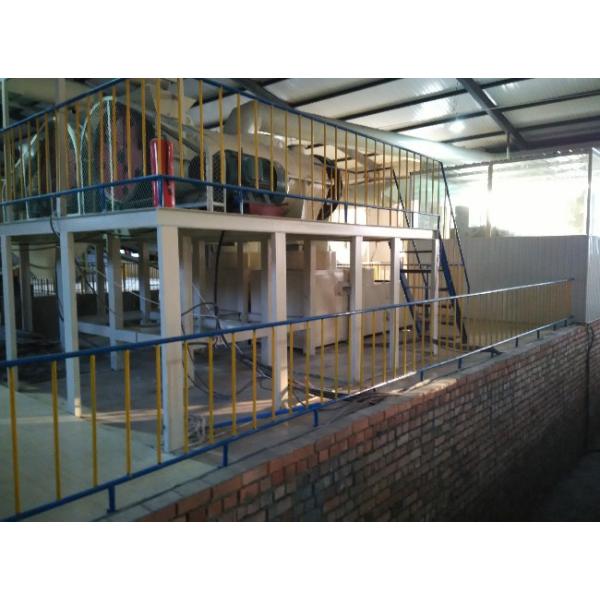
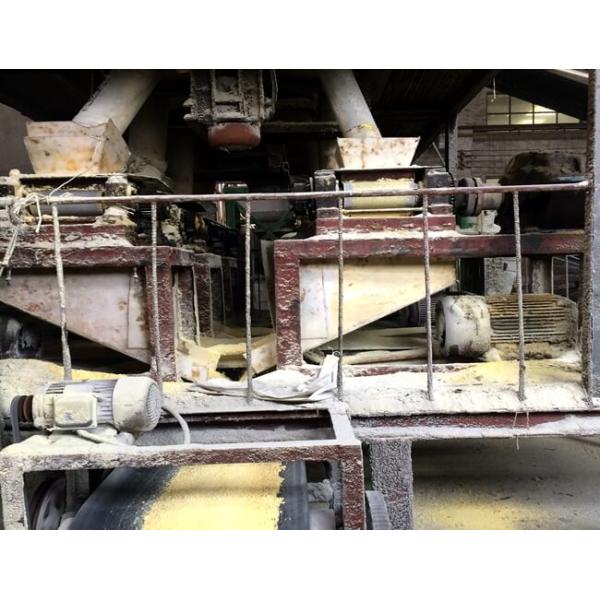
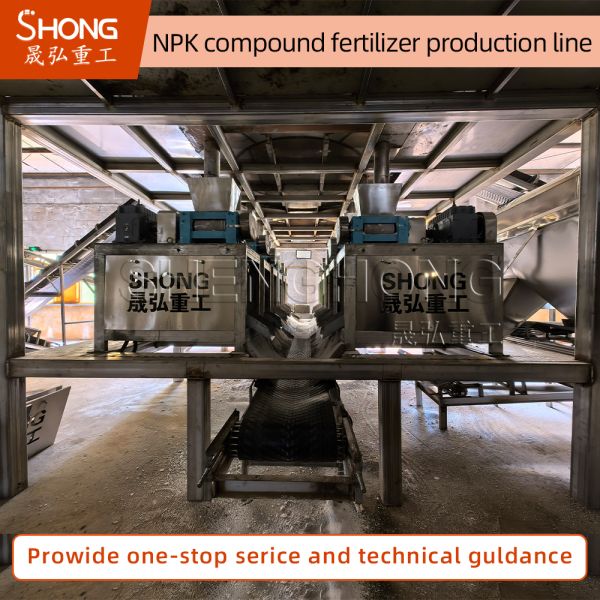
Oval / Irregular Shape Fertilizer Production Line for 15-15-15 or 10-10-10 Compound
NPK 15-15-15 or 10-10-10 Compound Fertilizer Production Line
Introduction of NPK Fertilizer Production Line
The process flow of the compound fertilizer production line includes: raw material ingredients, raw material mixing, raw material granulation, particle drying, granular cooling, particle grading, finished packaging film, and final product packaging.
NPK Compound fertilizer production line is widely applied to produce compound fertilizer with capacity ranging from 5,000-200,000 tons/year. It can granulate NPK, NP, ANP, DAP, MAP, CAN, SSP and other materials into compound fertilizer particles in one processing line.
Raw Materials for NPK Compound Fertilizer Production
Compound fertilizer contains two or all three of the basic plant nutrients—Nitrogen, Phosphorus, and Potassium—as well as microelements such as B, Mn, Cu, Zn, and Mo. The raw materials can be powder or bulk, including:
| Nitrogen |
Phosphorus |
Potassium |
| Calcium nitrate |
Single superphosphate |
Kainit |
| Urea |
Rock phosphate |
Potassium chloride |
| Ammonium bicarbonate |
Dicalcium phosphate |
Potassium sulphate |
| Ammonium chloride |
Triple superphosphate |
Potassium nitrate |
| Nitrate of soda |
|
|
| Ammonium sulphate nitrate |
|
|
| Ammonium sulphate |
|
|
| Ammonium nitrate |
|
|
Production Line Characteristics
Small investment, quick results, and good economic benefits
Compact, scientific, and advanced equipment process
Energy saving and consumption reduction with no waste removal
Stable operation, reliable running, and convenient maintenance
Wide raw material adaptability for various fertilizer types
High granulation rate with excellent particle appearance
Production Process Flow
1
Raw Material Ingredients: Urea, ammonium nitrate, ammonium chloride, ammonium sulphate, ammonium phosphate, potassium chloride, potassium sulfate and other raw materials are proportionally matched according to market demand and soil test results.
2
Raw Materials Mixing: The mixture of ingredients is thoroughly mixed to ensure uniform fertilizer efficiency in the granules.
3
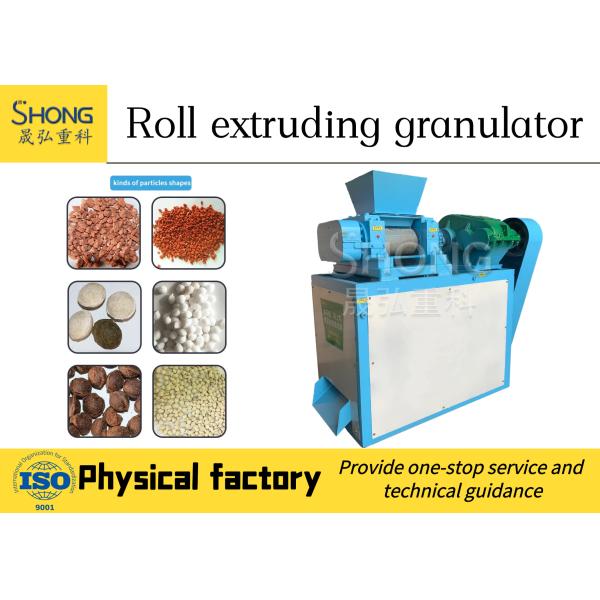
Granulation: The mixed raw material is sent to the granulator (drum granulator or extruding granulator).
4
Drying: Granules are placed in the dryer to remove moisture, increasing strength and improving storage capability.
5
Cooling: After drying, granules are cooled to prevent clumping and facilitate bagging for storage and transport.
6
Particle Classification: Cooled particles are graded; unqualified particles are crushed and regranulated while qualified products are sifted out.
7
Finished Coating: Qualified products are coated to enhance brightness and roundness of granules.
8
Packaging: Coated particles are stored in ventilated areas and prepared for distribution.
Technical Features
- Small investment, quick profit, good economic returns
- Saving energy, reducing consumption, no "three wastes" discharge
- Stable operation, reliable operation, easy maintenance, wide raw material adaptability
- Granulating, molding, screening integrated into one machine
- Finished product with good appearance, easy to operate
- Main components such as roller body use new type metal with anti-corrosive, abrasion resistance, shock resistance characteristics
- Bearing bracket selects excellent anti-corrosion casting parts for whole body
- Transmission part adopts two-input transfer mode for improved power ratio and lubrication performance