Mobile Container House: Relocatable Buildings for Sites That Keep Moving
A mobile container house is designed around movement. It can be lifted onto a truck, transported to a new location and put back into service with minimal work. For contractors, mining operations, event organisers and agricultural businesses, that mobility is the whole point.
What Makes a Unit Genuinely Mobile
- Structural base — a reinforced frame that accepts lifting at the corner fittings without distortion.
- Self-supporting envelope — walls and roof that stay rigid during transport and craning.
- Service disconnection — plug-and-socket connections for power and water that can be disconnected and reconnected on site.
- Compact transport footprint — folding or knock-down formats that keep transport cost per move low.
- Durable exterior — galvanised and coated surfaces that tolerate repeated handling.
Formats and Their Mobility
| Format |
Transport Effort per Move |
Re-deployment Speed |
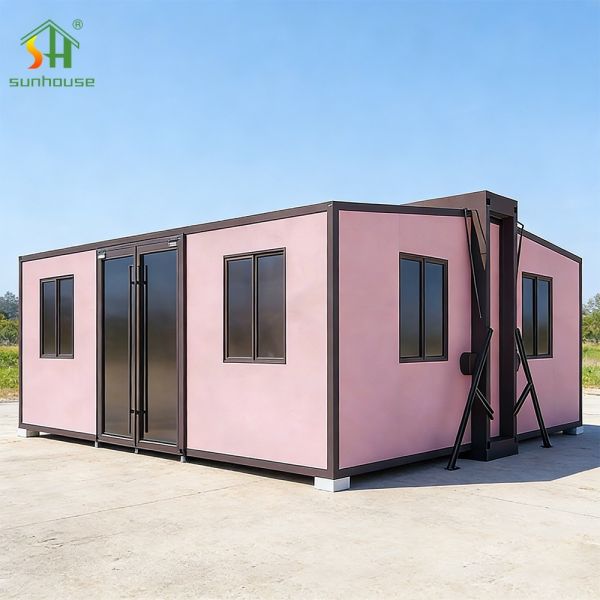
| Expandable unit |
One unit, folding |
Hours |
| Foldable unit |
One unit, folding |
Hours |
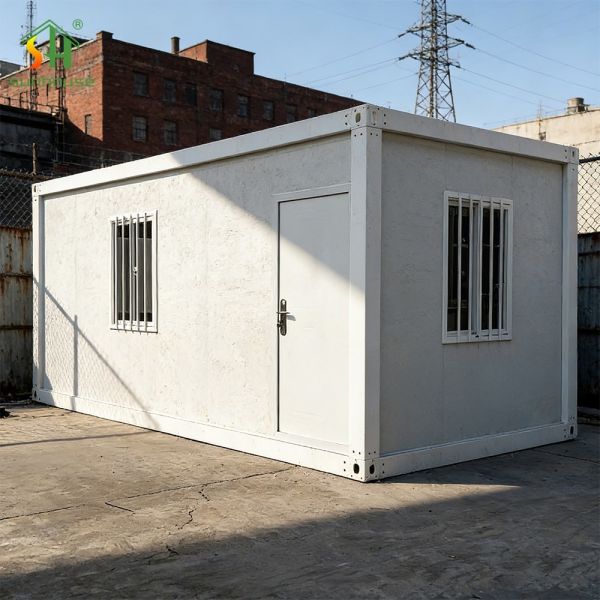
| Flat pack unit |
Dismantled, multiple per truck |
One to two days |
| Fixed module |
Complete unit, craned |
Hours once the base is ready |
Typical Uses
- Construction site offices, canteens and welfare units that follow the project
- Guard houses, gate offices and security posts
- Mining, oil and gas and remote infrastructure camps
- Agricultural accommodation and seasonal worker housing
- Event, exhibition and festival buildings
- Temporary classrooms, clinics and relief housing
Plan the moves, not just the first placement. Site access, lifting capacity and the base condition at each new location determine whether a unit can be relocated economically. A unit that is mobile on paper but cannot reach the next site is not mobile in practice.
Setting Up on a New Site
- Survey access for the delivery vehicle and lifting equipment.
- Prepare a level, load-bearing base — compacted ground, sleepers, concrete pads or a slab.
- Position the unit at the lifting points and set it down evenly.
- Level and, where required, tie down against wind uplift.
- Reconnect power, water and drainage, then inspect the building for transit damage.
What to Specify for a Unit That Will Move
- Heavier frame sections at the lifting points
- Folding or knock-down format rather than a fully welded shell
- Scratch and impact resistant exterior coatings
- Quick-connect services rather than hard-wired installation
- Internal fittings secured for transport
Frequently Asked Questions
How many times can a mobile container house be relocated?
A well-built unit can be moved repeatedly. Service life depends on frame condition, handling quality and how well joints and coatings are maintained.
How long does it take to set up on a new site?
An expandable or foldable unit can be operational within a day once the base and services are ready.
Does it need a concrete foundation?
Not normally. A level, load-bearing base is sufficient; concrete pads or sleepers are common for relocatable units.
Can it be towed like a caravan?
Container housing units are transported on a truck or trailer rather than towed. Some models can be fitted with a chassis for road movement — confirm availability.
Is a mobile unit less durable than a fixed one?
Not if it is designed for movement. The specification should include reinforced lifting points and a folding or knock-down structure.
Tell us how often the unit will move and where it will be deployed; we will recommend a format suited to repeated relocation.