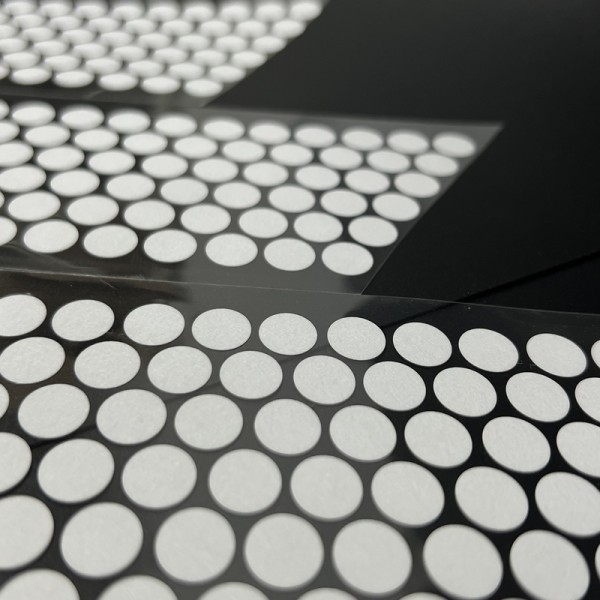
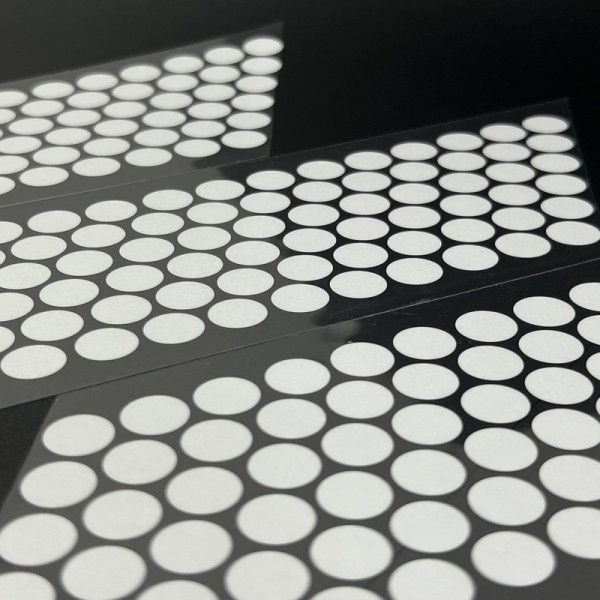
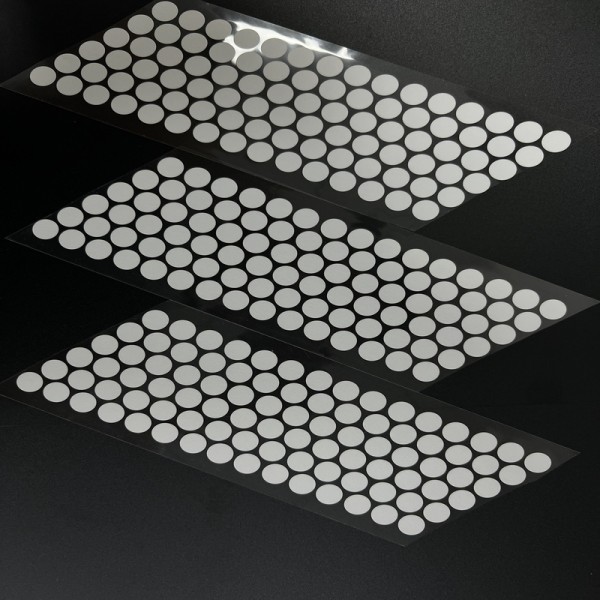
The aluminum foil venting induction seal is a specialized breathable liner engineered for hydrogen peroxide-based disinfectant containers. It combines the exceptional gas and moisture barrier properties of an aluminum foil layer with a precisely integrated ePTFE waterproof breathable membrane vent window. This liner provides a secure, tamper-evident electromagnetic induction seal that prevents leakage while actively venting the oxygen gas continuously generated by decomposing peroxide solutions. The aluminum foil layer delivers a near-absolute barrier against external moisture and contaminants, preserving the peroxide formulation's stability and extending shelf life. By maintaining ambient pressure within the bottle, this liner eliminates dangerous container bulging, cap failure, and the risk of product spray when opening—critical safety features for a chemical widely used in healthcare, household, and industrial disinfection.
Hydrogen peroxide solutions, from household 3% to industrial 35% concentrations, are inherently unstable. They continuously decompose into water and oxygen gas, a reaction accelerated by heat, light, and contamination. In a sealed, unvented container, this generated oxygen accumulates rapidly, causing internal pressure to rise to dangerous levels. Bottles bulge and become unstable on shelves; closures can fail catastrophically; and the unsuspecting user may be sprayed with peroxide when opening a pressurized bottle. Concurrently, hydrogen peroxide is extremely sensitive to external moisture and contaminants, which accelerate decomposition. A simple vent without a moisture barrier solves the pressure problem but allows humidity ingress, degrading the product. Traditional induction seals solve moisture ingress but create a pressure vessel. Neither conventional solution addresses both critical requirements.
The aluminum foil venting induction seal resolves this dual challenge. The laminate structure includes a solid aluminum foil layer that acts as a nearly perfect moisture and gas barrier, protecting the hydrogen peroxide from external humidity that would accelerate its decomposition. A small, precisely positioned window in the foil houses an ePTFE waterproof breathable membrane. This membrane continuously vents the oxygen produced by decomposition, keeping internal bottle pressure at safe, ambient levels. The membrane is chemically inert and oxidation-resistant, ensuring it does not degrade in the peroxide environment. The entire liner is applied via standard induction sealing equipment, creating a strong, tamper-evident bond to the bottle neck. The bottle remains flat-sided, safe to handle, and the product retains its labeled concentration and efficacy.
| Parameter | Specification |
|---|---|
| Product Type | Aluminum Foil Venting Induction Seal |
| Barrier Layer | Aluminum foil (pinhole-free, >99.9% pure) |
| Membrane Material | ePTFE (oxidation-resistant, inert) |
| Airflow | ≥ 300 ml/min @ 1 psi |
| Water Entry Pressure | ≥ 80 kPa |
| Moisture Vapor Transmission Rate (foil) | < 0.005 g/m²·24h |
| Oxygen Transmission Rate (foil) | < 0.005 cc/m²·24h |
| Seal Type | Electromagnetic induction seal |
| Compatible Bottle Materials | HDPE, PET, PP |
| Peroxide Compatibility | 3% to 35% H₂O₂ solutions |
| Tamper Evidence | Yes, full-face induction seal |
The induction seal liner is placed inside the cap and sealed onto the bottle neck. The aluminum foil layer faces the product, providing an impermeable barrier that stops external moisture from entering and decomposing the peroxide. The ePTFE membrane window faces the headspace. As oxygen gas evolves from peroxide decomposition, it migrates to the headspace and exits through the billions of microscopic pores in the ePTFE membrane. The membrane's nanopores are large enough for oxygen molecules but far too small for liquid peroxide to penetrate. The oxygen escapes into the cap and vents harmlessly through the threads. When the bottle cools or is partially emptied, ambient air can enter through the same path to prevent vacuum. The aluminum foil remains intact as a tamper-evident seal until the consumer removes it completely.