Application Areas
Aerosol tinplate cans are widely used in various fields including:
- Personal Care (Deodorant, Hair Spray, Shaving Foam)
- Household Products (Air Freshener, Polishes, Cleaner)
- Painted and Coatings (Spray Paint, Primers)
- Automatic Products (Lubricants, Brake Cleaners)
- Medical/Pharmaceutical (Inhalers, Antiseptic Sprays)
- Food Products (Cooking Oils, Whipped Cream)
- Industrial (Adhesives, Mold Release Agents, Lubricants)
- Gardening (Pesticides, Plant Care Sprays)
Company Overview
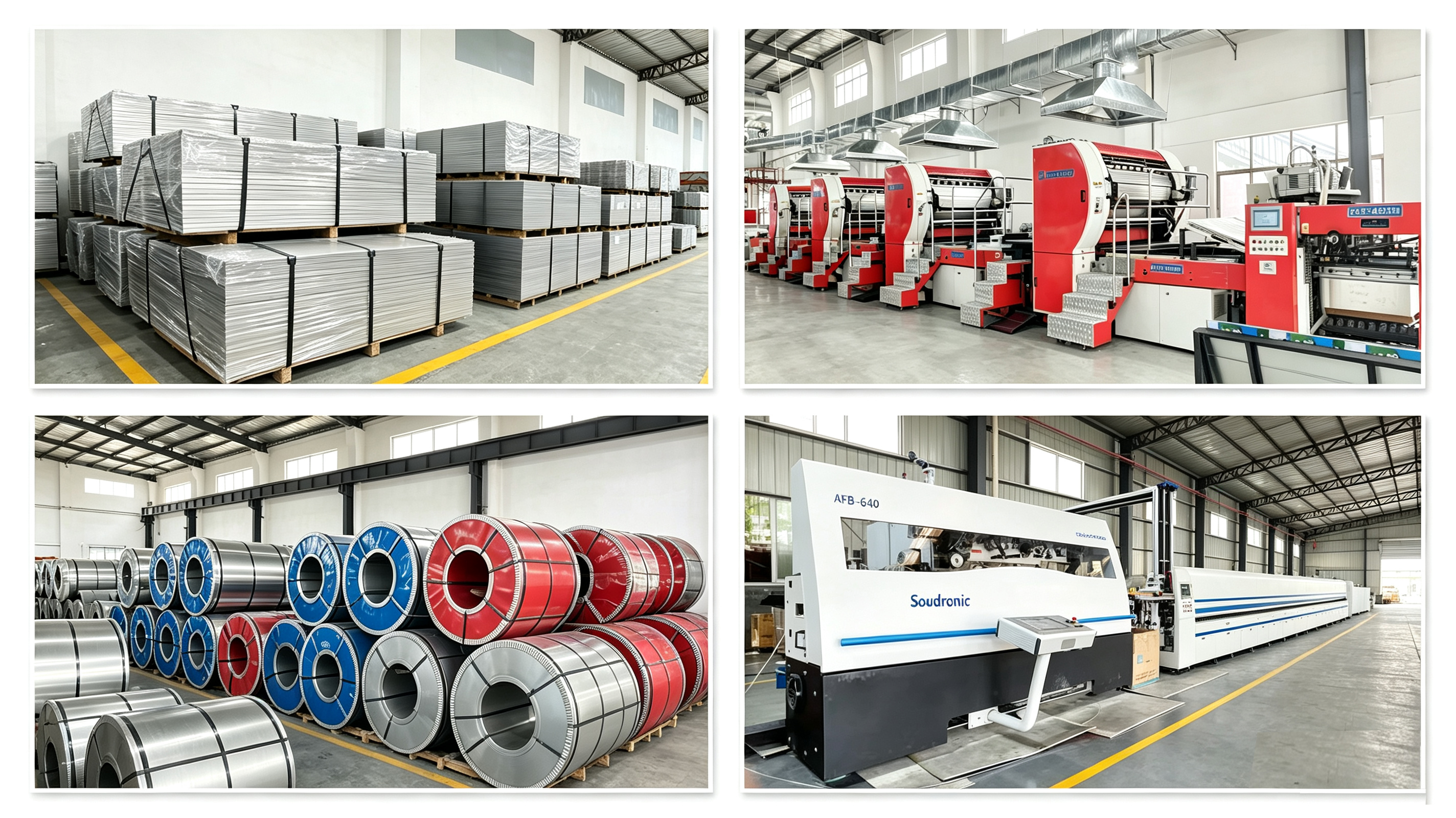
As a aerosol tinplate packaging solutions provider with 29 years of industry experience, we are committed to offering high-quality aerosol tinplate cans to our global customers. Our modern factory, spanning approximately 15,000+ square meters, is located in China and is equipped with 10 fully automated high-speed production lines. These can-making lines can produce 450 cans per minute, with an annual production capacity of up to 400 million cans.
Furthermore, we have a professional team of over 100 experienced employees who ensure that each project is completed efficiently and precisely. We possess comprehensive import and export qualifications, and with our advanced production equipment and technology, our products are not only popular in the domestic market but are also exported to regions such as Southeast Asia, the Middle East, Africa, Europe, South America and North America, earning the trust and recognition of customers both at home and abroad.
Production Process
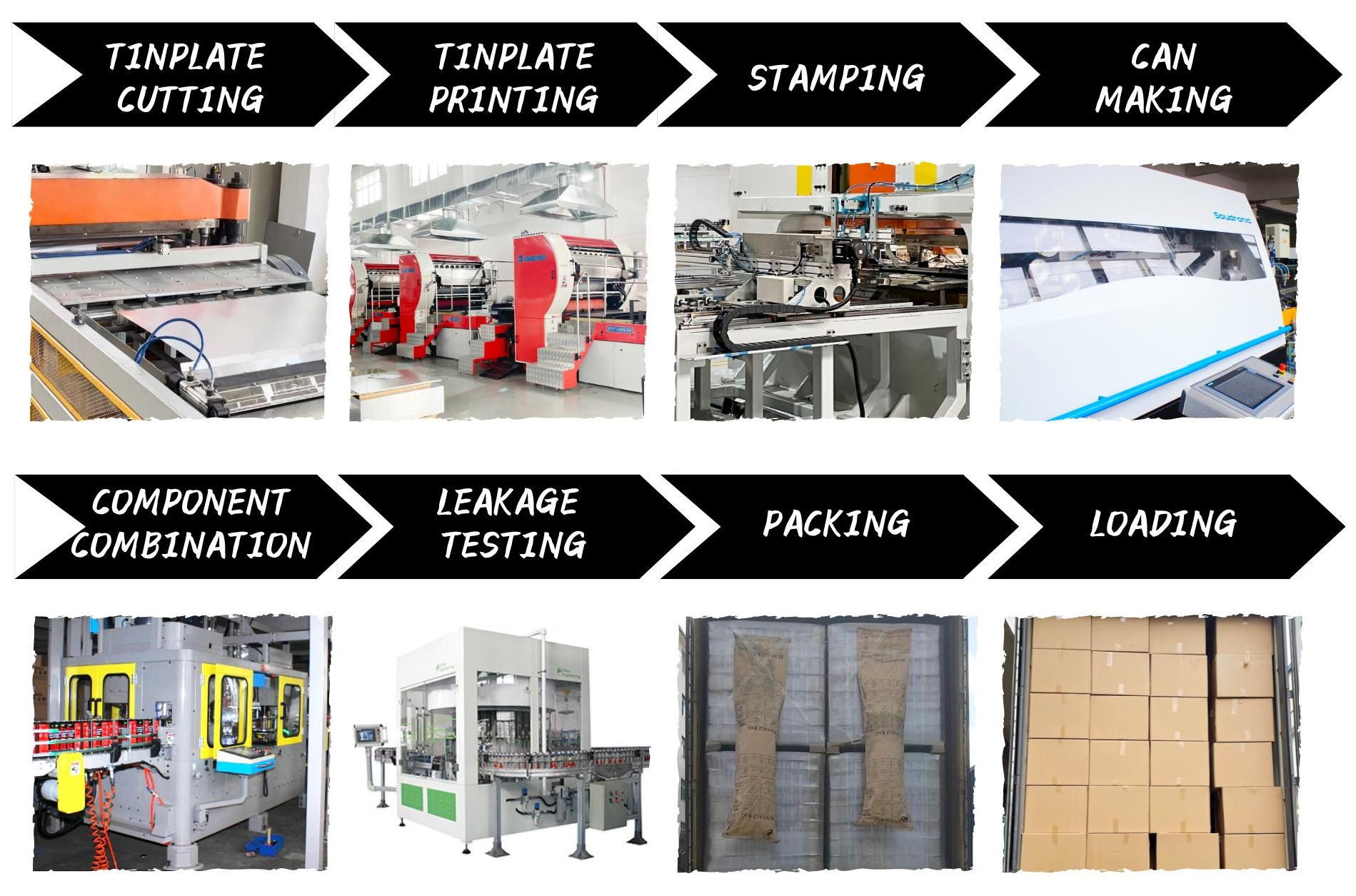
The production of aerosol tinplate can is a highly automated, high-speed process that can produce 400-500 cans per minute.
1. Raw Material Preparation and Coating
- Incoming Material: The process starts with coils of ETP-low-carbon steel coated with a thin layer of tin for corrosion resistance.
- Cutting: Raw material in coils are cut into flat sheets or individual rectangular blanks specific to the can's diameter and height.
- Printing and Coating: Before assembly, the flat sheets are decorated using offset lithography and coated with protective varnish on the outside. The inside is coated with a protective lacquer (e.g., epoxy-phenolic) to resist corrosion from the product.
2. Body Formation and Welding
- Rolling: The rectangular tinplate blank is rolled into a cylinder, leaving a precise overlap of about 0.3 to 0.5mm at the edges.
- Welding: The overlapped edges are fused together using high-frequency electrical resistance welding. An electrical current passes through the metal between copper electrodes, generating heat that welds the seam without filler material. This creates a strong, pressure-tight seal.
- Side-Seam Coating: The intense heat of welding vaporizes the internal lacquer along the seam. To restore corrosion protection, a protective powder or liquid coating (stripe) is automatically applied over the weld seam on both the inside and outside.
- Curing: The coated cans pass through a curing oven (typically 250℃ to 280℃) to harden the protective stripe material into an inert barrier.
3. Top and Bottom Manufacturing
The top and bottom components are manufactured simultaneously on separate high-speed presses:
- Stamping: Tinplate sheets are fed into a punch press. Circular blanks are punched out and then drawn into their final shape (the top and bottom) through a series of dies.
- Curling: The cut edges of the ends are curled to create a "hook" that will form the double seam. For the top dome, the one-inch opening is also curled to hold the valve cup.
- Compound Application: A sealing compound is applied to the curl of the ends to ensure a hermetic seal.
4. Final Assembly and Testing
- Flanging: The top and bottom edges of the cylindrical body are flared outward to form the "body hook" for the double seam.
- Necking: For many aerosol cans, the diameter at the top and bottom is reduced (necked-in) for cosmetic appeal or to meet specific valve requirements.
- Double Seaming: The can body is passed to a double-seaming machine where the bottom end is seamed on first. The can is then inverted, and the top is seamed on. This two-step process interlocks the body hook and the end curl to form a pressure-tight seal.
- Pressure Testing: Every finished can is fed through an in-line air tester. The can is sealed, and internal air pressure (typically 90-120 psig) is applied. If the can leaks or deforms, it is automatically rejected.
5. Packing
All finished cans will be packed by fully automatic packing machine in pallets which is strong enough and suitable for exporting.
Company Facilities
Equipment Details
We, aerosol tin can and component manufacturer, equipped with several imported full-automatic and high speed (450 pieces per minute) aerosol tin can production lines, and a whole set of full-automatic stacking and packing machines. Our company implements full-automatic production throughout the manufacturing process and has an annual capacity of producing 400 million three-pieces aerosol tin cans and 600 million sets aerosol component.
Kindly check the equipment we operate below:
- SOUDRONIC welding machines
- JAPAN FUJI printing and coating machines
- TAIWAN XINYI automatic component combination machines
- Automatic air testing machines
- Automatic packing machines
- Automatic iron-cutting machines
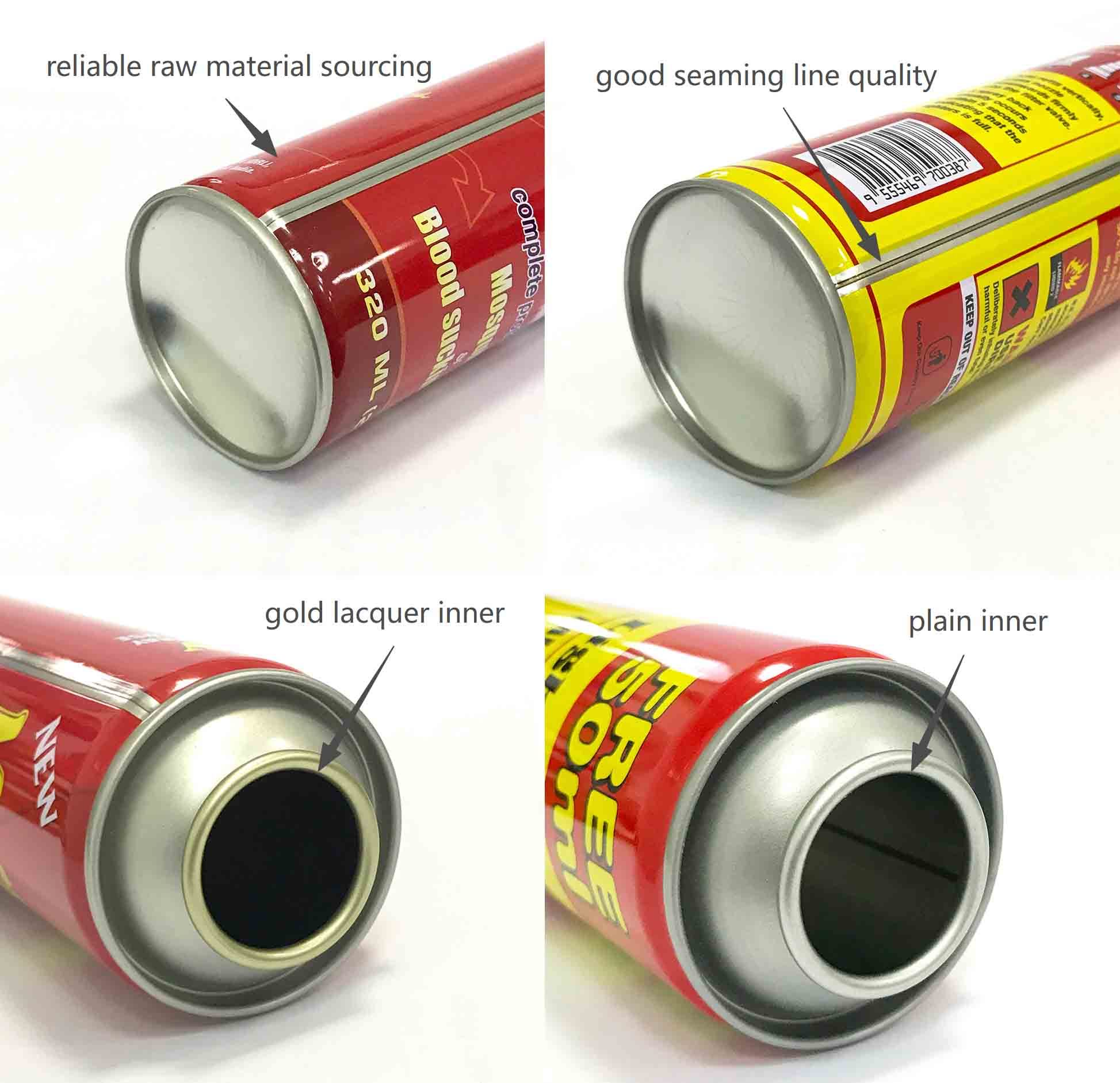
- Several equipments to check the printing quality, seaming line quality and so on
Frequently Asked Questions
1. What is your Key advantages?
1) Experienced staff
2) Advanced machine
3) Custom design is welcome
2. Artwork format?
Editable PDF or AI format
3. Your payment details?
1) 30% advance and the rest balance against B/L
2) Total T/T
4. What is your delivery details?
1) FOB port SHENZHEN
2) Lead time 15-20 working days after receiving deposit
5. And your package?
We can pack as customer's requirement, pallets and cartons
6. Could you please give more details of your products?
1) We offer very reasonable price and good quality products for our customers.
2) The samples are free of charge after we establish business relationship.