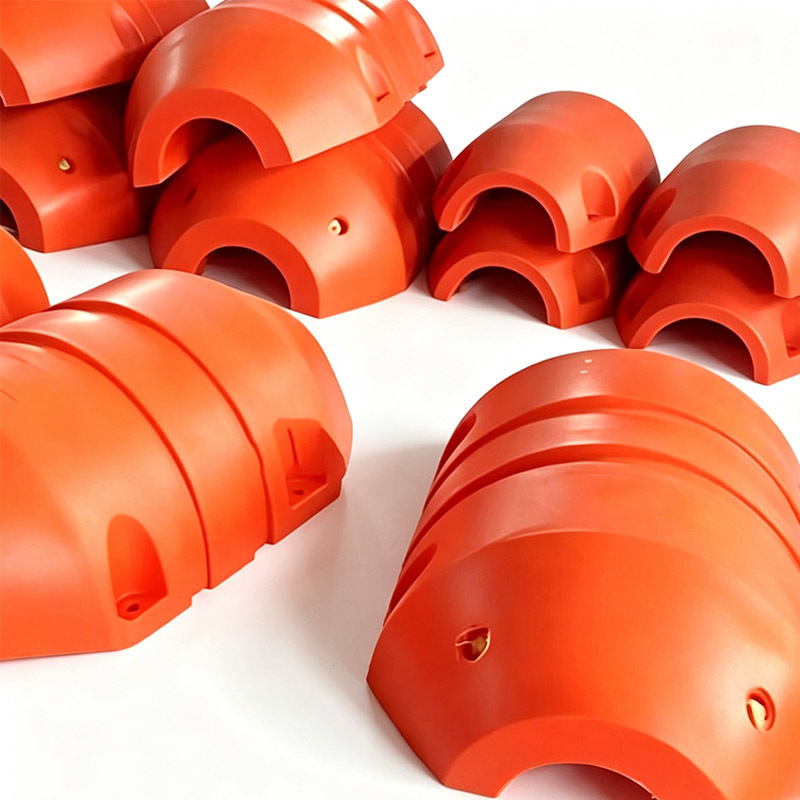
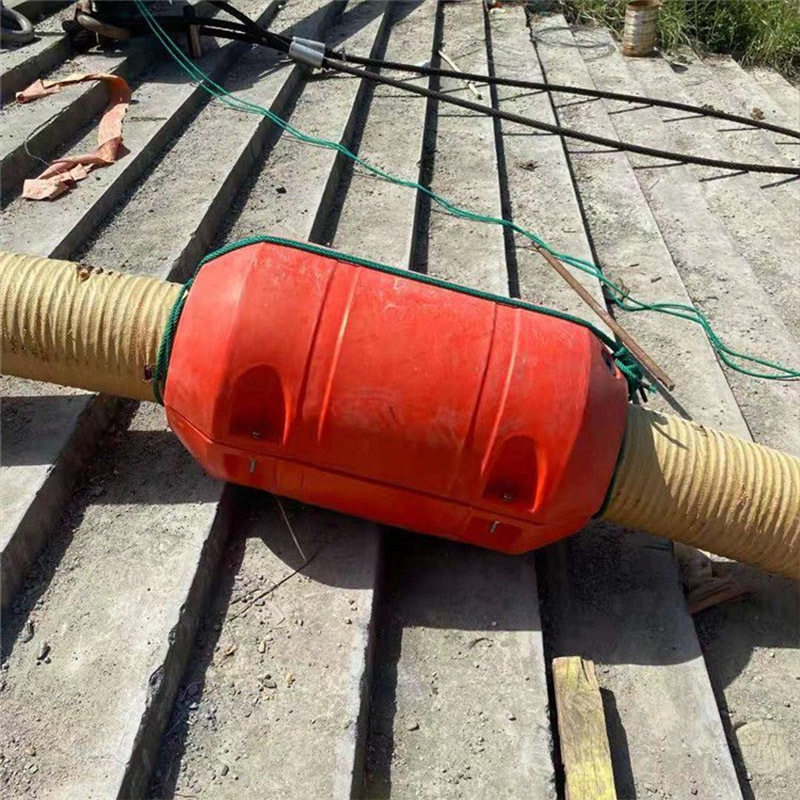
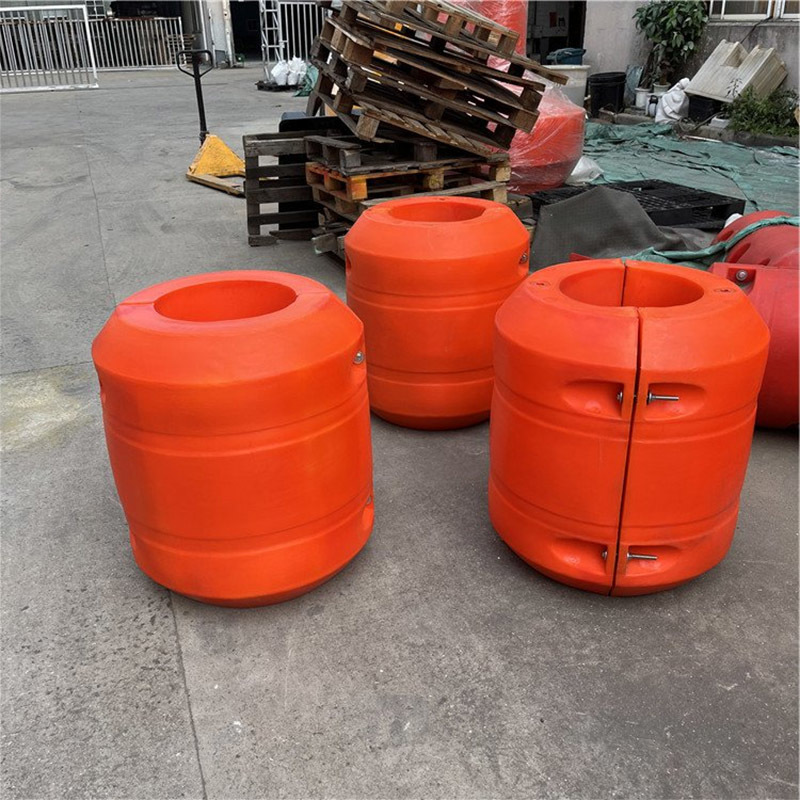
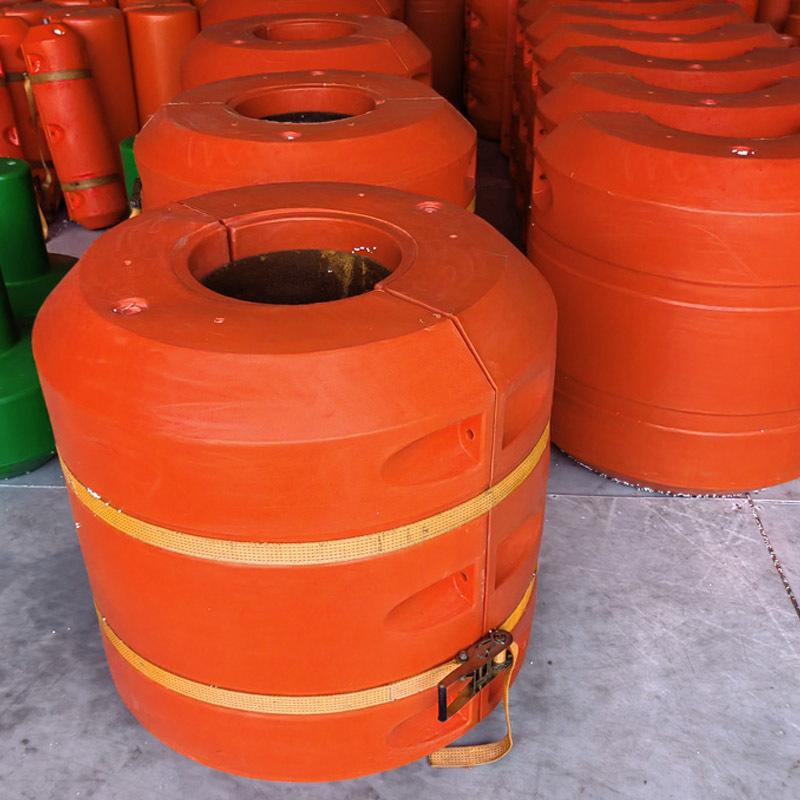
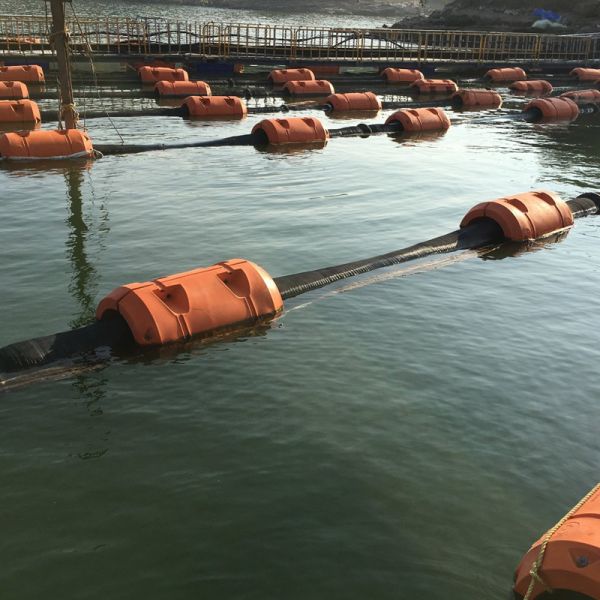
Hose Floats are precision-designed external buoyancy components used to support flexible hoses and floating pipeline sections in dredging, offshore engineering, marine construction, reclamation, mining, and industrial material-transfer operations. The system establishes controlled positive buoyancy along the hose length while preserving the flexibility required for dynamic marine service.
A marine construction contractor in the United Arab Emirates successfully implemented Hose Floats for a coastal industrial platform development project. The system maintained consistent support along floating discharge pipelines under high ambient temperatures, intense solar exposure, saline water, and variable slurry loading conditions.
The modular design allowed for adjustments when dredging positions changed and enabled recovery and reuse of flotation equipment for subsequent construction phases, demonstrating excellent operational flexibility and cost efficiency.

| Item | Requirements | Item | Requirements |
|---|---|---|---|
| Tensile Strength | ≥13.1MPa | Water Absorption | 1-2g/100cm² |
| Break Elongation | ≥11.1% | Breaking Strength | 0.08-0.1MPa |
| Impact Strength | ≥32.4KJ/m² | Breaking Elongation | 4-6% |
| Bending Strength | ≥15.7MPa | Compressive Strength | 0.1-0.24MPa |
| Weather Resistance After total aging energy≥3.5GJ/m² | Break Elongation %≥ 10 | Oxidative Induction Time 200°Cmm≥ | 10 |
| Float I.D. (mm) | Float O.D. (mm) | Float Length (mm) | Thickness (mm) | Net Buoyancy (KGS/Float) |
|---|---|---|---|---|
| 160-180 | 500 | 800 | 4 | 280 |
| 225 | 600 | 700 | 4 | 320 |
| 280 | 700 | 900 | 4 | 450 |
| 340 | 1000 | 1000 | 6 | 500 |
| 410 | 1100 | 1100 | 6 | 550 |
| 460 | 1200 | 1200 | 6 | 1200 |
| 510 | 1300 | 1300 | 7 | 1250 |
| 560 | 1300 | 1500 | 8 | 1360 |
| 610 | 1400 | 1600 | 8 | 1600 |
| 630 | 1480 | 1600 | 8 | 1950 |
| 680 | 1550 | 1800 | 8 | 2200 |
| 730 | 1620 | 1900 | 9 | 2300 |
| 780 | 1700 | 2000 | 9 | 2700 |
| 840 | 1850 | 2100 | 12 | 3200 |
| 890 | 2000 | 2400 | 12 | 4600 |
| 940 | 2040 | 2500 | 13 | 4900 |
| 1150 | 2400 | 2600 | 14 | 6500 |
Note: Customized floaters are available upon request.
Configured to provide controlled flotation based on actual operating load, including hose, couplings, and conveyed medium weight. Ensures sufficient buoyancy reserve for operational variation and prevents excessive immersion.
Engineered polymeric or composite construction provides mechanical strength to withstand transportation, installation, and operational impacts while maintaining dimensional integrity.
Mechanically secured modular structure maintains proper positioning while allowing hose flexibility, preventing uncontrolled migration of flotation units during wave and current action.
Corrosion-resistant materials with UV and weathering resistance support extended service life in marine environments with minimal maintenance requirements.
The calculation should include the hose's empty weight, filled weight, coupling weight, conveyed medium density, water density, required freeboard, and expected environmental conditions. The total available buoyancy should provide sufficient support for the operating condition rather than being evaluated only against the empty hose.
They can be configured for hot coastal applications when the selected material is appropriate for elevated ambient temperature, UV exposure, seawater, and outdoor service. The project temperature range and environmental exposure should be specified before material selection.
Service duration depends on material selection, environmental exposure, mechanical loading, installation quality, operating frequency, and maintenance. Long-term installations should have a planned inspection schedule to identify potential issues before they affect flotation performance.
Yes, modular flotation allows spacing to be modified where the revised configuration is technically verified. Changes may be necessary when hose length, conveyed medium, water depth, or pipeline routing changes. Any significant modification should be evaluated to ensure adequate freeboard and mechanical stability.
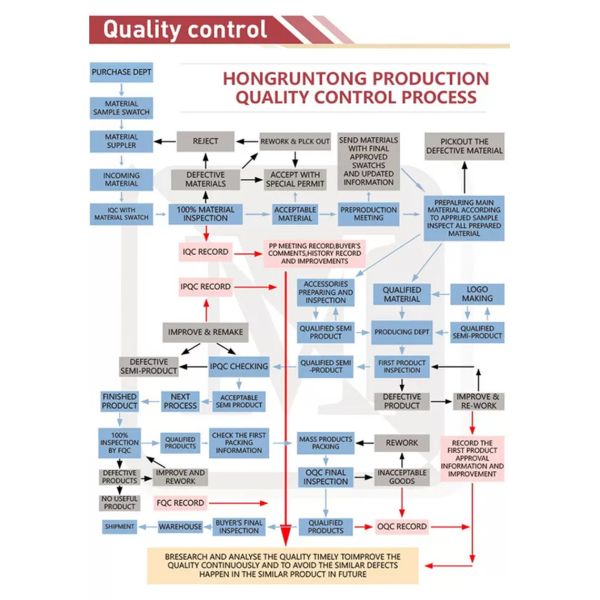
Depending on project requirements, technical documentation may include product dimensions, material information, buoyancy parameters, installation instructions, inspection requirements, drawings, and quality-related documentation. Specific certification or inspection documentation should be confirmed before production.