Nitinol Wires: Materials Analysis and Corrosion Resistance
Product Specifications
| Density | 6.45 g/cm³ |
| Shape | Wire |
| Corrosion Resistance | High |
| Thermal Conductivity | 11.7 W/m·K |
| Sample | Support |
| Product Surface | Bright |
| Origin | China |
| Young's Modulus | 55-75 GPa |
| Product Composition | Nickel Titanium |
| Customization | Support |
| Electrical Conductivity | Low |
| Status | Straight |
| Product Shape | Strip/Ribbon |
| Service | OEM/ODM |
| Shape Memory Temperature | 50-100°C |
Premium Nitinol Wire Solutions
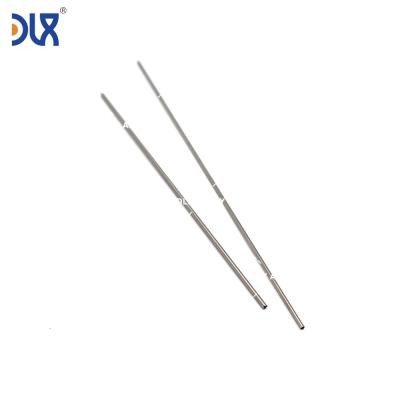
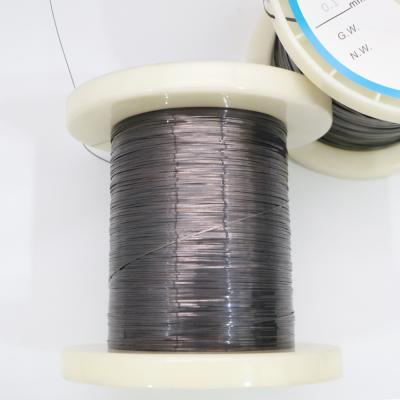
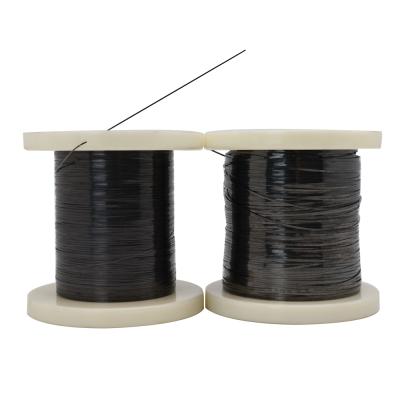
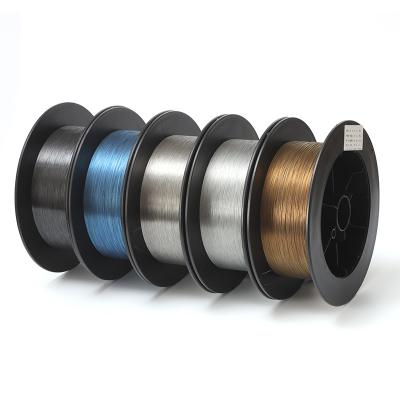
Nitinol wires represent a superior class of nickel-titanium alloy products, combining exceptional toughness, flexibility, and corrosion resistance. These advanced wires feature unique shape memory and superelastic properties, making them ideal for medical implants, industrial sensors, and various high-performance applications.
Technical Specifications by Grade
| Grade | Chemical Composition | Transformation Temperature (Af) Range | Tensile Strength (MPa) | Elongation (%) | Main Applications |
| NiTi-01M (Superelastic) | Ni: 54.5-57.0%, Ti: Balance | -25~35°C | 800-1100 | 10-20 | Medical orthodontic wires, root canal files, vascular stents |
| NiTi-02 | Ni: 55.0-56.5%, Ti: Balance | 0~80°C | 700-1000 | 8-15 | Shape memory alloys, temperature control devices |
| CuNiTi (Ternary Alloy) | Ni: 54.0-56.0%, Cu: 0.5-2.0%, Ti: Balance | -25~35°C | 850-1200 | 12-25 | Medical guidewires, sutures, staplers |
| NiTiFe | Ni: 54.5-57.0%, Fe: 0.1-2.0%, Ti: Balance | -50~20°C | 900-1300 | 10-18 | Low-temperature applications, aerospace components |
| NiTiCr | Ni: 54.5-57.0%, Cr: 0.1-0.5%, Ti: Balance | -20~40°C | 1000-1400 | 8-15 | High-strength medical devices, bone fixation devices |
Advanced Materials Analysis
Our rigorous materials analysis ensures the highest quality Nitinol wires. Starting with high-purity nickel and titanium (approximately 50% each), we maintain strict control over impurities (carbon <0.05%, minimal oxygen). Spectrometry verifies exact composition ratios, while microscopy examines the martensite-austenite crystal structure responsible for shape memory and superelastic properties.
Mechanical testing confirms tensile strength ranging from 800-1500 MPa for superelastic grades, with transition temperatures adjustable from -20°C to 100°C. Fatigue resistance testing ensures our wires withstand millions of bending cycles without failure, guaranteeing reliable performance in medical and industrial applications.
Superior Corrosion Resistance
Nitinol wires demonstrate exceptional corrosion resistance due to their titanium-rich oxide layer. Testing confirms minimal pitting in saline solutions and acidic environments, with negligible weight loss even after prolonged exposure. The self-healing passive film ensures long-term durability in both medical implants and industrial applications.
Diverse Applications
Our Nitinol wires serve critical functions across multiple industries:
- Medical: Vascular stents, surgical guidewires, orthodontic archwires
- Aerospace: Actuators, vibration dampening components
- Robotics: Flexible joints, precision sensors
- Industrial: Chemical processing filters, automotive safety systems
- Energy: EV battery thermal management systems
Market Outlook
The Nitinol wire market is projected to grow from $550 million (2025) to $1.2 billion by 2033, driven by:
- 9.5% CAGR in medical device applications
- 14% annual growth in EV thermal systems
- Increasing demand for minimally invasive surgical tools
- Advancements in robotics and aerospace technologies
Our Manufacturing Capabilities
Our 12,000㎡ ISO 9001-certified facility produces 1,200 tons annually, with complete capabilities for research, production, testing, and packaging. All products undergo rigorous simulated environment testing (high temperature, high pressure, corrosion resistance) before shipment.
Frequently Asked Questions
What are Nitinol wires?
Nickel-titanium alloy wires known for shape memory, superelasticity, and excellent corrosion resistance in medical and industrial applications.
What materials are used in Nitinol wires?
Approximately 50% nickel and 50% titanium, with trace elements carefully controlled for optimal performance.
How is materials analysis performed?
Through spectrometry for composition, microscopy for microstructure, and mechanical testing for properties like tensile strength.
What are the main applications?
Medical devices, aerospace components, robotics, and industrial sensors requiring shape memory and superelastic properties.
How do they resist corrosion?
Through a titanium-rich oxide layer that provides superior resistance to bodily fluids, saline, acids, and harsh environments.