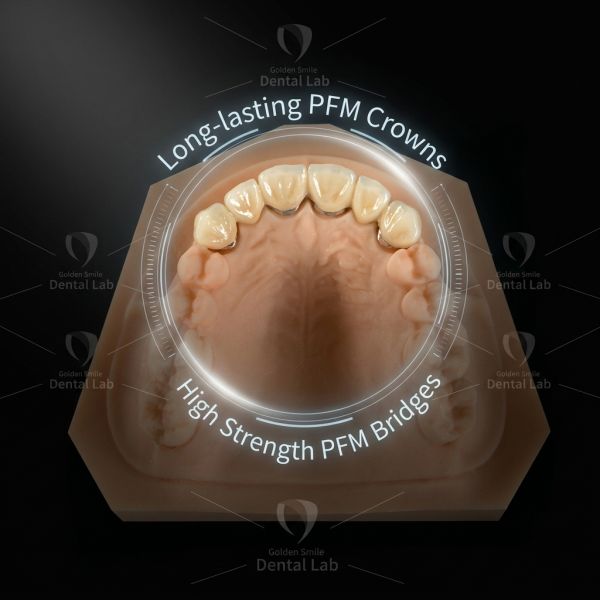
Porcelain Fused to Metal (PFM) restorations remain the most popular and time-tested choice in restorative dentistry. By combining a high-strength cast metal substructure with a customized porcelain veneer, PFM systems provide the perfect balance between the mechanical durability of metal and the natural aesthetics of ceramic.
The PFM restoration is a hybrid system designed to provide "best-of-both-worlds" performance. It utilizes a precision-cast metal alloy "cap" that is chemically bonded to layers of veneering porcelain.
The Metal Substructure: This internal frame provides the structural integrity needed to endure heavy masticatory (chewing) pressures.
The Porcelain Veneer: The outer layer is masterfully sculpted to mimic natural tooth anatomy. To ensure a life-like result, an opacious porcelain layer is first applied to mask the metal alloy, followed by a thick layer of translucent porcelain that matches the shade and characterization of the patient’s remaining teeth.
Patients can choose from a range of metal alloys for their substructure based on clinical needs and budget:
Non-Precious (Co-Cr / Ni-Cr): Cobalt-Chrome alloys are a cost-effective, extremely rigid, and popular choice for long-span bridges.
Semi-Precious: Contains a percentage of noble metals (like Silver or Palladium) for improved corrosion resistance.
White & Yellow Precious (Gold Alloys): High-noble alloys offering the best biocompatibility and the most accurate marginal fit.
The commitment to restorative excellence is reflected in a comprehensive service model designed for dental professionals worldwide. By integrating clinical precision with personalized support, the laboratory functions as a strategic extension of the dental practice, ensuring optimal outcomes for every patient.
The laboratory specializes in high-tier fixed prosthodontics, with a primary focus on:
Ceramic Dental Crowns: Crafted for lifelike translucency and anatomical accuracy.
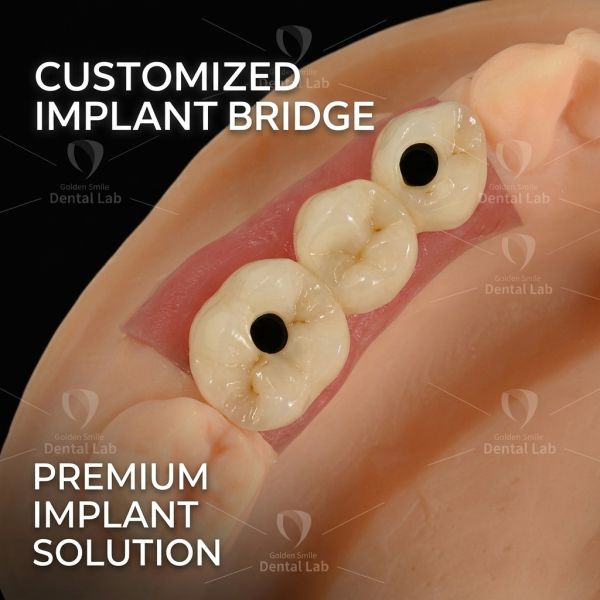
Dental Implant Crowns: Engineered for long-term functional stability and precise fit. Every restoration is fully customized to harmonize with the patient's natural dentition, prioritizing both aesthetic appeal and biocompatibility.
Success in complex cases often requires a collaborative approach. The technical team works directly with dental professionals to provide:
Case Planning & Design: Tailoring restoration structures to meet unique patient anatomies.
Material Selection Guidance: Identifying the most suitable substrates—from high-translucency zirconia to lithium disilicate—based on the specific clinical indications.
To stay at the forefront of the industry, the laboratory hosts regular workshops and training programs. these sessions focus on:
The latest advancements in digital dentistry.
New techniques in material handling and restoration placement.
Maximizing the efficiency of digital workflows (CAD/CAM).