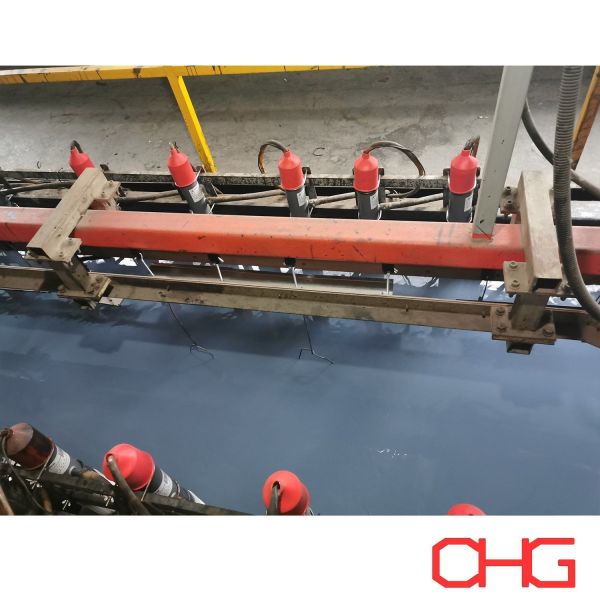
Automatic Electrophoretic Coating Line (EPD / KTL) with Custom Engineering
Electrophoretic coating—commonly referred to as E-coating, EPD, KTL, cathodic electro-deposition, or electrophoretic painting—is an advanced surface treatment process widely used for metal components requiring uniform coverage and high corrosion resistance.
In this process, metal parts are fully immersed in a water-based coating bath containing dispersed paint particles. When an electric current is applied, the coating material migrates and deposits evenly onto the conductive metal surface, forming a continuous and tightly bonded film.
Typical Production Line Process
Manual loading→ Pre-spray surface pretreatment→ Cathodic electrophoretic coating (with constant-temperature air-conditioning system)→ Post-electrophoresis UF rinsing / spray treatment→ Paint film curing and drying→ Natural cooling→ Manual unloading
Key Advantages of Electrophoretic Coating Systems
- Highly Uniform Film Thickness: Electrophoretic deposition delivers exceptionally even coating thickness across the entire workpiece, including sharp edges, deep recesses, and complex geometries. This results in a smooth, consistent surface finish with excellent dimensional control.
- Outstanding Corrosion Resistance: The process forms a dense, strongly adherent coating layer that provides long-term protection against corrosion, moisture, and chemical exposure—making it ideal for components used in harsh or outdoor environments.
- High Automation and Productivity: E-coating lines are designed for continuous, automated operation. Precise control of process parameters minimizes manual handling, improves repeatability, and significantly increases production efficiency.
- Environmentally Responsible Technology: Using water-based coatings with minimal VOC and HAP emissions, electrophoretic coating systems comply with strict environmental regulations while supporting sustainable manufacturing practices.
- Efficient Material Utilization: The coating material is deposited only where electrical attraction occurs, greatly reducing paint loss and overspray. This leads to lower material consumption, reduced waste, and improved cost control.
- Broad Substrate Compatibility: Electrophoretic coatings adhere effectively to a wide range of substrates, including carbon steel, aluminum, galvanized steel, and other conductive materials, enabling diverse industrial applications.
- Improved Workplace Safety: The elimination of flammable solvents and reduced operator exposure to hazardous substances contribute to a safer and cleaner working environment.
- Stable Quality and Process Control: Integrated monitoring and control systems ensure consistent coating thickness, adhesion, and appearance across all production batches, supporting strict quality standards.
- Long-Term Cost Efficiency: Although the initial investment may be higher, reduced paint waste, lower rework rates, and high operational efficiency make electrophoretic coating a cost-effective solution over the system’s lifecycle.
- Flexible Coating Options: Electrophoretic paint formulations can be tailored to achieve various finishes, including clear, pigmented, or functional coatings, meeting both aesthetic and performance requirements.