Manufacture White Powder Anionic Polyacrylamide Apam Flocculant Polymer for Shield Sludge Treatment AA6518
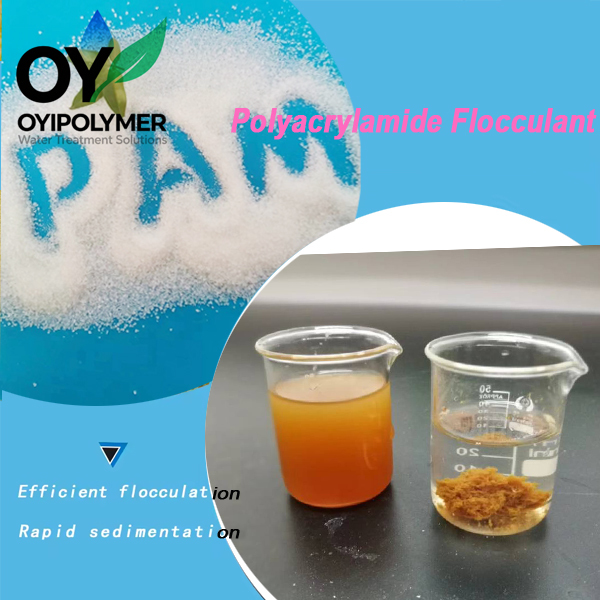
- Anionic polyacrylamide powder(APAM) could be used in industrial and urban wastewater treatment.
- The treatment of industrial wastewater or the mixture of industrial and urban wastewater normally use middle/low electric density and middle/high molecular weight product.
- The treatment of urban sewage use middle/high electric density, midde/high molecular molecular weight product.The treatment of sludge need use high electric density product for better effect.
- APAM could treat wasted water effectively after concentration and flotation process.
Working Perfromance Overview
Physical Properties
|
Product Name
|
Anionic Poyacrylamide
|
Cationic Polyacrylamide
|
Nionic Polyacrylamide
|
|
CAS Number
|
9003-05-8
|
|
Appearance
|
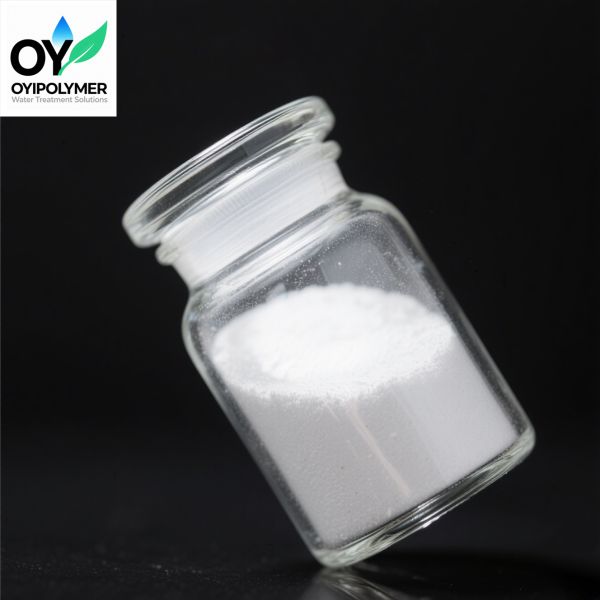
White granule powder
|
|
Solid Cotent(%)
|
≥90
|
|
Molecular Weight
|
Medium-High-Very high-Super High
|
|
Charge Density(%)
|
0-35
|
5-80
|
0-5
|
|
Dissolution time(min)
|
≤90
|
|
Recommend Dissolution Ratio
|
0.1%--0.5%
|
|
Shelf Life
|
24 months
|
|
Storage Condition
|
Should be stored in cool and dry place, at the tempreture no higher than 35℃
|
Applications

- Sludge Dewatering (Primary Application)
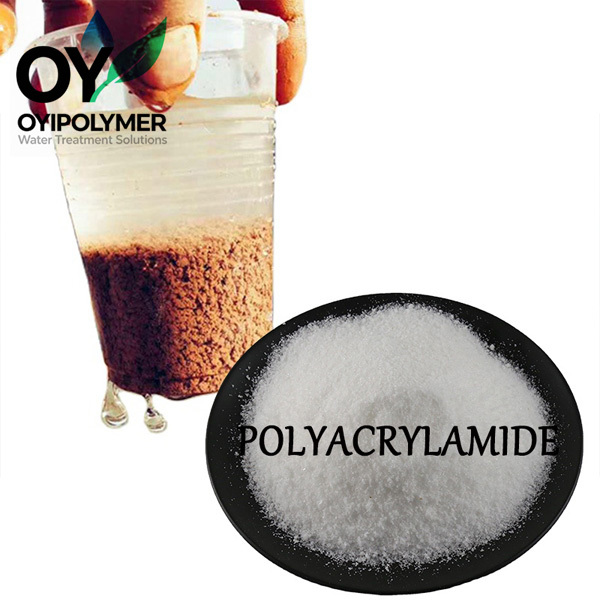
Function: polyacrylamide is the preferred chemical for conditioning and dewatering organic sludge from biological treatment processes. It efficiently bridges fine particles to form large, stable flocs that release water easily.
Industries:
Municipal Wastewater Plants: Dewatering sewage sludge before disposal or incineration.
Food & Beverage Processing: Treating sludge from wastewater generated in production facilities.
Livestock & Poultry Farms: Managing manure and agricultural waste.
- Wastewater Treatment & Clarification
Function: It clarifies wastewater by aggregating suspended solids (SS) and removing organic matter (BOD/COD), leading to clearer effluent.
Industries:
Chemical Industry: Treating complex industrial effluent.
Textile & Dyeing: Treating wastewater containing dyes and pigments.
Tannery & Leather Production: Coagulating organic waste and chemicals.
- Papermaking Process Aid
Function: polyacrylamide acts as a retention and drainage aid. It helps retain fine cellulose fibers and fillers (like calcium carbonate) in the paper sheet, improving product quality and reducing material loss. It also accelerates water drainage on the wire mesh, increasing production speed.
Benefits: Enhances paper strength, improves formation, and reduces production costs.
- Mining & Mineral Processing
Function: Used for solid-liquid separation in tailings treatment. It settles fine mineral particles quickly, allowing for water recovery and reducing the environmental footprint of tailings ponds.
Applications: Coal washing, gold, copper, and iron ore beneficiation.
- Oil & Gas Industry
Function: Used in drilling fluids as a viscosity modifier and shale inhibitor. It is also crucial for treating produced water, allowing it to be safely re-injected or discharged.
Solution Preparation & Jar Testing
- Polyacrylamide can't be put directly into sewage, so dissolve in water before using Polyacrylamide.
- The dissolved water should be clean water, and without heating, but the temperature can't be cold. The temperature is higher than five degrees Celsius. Otherwise it will be dissolve very slowly.Temperature above 40 degrees Celsius affect the use effect.
- Notice: Don't use strong acid, strong base, high salt water preparation.
- The ratio range is recommended to be between 0.1% and 0.3%. For example, 1 liter of water with 1~3g of agents.
- If because of other reasons, the dispersion is not good, we suggest that you mix a little more sparse.
- The water is warmer in Summer. Cationic, Anionic Polyacrylamide should be strict for about 1 hour. Nonionic Polyacrylamide should be strict for about 2 hours.
- The water is cold in Winter, Cationic, Anionic Polyacrylamide should be strict for about one and a half hours. Nonionic Polyacrylamide should be strict for about 3 hours.
Packaging
Supplied in 25kg kraft paper bags with inner PE lining.