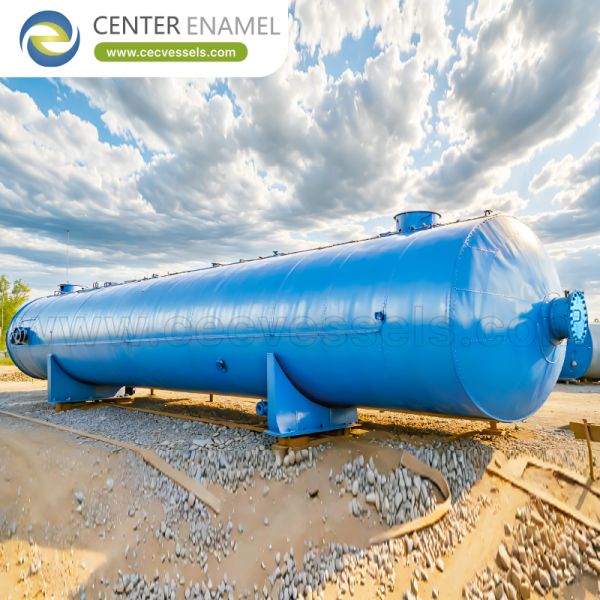
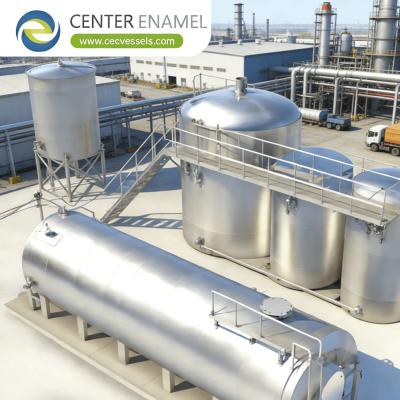
In industrial wastewater management and process fluid recovery, the stainless steel gravity oil-water separator remains the most reliable technology for the primary separation of immiscible liquids. By leveraging density differences (specific gravity), these systems allow oil droplets to coalesce and rise while heavier water phases settle, creating a clean, efficient phase separation process.
At Shijiazhuang Zhengzhong Technology Co., Ltd (Center Enamel), we specialize in the custom engineering of these vessels. We understand that "efficiency" is not a static metric; it is the result of precise hydraulic design tailored to the specific flow rates, oil droplet sizes, and chemical properties of your process stream.
The efficiency of gravity separation is fundamentally governed by Stokes' Law. For a separator to achieve "high-efficiency" phase separation, the residence time of the fluid within the tank must be sufficient for the oil droplets to overcome fluid drag and reach the surface for skimming.
To achieve high efficiency, our custom engineering process focuses on maximizing the denominator variables (viscosity control, if necessary) and optimizing the tank geometry to ensure the fluid velocity never exceeds the rise velocity of the smallest target oil droplet.
While traditional separators are often made of carbon steel or fiberglass, stainless steel offers distinct advantages for industrial, high-purity, or chemically aggressive environments:
A gravity separator is not a "one-size-fits-all" product. Efficiency is directly proportional to residence time and surface area.
| Feature | Stainless Steel | Carbon Steel (Coated) | Fiberglass (FRP) |
|---|---|---|---|
| Durability | Excellent (50+ years) | Moderate (Maintenance-heavy) | Variable |
| Corrosion Resistance | High (Self-Passivating) | Low (Requires Coating) | High |
| Chemical Compatibility | Universal (Grades 304/316L) | Limited | Moderate |
| Thermal Tolerance | High | High | Low |
Size determines residence time. If the tank is too small, the fluid moves too fast ("short-circuiting"), and small oil droplets do not have enough time to rise to the surface before the water exits the tank. A customized size ensures the tank volume is mathematically matched to your flow rate, guaranteeing that droplets have adequate time to coalesce and float.
Gravity separation is effective for "free" oil but limited against stable emulsions. If your oil is emulsified, we integrate the separator with pre-treatment steps (such as chemical dosing or DAF—Dissolved Air Flotation). The stainless steel tank then acts as the final polishing and collection stage.
Without engineered internal baffling, the incoming fluid creates turbulence that disrupts the oil-water interface. Our custom baffles are designed to dissipate energy at the inlet, allowing the fluid to "settle" into a laminar flow state, which is essential for high-efficiency phase separation.
Because stainless steel is non-porous and resists sludge adhesion, the maintenance frequency is significantly lower than in coated steel tanks. Maintenance usually involves periodic skimming of the accumulated oil and draining of the bottom sludge (solids), which we facilitate with custom-designed drain sumps and sludge collection ports.
Are you ready to optimize your fluid separation process?
Our engineering department at Center Enamel is prepared to perform hydraulic modeling and custom design calculations based on your specific flow rates and fluid composition. [Contact us today to discuss your site requirements and receive a preliminary design proposal.]
What is the specific nature of the fluid or wastewater you are looking to treat, so I can provide more targeted technical advice on the necessary pre-treatment requirements?