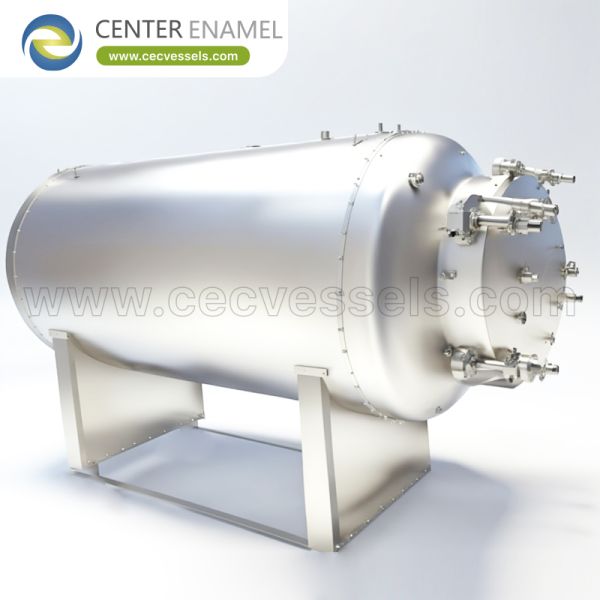
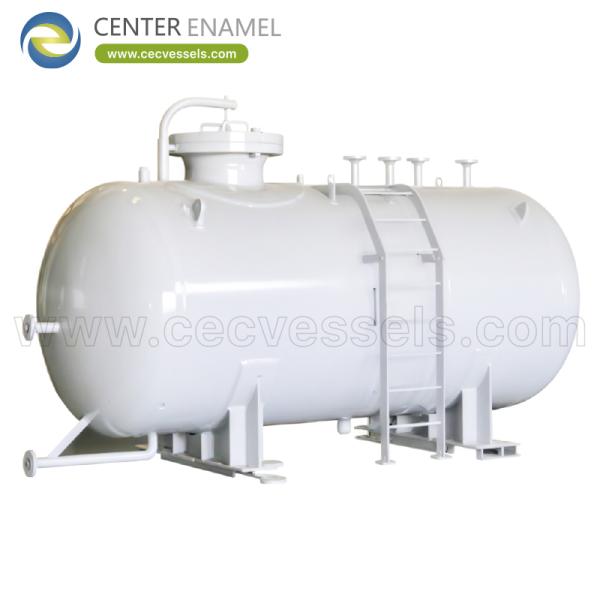
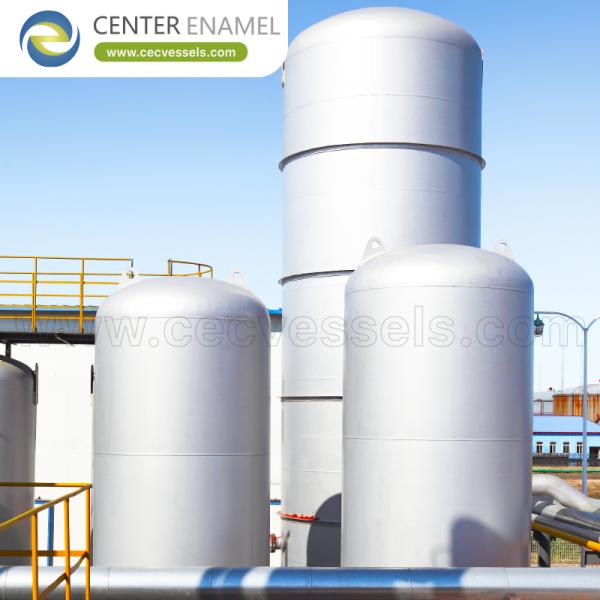
Polyolefins are the workhorses of the modern world. From the lightweight plastic of food packaging and everyday containers to the durable pipes of our infrastructure and the molded components in our cars, polyethylene (PE) and polypropylene (PP) are indispensable. To meet the immense global demand for these versatile materials, manufacturers require a production process that is not only powerful and efficient but also incredibly reliable. At the very heart of this high-volume, continuous manufacturing is a key technological cornerstone: State-of-the-Art Fluidized Bed Reactors (FBRs). These advanced reactors represent the pinnacle of chemical engineering, enabling the industry to achieve new levels of performance and consistency.
Polyolefins are produced through a process called gas-phase polymerization. This involves a chemical reaction where gaseous monomers (like ethylene or propylene) are converted into solid polymer chains. The fluidized bed reactor is the perfect vessel for this transformation.
At its core, an FBR operates by passing a gas stream, which contains the monomers and a catalyst, upward through a bed of solid catalyst particles and growing polymer granules. The gas velocity is carefully controlled to suspend the solid particles, causing the entire bed to behave like a vigorously boiling fluid. This state of "fluidization" is the key to the reactor's high performance, as it creates a dynamic and perfectly mixed environment for the chemical reaction to take place.
Modern FBRs used in polyolefin production have been meticulously engineered to provide a series of powerful benefits that translate directly into operational excellence.
Exceptional Heat Management: The polymerization of polyolefins is a highly exothermic reaction, meaning it releases a significant amount of heat. If this heat is not managed effectively, it can cause the polymer particles to melt and stick together, a condition known as agglomeration, which can lead to a costly reactor shutdown. The fluid-like nature of the bed provides excellent heat transfer, ensuring that the heat generated by the reaction is efficiently and uniformly distributed throughout the reactor. This maintains a stable, optimal temperature and allows the reactor to operate smoothly and continuously for long periods.
Uniform Product Quality: The constant, vigorous mixing of the fluidized bed ensures that every polymer particle is exposed to the same reaction conditions for the same duration. This leads to a highly consistent final product with uniform properties such as density, molecular weight, and particle size distribution. This level of control is essential for producing the wide range of polyolefin grades required by the market, from the stiff plastics used in bottle caps to the flexible materials in plastic films.
High Efficiency and Yield: By providing an optimal and stable environment for the reaction, FBRs achieve a very high conversion rate of the monomer into the polymer. The ability to precisely control variables like temperature, pressure, and gas composition allows operators to maximize the yield of the desired polyolefin product, optimizing resource utilization and economic performance. The continuous nature of the process further enhances overall productivity.
Operational Reliability: These reactors are built for continuous, 24/7 operation. The stable fluidization process minimizes the risk of flow disruptions and blockages. This inherent reliability, coupled with advanced process control systems, translates to high uptime and a consistent output, which is crucial for large-scale chemical manufacturing that cannot afford interruptions.
The adoption of state-of-the-art fluidized bed reactors (FBRs) is fundamentally transforming the landscape of polyolefin production. By providing a clean, efficient, and highly controllable environment for polymerization, these reactors are paving the way for a more productive, flexible, and reliable industry. Their innovative design enhances reaction control, minimizes impurities, and optimizes catalyst utilization, setting new standards for quality and operational excellence.
Process Versatility:
Modern FBRs offer remarkable process versatility, enabling manufacturers to produce a broad spectrum of polyolefin grades—from high-density polyethylene (HDPE) and linear low-density polyethylene (LLDPE) to polypropylene (PP)—simply by fine-tuning process parameters and catalyst systems. This adaptability not only streamlines production lines but also provides a strategic advantage in a competitive market, allowing producers to rapidly shift output in response to evolving consumer demands and emerging applications.
Scalability for Global Growth:
Designed with scalability in mind, fluidized bed reactors can be expanded seamlessly to accommodate the surging global demand for polyolefins. Their ability to handle massive throughputs without compromising process stability or product consistency makes them a future-proof technology, essential for sustaining the supply chains of countless industries—including packaging, automotive, construction, and consumer goods—across the world.
Sustainability and Efficiency:
Beyond production capacity and flexibility, FBRs contribute significantly to the sustainability of polyolefin manufacturing. Their efficient heat and mass transfer properties reduce energy consumption and waste generation, while precise process control enhances catalyst efficiency, minimizing raw material usage. These factors collectively support greener manufacturing practices and help meet increasingly stringent environmental regulations.
In conclusion, state-of-the-art fluidized bed reactors are far more than just manufacturing equipment; they are the technological backbone of the polyolefin industry. Embodying the principles of efficiency, reliability, and sustainability, they ensure that the materials we rely on every day are produced with the highest quality and consistency. By driving innovation and operational excellence, FBRs are powering a more productive, adaptable, and sustainable future for polyolefin manufacturing worldwide.