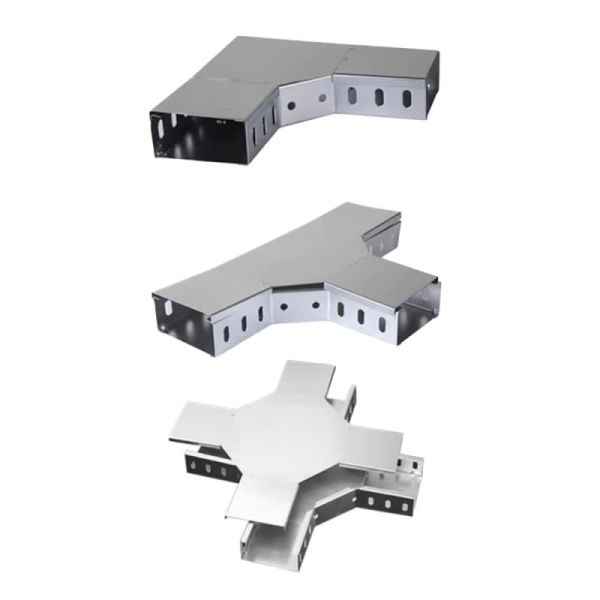
90 Degree Cable Tray Bend is a standard cable tray fitting designed to change the cable route direction by 90 degrees, ensuring smooth, safe, and organized cable management within a cable tray system

Bending 90 Degree Cable Tray Bend Advantages
1. Space Efficiency
In areas where space is limited, 90-degree bends help in routing cables more efficiently. They minimize the need for long stretches of cable trays, which is especially beneficial in facilities where space optimization is crucial.
2. Improved Cable Protection
Cables are generally susceptible to damage from sharp turns or excessive tension. 90-degree bends allow for smoother transitions, reducing the risk of cables getting tangled, stressed, or even short-circuiting.
3. Easy to Install
Prefabricated 90-degree cable tray bends can be easily installed, reducing labor time. Unlike custom-built bends, these standard parts fit into place with minimal adjustments, speeding up the installation process.
4. Cost-Effective
Using bends can reduce the overall cost of installation by decreasing the need for additional materials or supports, as they allow for more efficient space use. It also reduces the time spent on custom installations.
5. Aesthetic Appeal
When installed properly, 90-degree bends make the cable tray system look cleaner and more organized. A neat cable tray not only improves the appearance of a facility but also ensures easier maintenance and troubleshooting in the future.
Routing Cables Around Obstacles: When cables need to bypass walls, columns, or other structural elements, a 90-degree bend helps in maintaining a clean and organized path.
Change of Direction: In large electrical or data systems, cable trays need to adapt to the layout of the building, often requiring multiple turns. A 90-degree bend allows for an efficient change in direction.
Space Optimization: These bends allow for the most efficient use of available space, ensuring that cables follow the most logical path while taking up minimal room.
Standard 90-Degree Bend: This is the most basic form, typically a smooth, consistent curve or angle that bends the tray at a right angle.
Reducing 90-Degree Bend: A variant where the bend changes size as well as direction. For example, you may reduce the width of the tray at the turn.
Tee 90-Degree Bend: Often used to create a junction, it connects three sections of trays at a 90-degree angle.