wire ladder rack
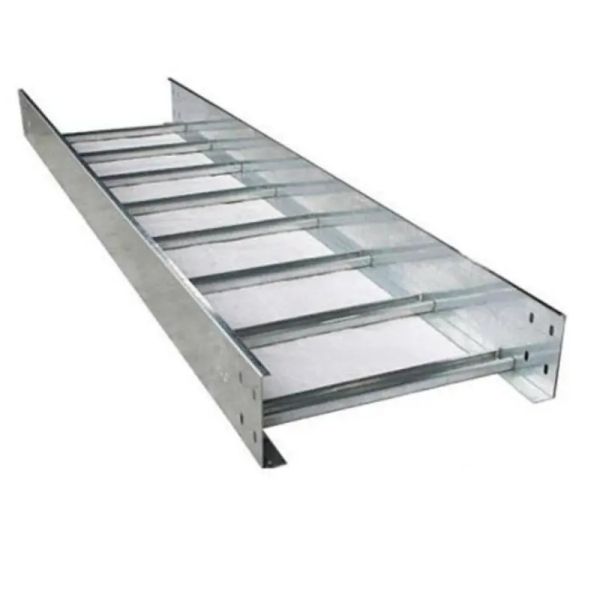
Wire Ladder Rack is the preferred cable pathway for high-density and critical environments due to its robust design. Here are its defining features:
Open Design: The signature "ladder" rungs allow for maximum heat dissipation and easy visual inspection of cables. This makes it ideal for high-bandwidth, heat-generating cables.
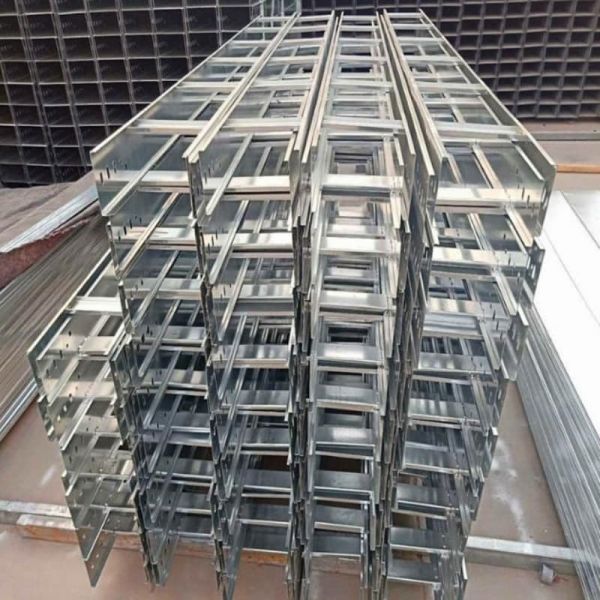
Superior Strength & Load Capacity: Constructed from heavy-gauge steel or aluminum, it is designed for long-span installations (up to 20 ft or more between supports) with very high load ratings (often 100+ lbs/ft).
Versatility & Scalability: Its modular design allows for creating custom runs with straight sections, horizontal/vertical bends, tees, and crosses. It easily adapts to complex building layouts.
Safety & Compliance: Top-tier products are tested and listed to critical safety standards like UL Classified and comply with TIA-569-D and BICSI recommendations for telecommunications pathways.

Choosing the right ladder rack involves evaluating several technical and project-specific factors.
1. Material & Finish
Steel (Pre-Galvanized or Hot-Dip Galvanized): Offers the highest strength. Hot-dip galvanized provides superior corrosion resistance for harsh environments.
Aluminum: Lightweight, naturally corrosion-resistant, and excellent for data centers where weight is a concern. Typically has a lower load capacity than comparable steel.
2. Load Capacity & Structural Design
Load Class (Per NEMA VE 1 / IEEE 1185): This is the most critical specification.
Class 1 (Light Duty): ~25-50 lbs/ft
Class 2 (Medium Duty): ~50-75 lbs/ft
Class 3 (Heavy Duty): ~75-100+ lbs/ft
Always calculate total cable weight with a safety factor (e.g., 1.5x).
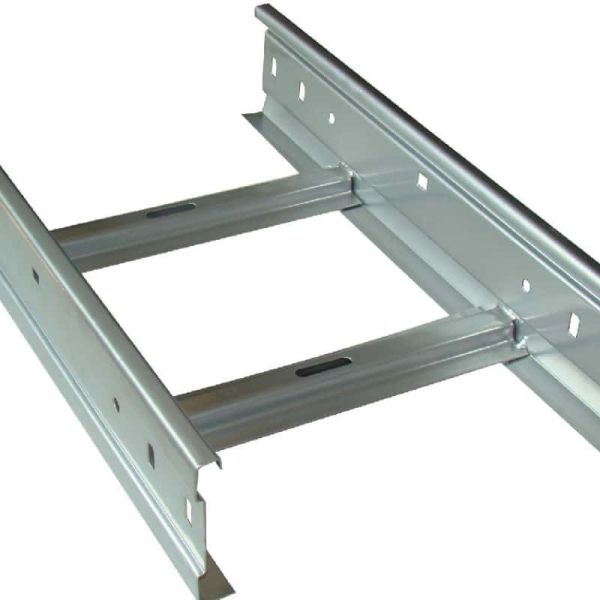
Rung Spacing & Design: Closer rung spacing (e.g., 6" vs. 9") provides better cable support, preventing sag for smaller-diameter cables like Cat 6/6A.
3. Dimensions & Configuration
Width: Common widths are 12", 18", and 24". Wider trays accommodate more cables and aid in segregation (e.g., separating fiber from copper).
Side Rail Height: Higher side rails (e.g., 3", 4", 6") prevent cable spillover and are required for heavier loads.
Standard Lengths: Typically 10 ft or 12 ft straight sections. Confirm what is manageable for your site access.
4. Installation & Project Factors
Support Span: Determine the maximum distance between supports (suspension rods). Heavier loads require shorter spans.
Accessories: Ensure availability of splice plates, horizontal/vertical bends, reducers, tees, crossovers, and drop-outs.
Support Hardware: Select appropriate threaded rod, beam clamps, wall brackets, or ceiling attachments compatible with your building structure.
Cable Fill & Bend Radius: Adhere to TIA/EIA-568 standards. Do not exceed 50% fill for planned capacity. Maintain minimum bend radii for cables (especially fiber optics).
This comparison helps validate if ladder rack is the right choice for your application.
| Feature | Wire Ladder Rack | Solid-Bottom Cable Tray |
|---|---|---|
| Best For | High-density data/telecom, long spans, heavy loads, need for ventilation. | Power distribution, sensitive cables needing protection from debris, smaller runs. |
| Ventilation | Excellent (open design). | Poor (solid design). |
| Cable Access | Easy from top or bottom. | Primarily from top. |
| Load Capacity | Very High (optimized structure). | High, but may require more supports. |
| Weight | Lighter (less material). | Heavier. |
| Cost | Generally higher. | Generally lower. |