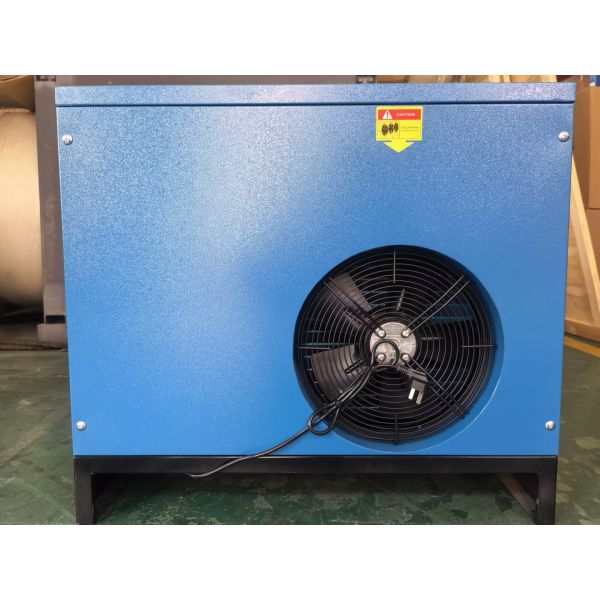
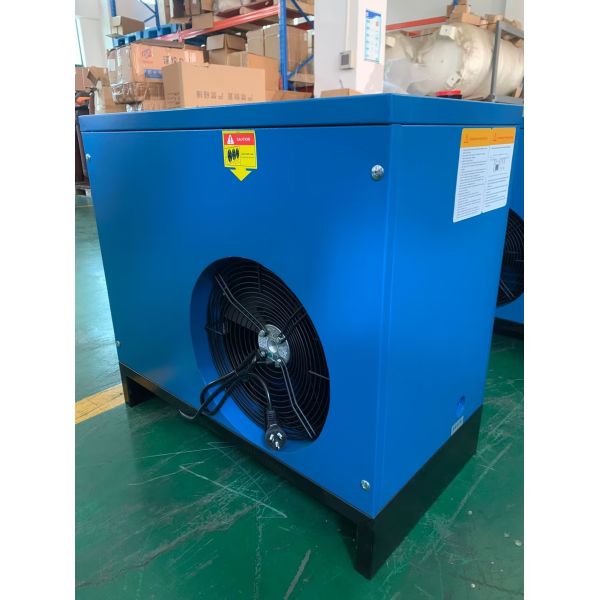
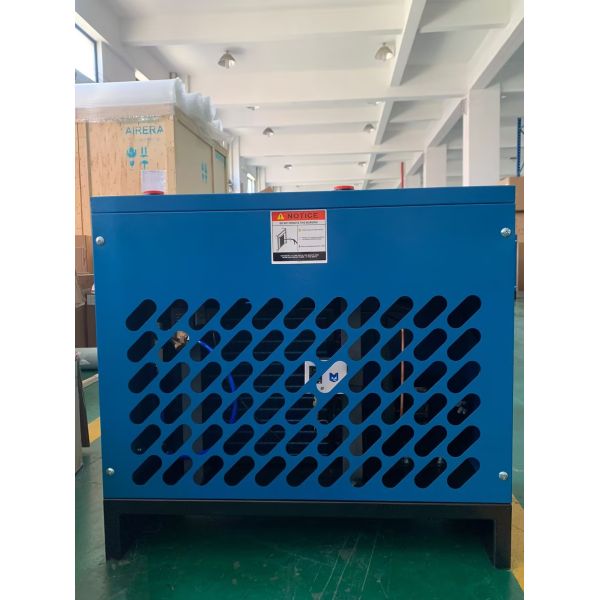
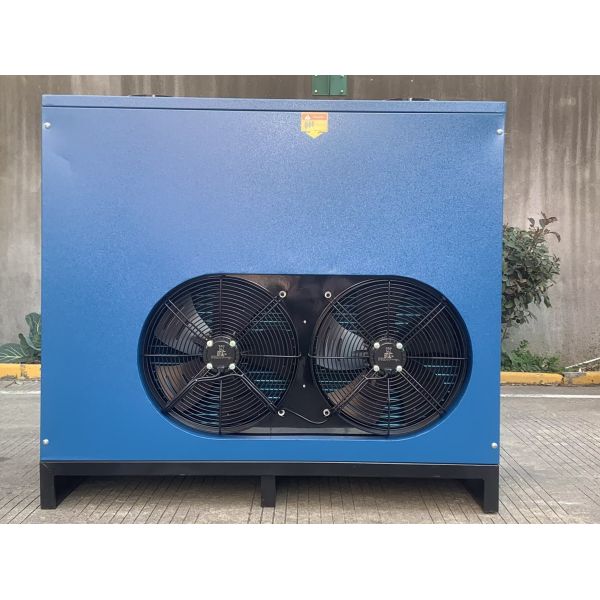
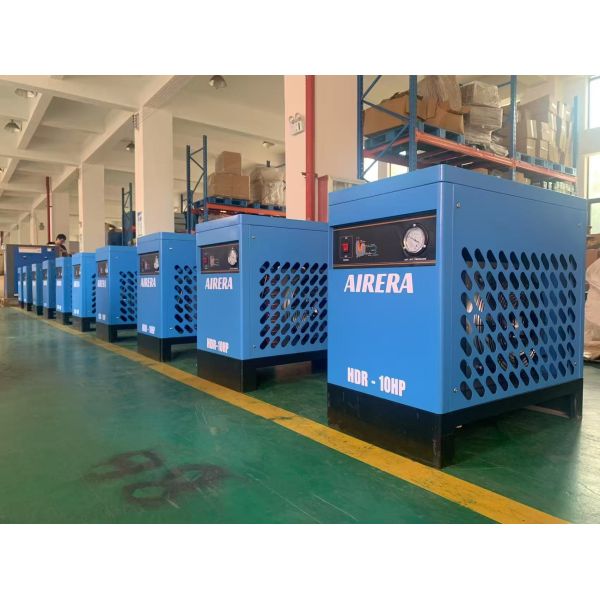
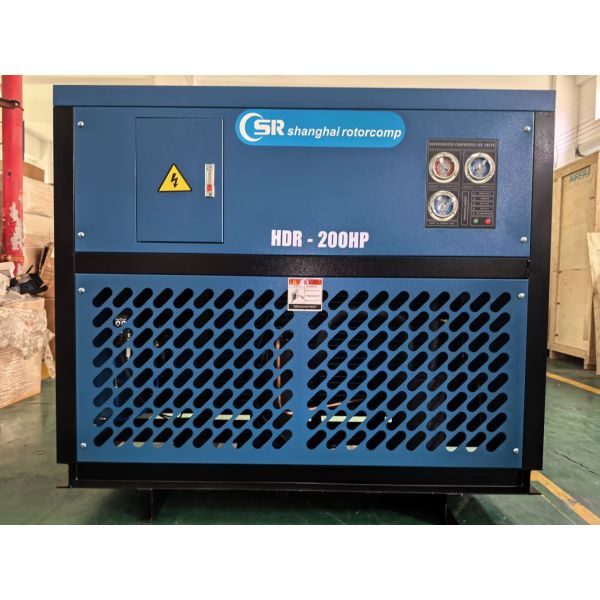
The AIRERA 2.4 Nm3/min wide-body air-cooled freeze dryer is engineered to thrive under the most extreme and demanding working conditions. Featuring an innovative wide-body structural design, this model substantially expands the internal heat exchange space and integrates an oversized, high-efficiency condensing system. Even during harsh summer months or in poorly ventilated spaces where the inlet air temperature soars to 55°C, it maintains exceptional heat dissipation, completely eliminating the headaches of over-temperature shutdowns and high-pressure trips. With robust refrigeration performance and powerful moisture removal, AIRERA ensures your compressed air system runs efficiently, continuously, and stably around the clock.
Stable performance under high-temperature conditions
This HDR series air dryer can withstand inlet air temperatures of up to 80 degrees Celsius. Even in high-temperature workshops during the summer or in scenarios where waste heat from air compressors is directly fed into the system, it can reliably maintain a dew point between 2 and 10 degrees Celsius, ensuring that dehumidification remains effective even when the inlet air is overheated.

Comprehensive Coverage Across All Flow Rates with Strong Adaptability
With models available for flow rates ranging from 1.2 Nm³/min to 65 Nm³/min, these units can be precisely matched to any application—from low-power air compressors in small repair shops to high-flow units in large factories. Pipe connections ranging from Rc1/4 to DN125 are all provided, eliminating the need for additional adapters or modifications.

Maintains a stable, low dew point to prevent corrosion caused by moisture in the air supply.
A high-quality heat exchange evaporator, paired with an automatic drain valve, thoroughly filters moisture from the compressed air, ensuring that the air used in laser cutting, metal spraying, and electronics manufacturing is free of water droplets—thereby preventing workpiece oxidation and paint bubbling.

| ITEM | UNIT | MODEL HDR-20HP |
|---|---|---|
| Capacity | Nm³/min | 2.4 |
| Motor | Power(kw) | 1.0 |
| Power Supply | V | 220/1/50 |
| Air Connection |
Rc1 |
|
| Dimension | L×W×H in mm | 700×450×830 |
| Weight | kg | 80 |
| Working pressure | Mpa | <=1.3 |
| Max. inlet temperature | ℃ | 80 |
| Max. ambient temperature | 40 | |
| Min.ambient temperature | 5 | |
| Cooling type | Air-cooling or Water-cooling | |
| Refrigerant | R22 | |
| PDP | 2~10°C |

2.4 Nm³/min belongs to small-to-medium flow rates. Why is its heat dissipation pressure under a 55°C high-temp inlet greater than smaller models? How does AIRERA solve this?
As the flow rate increases to 2.4 Nm³/min, the total amount of heat and moisture brought in multiplies when the inlet air reaches 55°C, placing extreme demands on the air-cooled condenser's heat rejection. AIRERA solves this by upgrading to a high-power fan and optimizing the airflow paths within the wide-body chassis to achieve stronger air convection. This allows the machine to expel this multiplied heat much faster under the same ambient temperature, ensuring no shutdowns due to heat accumulation.
Does AIRERA's wide-body freeze dryer consume more power since it can run stably at a 55°C high-temperature inlet?
On the contrary. Although the machine maintains operation under extreme conditions, thanks to its internal low-pressure-drop wide-body flow channels and high-EER compressor, the total pressure drop of the compressed air is extremely low. This means the upstream air compressor doesn't need to raise its discharge pressure to overcome dryer resistance. From a system-wide perspective, it actually avoids power waste caused by frequent trip-restarts or excessive resistance.
Tailored for dusty environments, AIRERA's wide-body design not only expands the heat dissipation area but also optimizes the spacing and arrangement of the condenser fins, making them less prone to dust accumulation and extremely easy to clean. Meanwhile, the powerful air-cooling system combined with a high-volume fan creates a certain "self-purging" effect that effectively reduces dust adhesion, ensuring highly efficient heat dissipation and zero tripping under the dual challenges of 55°C inlet air and harsh surroundings.