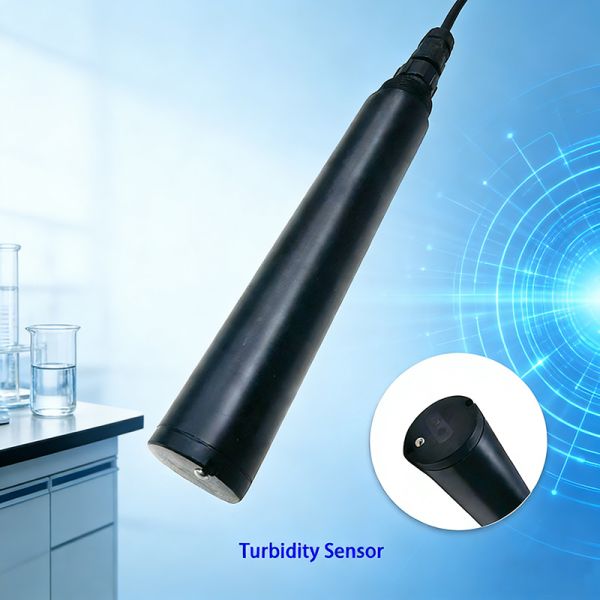
ZONEWU LoRaWAN Water Quality Turbidity Sensor
Product Features:
This LoRaWAN turbidity sensor has an industrial grade IP68 protection level and a self-cleaning lens structure as its core, completely solving the industry problems of easy scaling and frequent maintenance requirements in long-term underwater monitoring.It supports LoRaWAN long-distance wireless transmission, eliminating the need for complex wiring and enabling large-scale deployment in outdoor environments without network coverage. The sensor adopts the ISO standard 90° scattering method, combined with automatic temperature compensation, ensuring high-precision measurement from drinking water to aquaculture water bodies. With ultra-low power consumption and flexible remote configuration capabilities, it is an ideal choice for realizing unattended online monitoring in scenarios such as smart water utilities and smart fisheries.
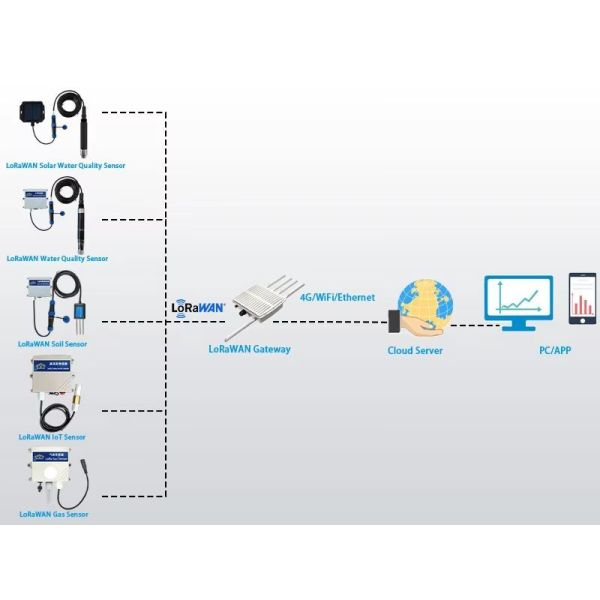
- Core features:This LoRaWAN Turbidity Sensor adheres to industrial-grade design standards and features an IP68 ultra-high protection rating, enabling long-term stable operation even when fully submerged in water, making the LoRaWAN Turbidity Sensor resilient to harsh underwater conditions. The unique self-cleaning blade structure of the LoRaWAN Turbidity Sensor represents a significant technological breakthrough, effectively preventing microbial attachment and sediment accumulation from interfering with the optical lens during prolonged monitoring, thereby greatly extending maintenance intervals and addressing the frequent manual cleaning requirements of traditional turbidity sensors. The LoRaWAN Turbidity Sensor supports the standard LoRaWAN 1.0.3 protocol and LoRa TDMA ad-hoc networking mode, with global multi-band compatibility, allowing remote wireless data transmission without complex wiring—ideal for large-scale deployment in areas lacking network coverage, such as outdoor environments and fish ponds. A default 5-meter waterproof cable is available for customization, along with various mounting brackets, enabling rapid deployment of the LoRaWAN Turbidity Sensor in different scenarios including immersion and pipeline configurations.
- Technical advantages:The LoRaWAN Turbidity Sensor employs the ISO-standard 90° light scattering method, featuring high detection accuracy and excellent repeatability, with a measurement range covering from low-turbidity drinking water sources to high-turbidity aquaculture water bodies. The built-in temperature sensor enables automatic compensation in the LoRaWAN Turbidity Sensor, effectively eliminating temperature-induced interference with turbidity readings to ensure the authenticity and reliability of monitoring data. The LoRaWAN Turbidity Sensor supports local serial port configuration and remote command issuance, allowing users to flexibly adjust sampling frequency and alarm thresholds. With outstanding power consumption control, the LoRaWAN Turbidity Sensor can achieve year-round unattended monitoring when paired with solar panels.
- Typical Applications:This LoRaWAN Turbidity Sensor is specifically designed for online water quality monitoring. In the aquaculture sector, the LoRaWAN Turbidity Sensor enables real-time monitoring of turbidity changes in fish ponds and shrimp tanks, helping farmers adjust feeding and water replacement strategies promptly to prevent disease outbreaks. For rural drinking water source monitoring, this LoRaWAN Turbidity Sensor can be used for turbidity early warning in reservoirs, well water, and other drinking water sources, ensuring safe water supply for residents. It is also suitable for surface water monitoring, influent and effluent surveillance in wastewater treatment plants, and daily management of recreational water bodies. With its high reliability, low maintenance costs, and wireless transmission advantages, the LoRaWAN Turbidity Sensor serves as an ideal choice for building modern smart water management systems.
Sensor Specification:
| Power Supply |
12-24VDC |
| Weight |
150g |
| Operating Temperature |
0~40℃ |
| Measuring Range |
0.00~50.00NTU
0.0~200.0NTU
0.0~1000.0NTU(Default )
0~4000NTU
|
| Measurement Error |
±5%FS(25℃) |
| Resolution Ratio |
0.01PH |
| Temperature measurement range |
0~40℃,Resolution Ratio:0.1℃
(When manually compensating for temperature, it is set to 25 ℃ by default.)
|
| Electrode usage cycle |
Normal use for 2 years |
| Material of electrode casing |
Corrosion-resistant plastic |
| Pressurization |
0.6Mpa |
|
Transmitter
Line length
|
Default 5m (other lengths can be customized) |
| Frequency |
CN470/IN865/EU868/RU864/US915/AU915/
KR920/AS923-1&2&3&4
|
| Mode |
OTAA Class A/C(Default ) |
| Reporting cycle |
10min(Default ) |
| Communication Protocol |
LoRaWAN |
|
Equipment information
(Reference)
|
AppEUI:0000000000000001
DevEUI:aaaa202404150001
AppKey:00001111222233334444555566667777
MAC Version:LoRaWAN 1.0.3
|
Packaging:
Single gross weight: 1.200 KG
Single package size: 37X26X5 cm
Product Description:


Quality assurance:
- Dedicated inspection throughout production with strict multi-stage quality control.
- Rigorous quality checks by professional engineers for stable product quality.
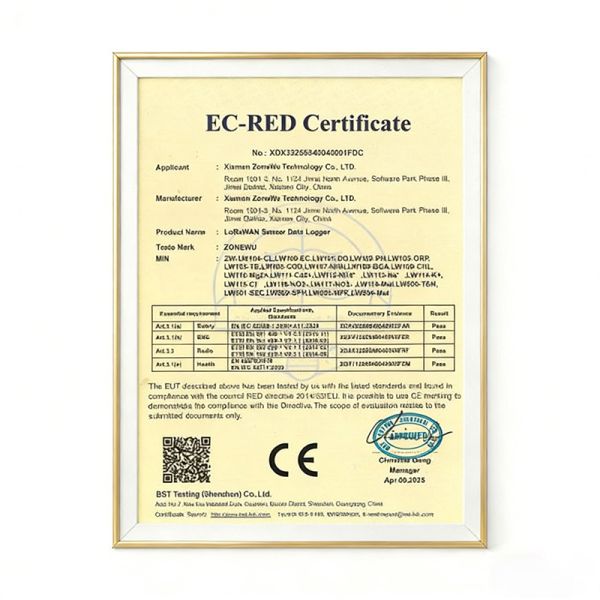
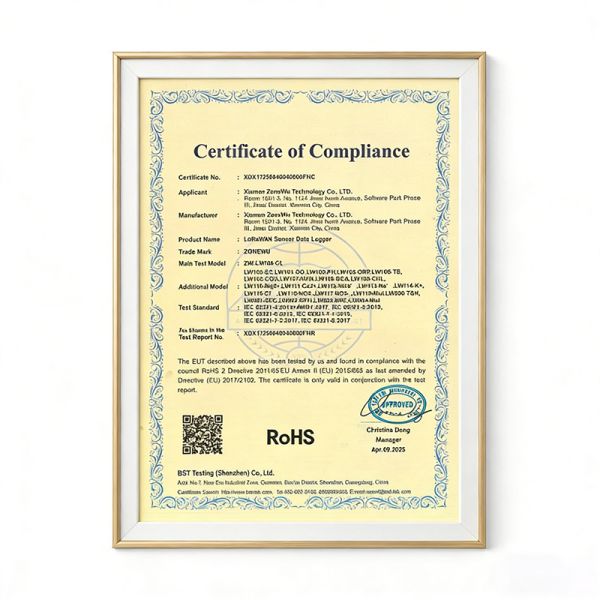
- All products certified with authoritative CE, RoHS and metrology standards.


Application:
This sensor is designed for online monitoring of water quality in outdoor and areas without network coverage. It can operate stably in turbid water bodies such as fish ponds and shrimp ponds for a long time, significantly reducing the frequency of manual cleaning and helping farmers monitor turbidity changes in real time to optimize feeding and water change strategies and prevent disease outbreaks; In rural drinking water monitoring scenarios, it can provide turbidity warnings for water sources such as reservoirs and wells, ensuring the safety of residents' water use; At the same time, it is also suitable for monitoring the inlet and outlet of sewage treatment plants, daily management of surface water and landscape water bodies, and remote data transmission and ultra-low power consumption operation through LoRaWAN wireless transmission. It is an ideal choice for large-scale, low-cost, unmanned monitoring in modern smart water systems.