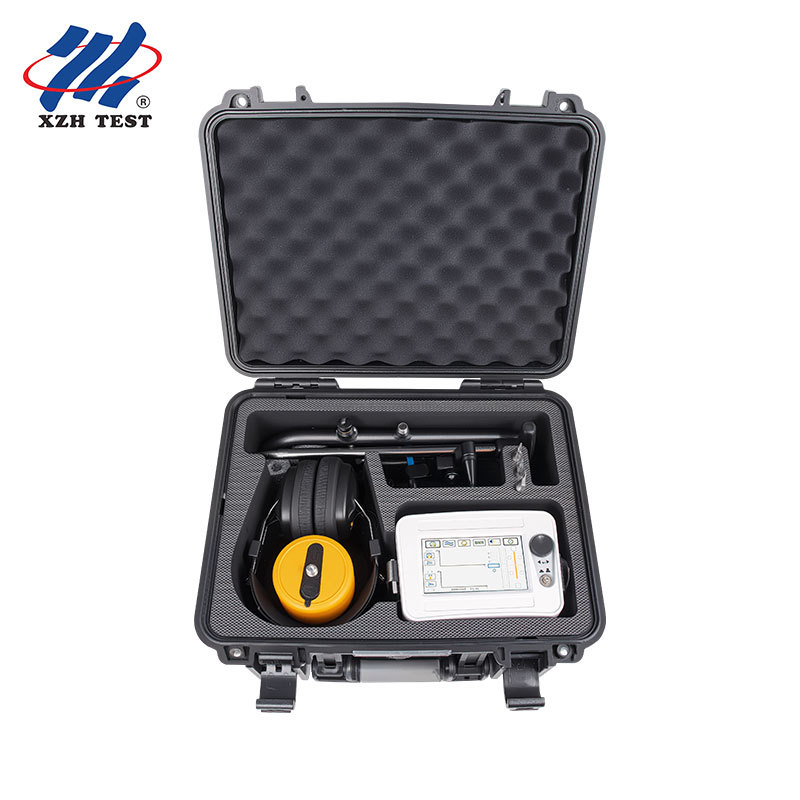
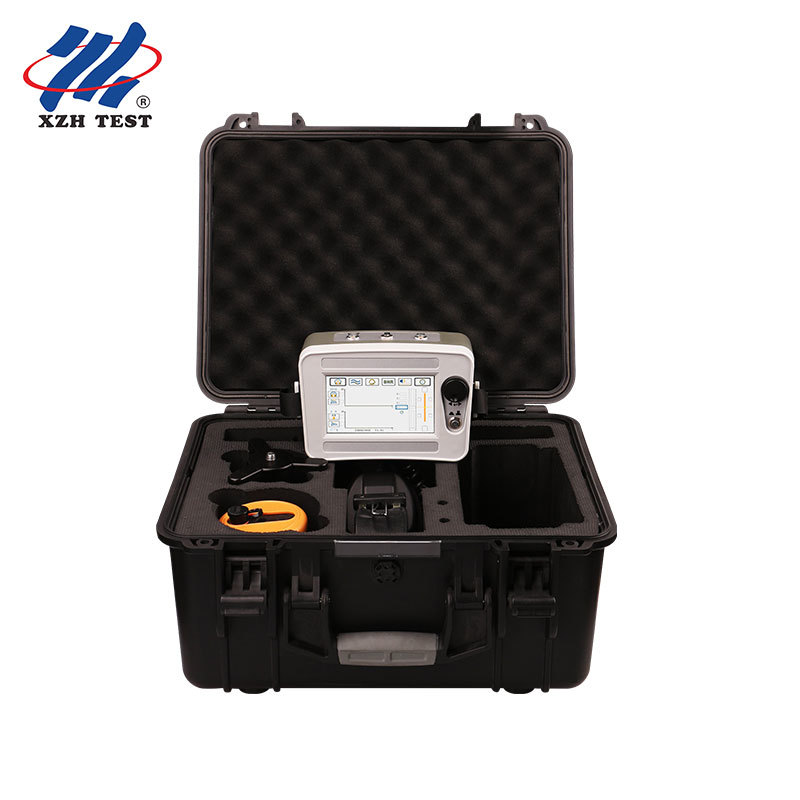
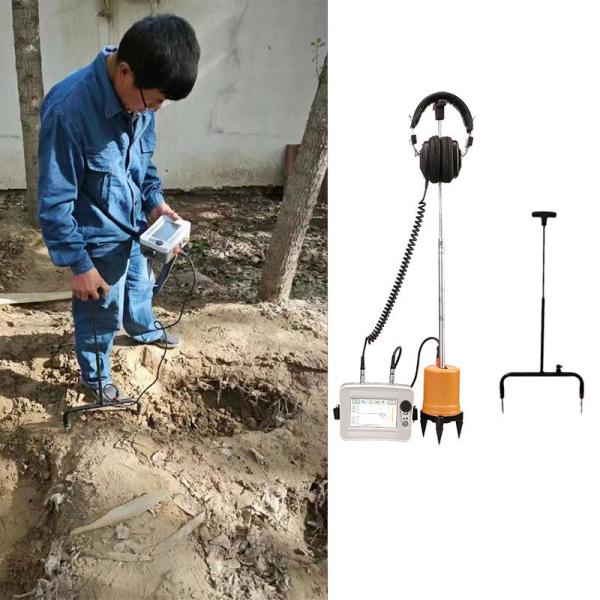
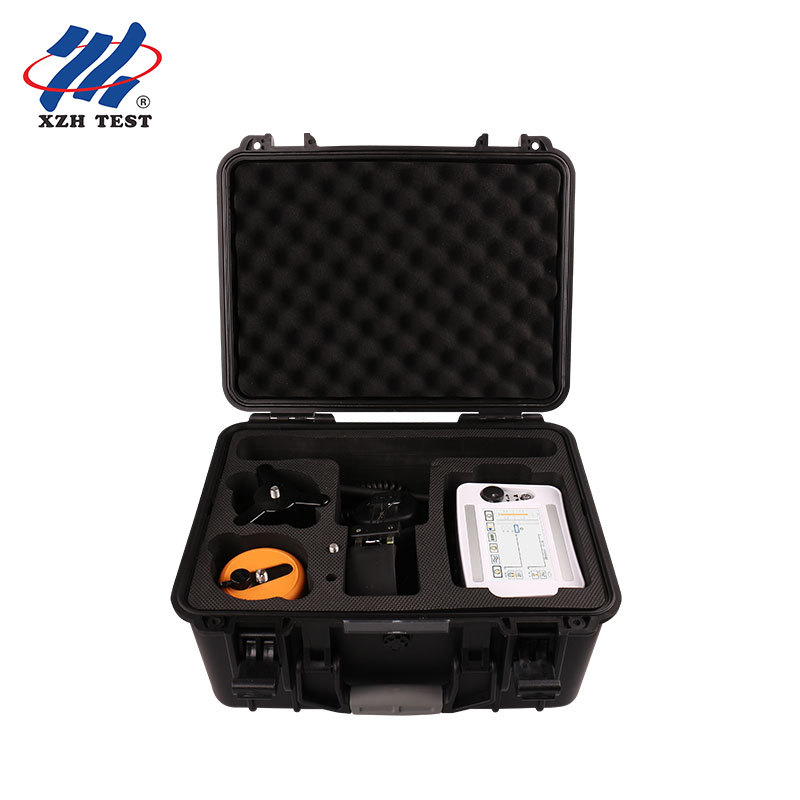
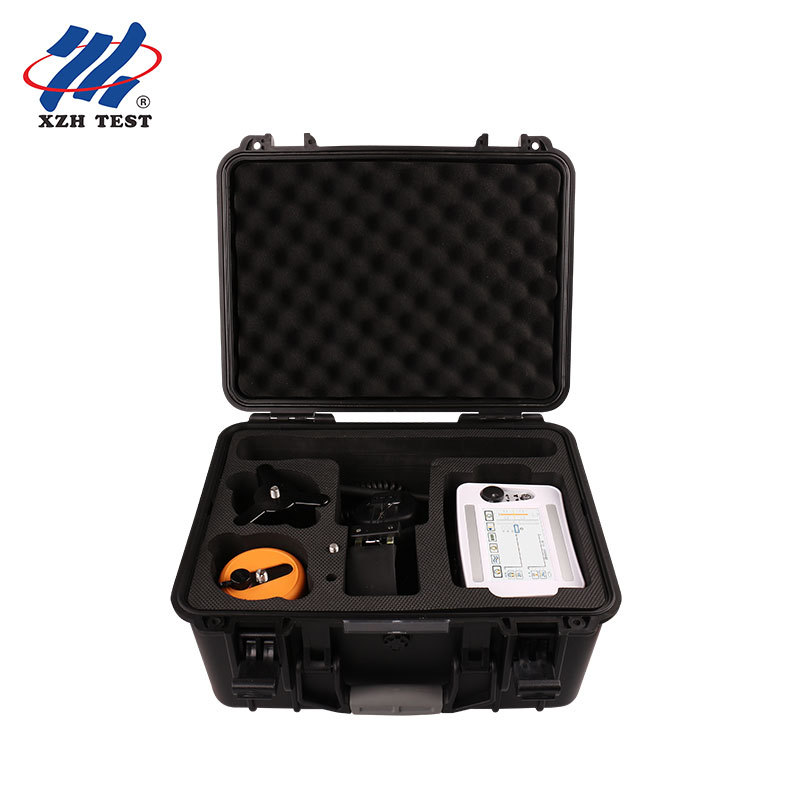
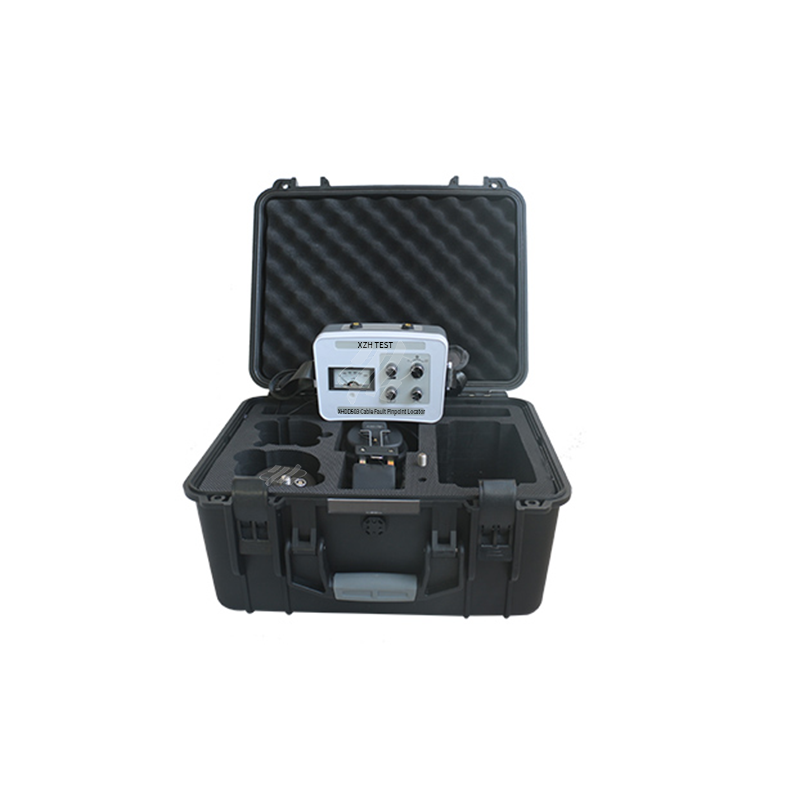
The XHDD503 Analog Cable Fault Pinpointer uses the principles of vibration pickup and electromagnetic induction to determine the specific location of a cable fault point. With the help of a high-voltage pulse generator, flashover discharge is carried out at the fault point. The vibration waves, sound waves and electromagnetic waves generated by the flashover discharge are picked up by the dedicated probe of the pinpointing instrument, amplified and processed by the instrument, displayed and output, and finally the precise location of the fault point is judged by the tester's hearing and vision — completing the task of accurately locating the cable fault point "right above the cable, within the range of rough measurement".
This pinpointing instrument is suitable for low-resistance, short-circuit, open-circuit and disconnection faults, as well as high-resistance leakage and high-resistance flashover faults, of power cables, high-frequency coaxial cables, street lamp cables and buried wires of various materials, cross-sections and media.
Key Features| Item | Specification |
|---|---|
| Magnification | 500,000 times |
| Positioning accuracy | Less than 0.1 m |
| Output impedance | 350 Ω |
| Working power supply | 4 × 3.7 V 3200 mAh standard batteries |
| Static current | < 10 mA |
| Standby time | More than 20 hours |
| Ambient temperature | −25 °C to 65 °C; relative humidity ≤ 90% |
The synchronous method of acoustic and magnetic fault location is a very accurate and unique method of fault location. Its principle is based on the traditional acoustic location method, with the addition of the detection and application of electromagnetic signals.
Under the action of high-voltage pulses, flashover discharge occurs at the fault point of the cable. When the fault point discharges, physical phenomena such as echo, vibration wave, sound wave, electromagnetic wave, infrared wave and instantaneous short circuit are produced. The cable fault tester detects the flashover discharge at the fault point: the echo and instantaneous short-circuit phenomenon can be used to complete the rough measurement of the fault point, while the pinpointing instrument uses the vibration wave, sound wave and electromagnetic wave generated by the flashover discharge to complete the precise positioning of the fault point.
The instrument uses an independent design of the acoustic and magnetic channels with separate power supply, which greatly improves the anti-interference ability and makes it suitable for various fault sites. Because of the large magnification and high sensitivity, it is especially suitable for locating deeper fault points; its trade-off is that the background noise is relatively large.
Usage Summary Wiring with the high-voltage generatorThe acoustic and magnetic synchronization pinpointing requires a high-voltage impact signal generator working in a periodic discharge state. Wiring methods include the phase-to-armored method (preferred when there is phase-to-ground insulation damage, as discharge-sound attenuation is small), the phase-to-phase method (for a simple phase-to-phase fault without combined grounding), and the wiring method for a simple disconnection fault.
Selecting the pinpointing areaBefore pinpointing, the cable path should first be clear; if the drawings and data are incomplete, path detection should be carried out and marks should be made. Based on the distance-measurement results and considering the cable-head plate margin and terrain, the fault point location is roughly determined, generally within (distance-measurement value ± 50 m). After ensuring the fault point is penetrated and the discharge cycle of the high-voltage pulse generator is 3–5 seconds, start pinpointing directly above the cable in the selected area.
Pinpointing stepsDuring the whole process, keep the probe directly above the cable and within the rough-measurement range. With the volume adjustment and level adjustment unchanged, when the signal strength from point A1 to point A2 gradually weakens, the point B where the earphone sound is the loudest and the meter needle swings the strongest and synchronized with the sound is the fault point.
Precautions & Common FaultsNote: if an FM radio signal is occasionally heard at pinpointing, this indicates the instrument is working normally and does not affect the work; it may be improved by adjusting the "frequency adjustment" knob.
Q1. What does the XHDD503 do?
It is an analog-meter cable fault pinpointer that uses vibration pickup and electromagnetic induction to determine the specific location of a cable fault point. With a high-voltage pulse generator it induces flashover discharge at the fault, and the vibration, sound and electromagnetic waves are picked up by the probe and processed by the instrument, so the tester can judge the precise point by hearing and vision, directly above the cable within the rough-measurement range.
Q2. Which faults and cables is it suitable for?
It suits low-resistance, short-circuit, open-circuit and disconnection faults, as well as high-resistance leakage and high-resistance flashover faults, of power cables, high-frequency coaxial cables, street lamp cables and buried wires of various materials, cross-sections and media.
Q3. What makes its anti-interference strong?
The sound and magnetic channels are designed separately and powered separately, and the zero level can be adjusted arbitrarily. Because of the large magnification and high sensitivity it is especially suitable for locating deeper fault points, though its background noise is relatively large.
Q4. What accuracy and working conditions can be expected?
Positioning accuracy is less than 0.1 m, with a magnification of 500,000 times and an output impedance of 350 Ω. It runs on 4 × 3.7 V 3200 mAh standard batteries with a static current under 10 mA and more than 20 hours of standby, at −25 °C to 65 °C and relative humidity ≤ 90%, and the sensor is waterproof to IP65.
Q5. What must be noted, and what is included?
Turn the working-mode knob to "O" when finished; charge the battery when the voltage is insufficient (charge it outside the instrument with the dedicated charger; about 4 hours for a full charge); do not disassemble the probe or the instrument; and do not place the sensor on the cable body. The package includes the cable fault pinpointer, headphones, probe, audio line and charger, with a one-year free warranty and lifetime maintenance and technical service