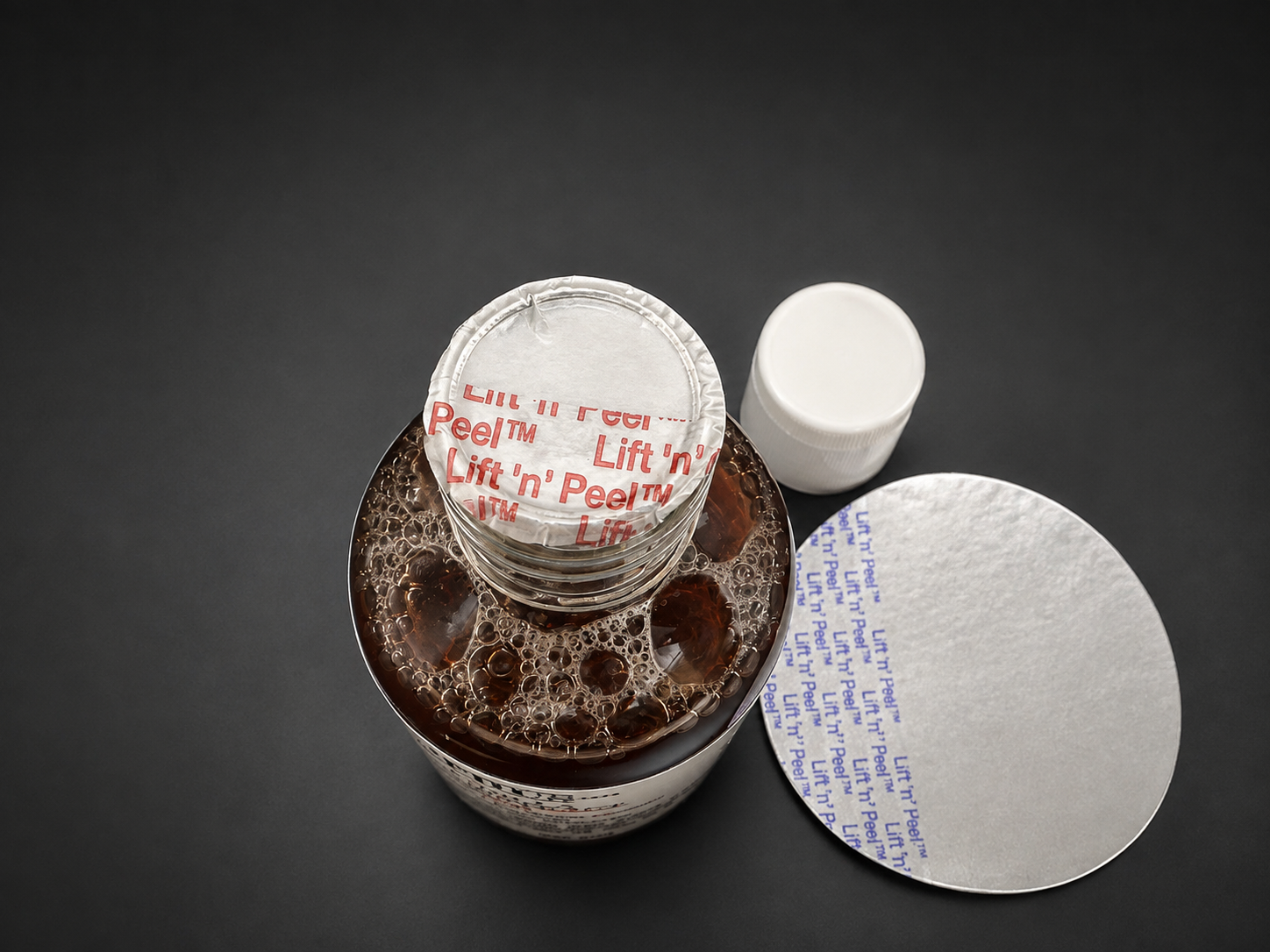
Specifications
Surfacefinish :
Smooth or Embossed
Single Package Size :
Can be customized
Place of Origin :
CHINA
Single Gross Weight :
0.900 g
Model Number :
/
Paperboard Properties Uom :
Value
Function :
Leak-proof and Tamper-evident Seal
Productname :
Cap Seal Liner
MOQ :
20000PCS
Delivery Time :
7-10WORK DAYS
Environmentalfeature :
Recyclable and Eco-friendly Options
Sealstrength :
Strong Adhesion to Container Rim
Usageindustry :
Pharmaceutical, Food & Beverage, Cosmetics
Payment Terms :
T/T
Thickness :
0.2mm - 0.5mm
Shape :
Round
Price :
0.1-1USD/PCS
Material :
Foil, Foam, or Combination
Temperature Resistance :
Up to 120°C
Supply Ability :
5000000PCS/DAY
Environmentalfriendly :
Recyclable Materials
Certification :
ISO9001
Packaging Details :
Bulk Packaging/Bag Packaging
Brand Name :
XINXIA
Coloroptions :
Silver, White, or Custom Colors
Description

Product Overview

The XINXIA PE Foam Liner with Single-Side PTFE Film is a custom closure sealing solution designed for containers holding corrosive, reactive, or chemically aggressive liquids. The liner combines a compressible PE foam layer with a chemical-resistant PTFE film facing. The PE foam compensates for minor dimensional variations between the cap and container opening, while the PTFE contact layer helps reduce direct chemical exposure to the foam and improves resistance to many acids, alkalis, solvents, cleaning agents, and industrial chemicals.

Available in thicknesses from 0.5 mm to 4.0 mm, the liner can be die-cut into customized diameters and shapes to match different caps, bottle mouths, jerry cans, and chemical containers. It is suitable for B2B packaging manufacturers, chemical producers, filling plants, and closure suppliers seeking a reliable liner for corrosive liquid sealing. Material compatibility, cap torque, container finish, storage conditions, and transportation requirements can be evaluated through sample testing before mass production.

Cause: Why Corrosive Liquid Packaging Requires a Specialized Liner

Corrosive liquids present greater packaging challenges than ordinary food, cosmetic, or household products. When a standard foam liner is exposed directly to an aggressive chemical, the liquid or vapor may cause swelling, softening, discoloration, shrinkage, loss of elasticity, or deterioration of the sealing surface.

Several common problems may occur when an unsuitable cap liner is used:

  • Chemical vapor attacks the liner material.
  • Liquid leakage occurs during storage or transportation.
  • The liner loses compression after repeated temperature changes.
  • Irregular bottle mouths create incomplete contact areas.
  • Low cap torque results in insufficient sealing pressure.
  • Excessive torque permanently deforms the foam.
  • Chemical residue accumulates around the container opening.
  • The liner sticks to or separates from the bottle mouth.

Industrial liquids may also experience vibration, pressure variation, high-temperature storage, or long-distance transportation. These conditions place additional demands on the cap and liner system. A liner used for corrosive liquid packaging must therefore provide both chemical protection and sufficient compression recovery.

Solution: PE Foam Combined with a PTFE Contact Surface

The XINXIA single-side PTFE laminated PE foam liner uses a functional composite structure:

PTFE Film Layer

The PTFE film is positioned toward the packaged liquid. It provides a low-surface-energy contact layer with excellent resistance to many chemically aggressive substances. It helps isolate the PE foam from direct contact with corrosive liquid and vapor.

PE Foam Layer

The PE foam provides thickness, cushioning, and compression. When the cap is tightened, the foam conforms to the container rim and helps compensate for small surface irregularities or dimensional tolerances.

Together, these layers provide a practical sealing solution for chemical bottles and containers. The structure can be customized according to the closure design, bottle-mouth dimensions, liquid composition, cap torque, storage temperature, and transportation conditions.

This liner is intended for compression sealing inside a cap. It should not automatically be treated as an induction sealing liner or pressure-venting liner unless an additional functional structure is specifically designed.

Specifications

Item Specification
Product Name PE Foam Liner with Single-Side PTFE Film
Brand XINXIA
Structure PTFE Film / PE Foam
Foam Material Polyethylene Foam
Contact Surface PTFE Film
Total Thickness 0.5–4.0 mm
Diameter Customizable
Shape Round, ring-shaped, oval, rectangular, or custom die-cut
Color White or customized subject to material availability
Sealing Method Cap compression sealing
Main Function Sealing, cushioning, and chemical-contact protection
Primary Application Packaging of corrosive and chemically aggressive liquids
Container Type Plastic bottles, chemical containers, jerry cans, drums, and custom packaging
Customization Thickness, diameter, shape, structure, and packaging
Sample Testing Available and recommended before mass production
Storage Recommendation Store in a clean, dry environment away from direct sunlight and excessive heat

Specifications can be adjusted according to the actual container, closure, and chemical medium. Final chemical resistance must be confirmed through compatibility testing with the customer’s actual formulation.

Applications

The single-side PTFE laminated PE foam liner can be evaluated for various chemical and industrial packaging applications, including:

  • Acid and alkaline liquid containers
  • Industrial cleaning chemicals
  • Laboratory reagent bottles
  • Agricultural chemical packaging
  • Pesticide and fertilizer containers
  • Corrosive chemical bottles
  • Bleach and disinfectant packaging
  • Detergent and descaling-agent bottles
  • Automotive chemical containers
  • Water-treatment chemical packaging
  • Specialty solvent packaging
  • Industrial maintenance liquids

PTFE offers broad chemical resistance, but no liner should be described as universally compatible with every chemical. Concentration, temperature, exposure time, vapor pressure, additives, and storage conditions can all affect sealing performance. Customers should provide the Safety Data Sheet or detailed formulation information whenever possible.

How It Works

The liner is inserted into the inner top surface of the cap, with the PTFE film facing the bottle opening and packaged liquid. When the cap is tightened, pressure is transferred from the cap to the PE foam layer.

The foam compresses and adapts to minor unevenness in the bottle rim. This creates continuous contact around the sealing surface. At the same time, the PTFE film acts as the primary chemical-contact surface and reduces direct exposure of the PE foam to the liquid or vapor.

Correct performance depends on the complete packaging system rather than the liner alone. Important factors include:

  1. Bottle-mouth flatness and finish
  2. Inner cap dimensions
  3. Liner diameter and thickness
  4. Cap thread design
  5. Application torque
  6. Chemical composition
  7. Filling temperature
  8. Storage and transportation conditions

For demanding applications, leakage, compression, chemical immersion, thermal cycling, inversion, and transportation simulation tests are recommended.

How to Choose the Correct Liner

1. Confirm the Bottle-Mouth Dimensions

Measure the inner diameter of the cap and the outside sealing diameter of the container opening. The liner must fit securely inside the cap without excessive movement, folding, or edge interference.

2. Select the Appropriate Thickness

Thicknesses from 0.5 mm to 4.0 mm are available. Thin liners are suitable for closures with limited internal space and relatively flat sealing surfaces. Thicker foam provides more cushioning and tolerance compensation but may require higher closure space and controlled torque.

3. Provide the Chemical Information

Please provide the liquid name, concentration, pH value, main ingredients, SDS, and expected storage temperature. This information helps us recommend a suitable structure for sample testing.

4. Confirm the Closure and Container Materials

The cap may be made from PP, PE, or another plastic, while the bottle may use HDPE, PP, PET, glass, or a specialized chemical-resistant material. The complete cap, liner, and bottle combination should be tested together.

5. Evaluate Actual Filling Conditions

Tell us whether the product is hot-filled, cold-filled, stored outdoors, transported by sea, or exposed to significant temperature changes. If the contents generate gas, a standard sealing liner may not be suitable. A separately engineered venting solution may be required.

6. Conduct Sample Testing

Before confirming a bulk order, test the liner using the actual liquid, cap, bottle, filling volume, and tightening torque. XINXIA can produce custom samples based on your drawing or physical closure sample.

FAQ

1. Can the diameter and shape be customized?

Yes. The liner can be die-cut into customized diameters and shapes, including round discs, rings, ovals, rectangles, and special profiles. Please provide a dimensional drawing or send cap and bottle samples for evaluation.

2. Is the liner resistant to all corrosive liquids?

PTFE is resistant to many acids, alkalis, solvents, and industrial chemicals, but compatibility cannot be guaranteed for every formulation or operating condition. Testing with the actual liquid is required before mass production.

3. Which side should face the liquid?

The PTFE film side should normally face the bottle opening and packaged liquid. The PE foam side faces the inside of the cap and provides cushioning and compression.

4. Can this liner release gas from the container?

The standard structure is designed for compression sealing and is not automatically breathable. If the contents generate gas, please provide the required airflow, pressure, liquid composition, and closure design. XINXIA can evaluate a customized venting liner structure.

5. What information is required for a quotation?

Please provide the liner diameter, thickness, required quantity, cap and bottle-mouth dimensions, chemical type, storage temperature, destination market, and any special testing requirements. Photos, drawings, or physical packaging samples can improve recommendation accuracy.

Send your message to this supplier
Send Now

0.5–4.0 mm Custom PE Foam Liner with Single-Side PTFE Film for Corrosive Liquid Container Sealing

Ask Latest Price
Surfacefinish :
Smooth or Embossed
Single Package Size :
Can be customized
Place of Origin :
CHINA
Single Gross Weight :
0.900 g
Model Number :
/
Paperboard Properties Uom :
Value
Contact Supplier
0.5–4.0 mm Custom PE Foam Liner with Single-Side PTFE Film for Corrosive Liquid Container Sealing

XINXIA New Material Co., Ltd

Verified Supplier
1 Years
jiangsu
Since 1995
Business Type :
Manufacturer
Total Annual :
500000USD-600000
Employee Number :
170~180
Certification Level :
Verified Supplier
Contact Supplier
Submit Requirement