Apparel Wet-Processing ETPs
Suitable for facilities seeking dependable color removal with a lower mineral-sludge contribution.

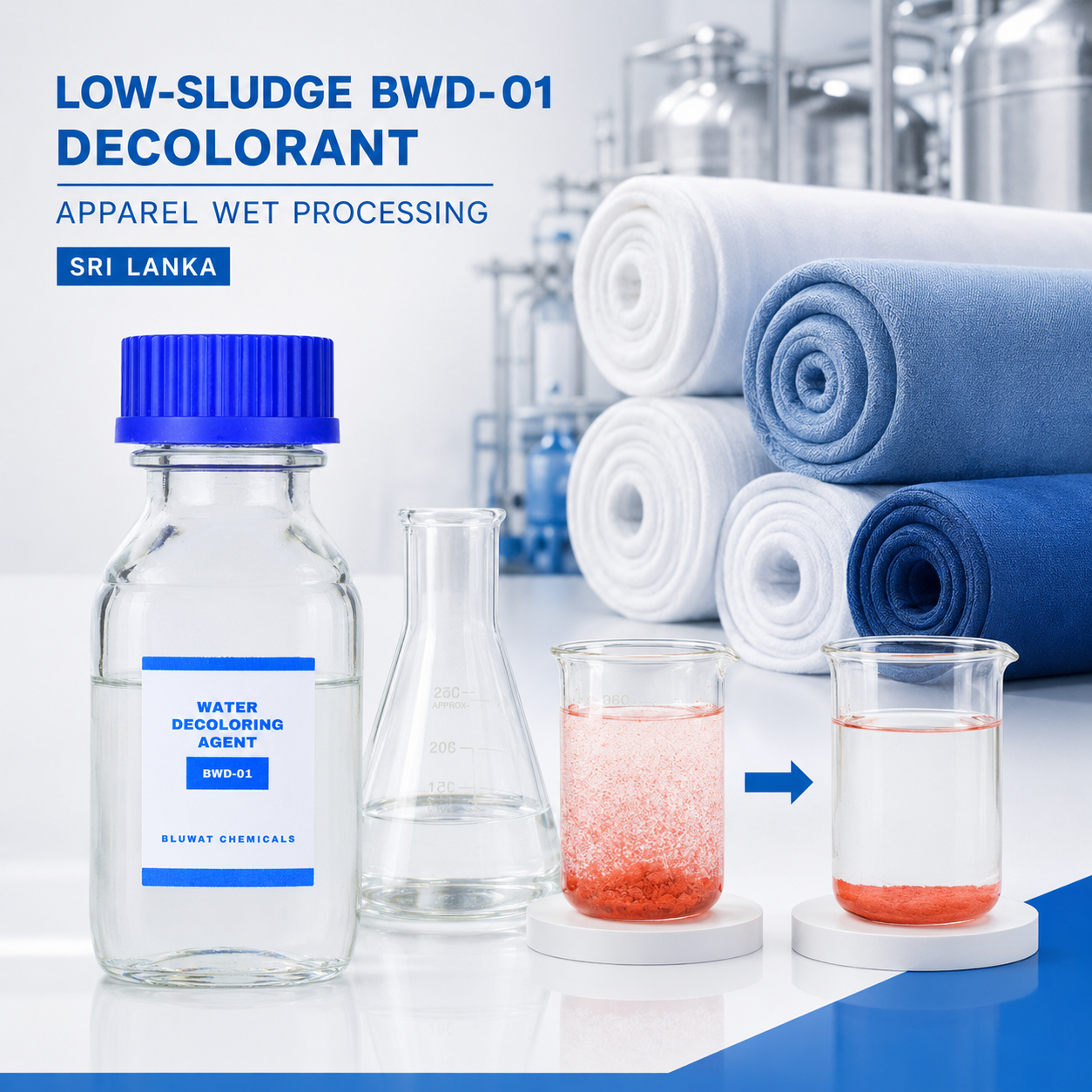
An organic cationic decoloring solution for mixed-fiber apparel wastewater, designed to support strong color removal, controlled sludge production and stable pretreatment before advanced treatment or selected water-reuse processes.
Textile wet processing in Sri Lanka does not create one uniform wastewater. Fiber type, dye class, shade depth, washing recipe and finishing chemistry can change the color and charge demand from one production batch to the next.
BWD-01 supplies strong cationic charge to destabilize negatively charged soluble dyes and fine color-bearing particles. It is especially relevant to reactive, acid and disperse dyes across mixed apparel materials.
Plants need dependable color removal without adding unnecessary inorganic sludge to an already optimized treatment system.
Conventional inorganic coagulation may remove suspended solids but leave a visible soluble-color fraction. Operators may then increase coagulant dosage, creating more sludge without proportional color improvement.
Screen BWD-01 as an organic decolorant that may reduce dependence on inorganic coagulants while maintaining strong color and flocculation performance.
The selected program should be based on actual wastewater rather than a universal dose. A controlled jar test identifies the point where charge neutralization, floc formation, separation speed and sludge production are balanced.
| Property | BWD-01 Specification |
|---|---|
| Chemical Name | Quaternary ammonium cationic polymer |
| Appearance | Colorless to yellowish translucent liquid |
| Solid Content | 50% min |
| Specific Gravity at 20 C | 1.1-1.3 |
| pH Value, 30% Solution | 3-6 |
| Viscosity at 25 C | 30-300 cps |
| Solubility | Soluble with water at any rate |
| Storage Temperature | 0-35 C |
| Standard Package | 30 kg or 250 kg plastic drum; 1250 kg IBC |
Technical note: Values are based on the Bluwat BWD-01 TDS. Confirm the supplied batch with its Certificate of Analysis and consult the SDS for handling and shelf-life details.
Suitable for facilities seeking dependable color removal with a lower mineral-sludge contribution.
Can be evaluated for reactive, acid and disperse dyes generated by different apparel materials.
Can support pretreatment before advanced oxidation, membrane treatment or selected water-reuse processes.
Cationic groups interact with negatively charged reactive, acid and disperse dyes across mixed apparel materials and colored colloids.
Reduced electrostatic repulsion allows dissolved or finely dispersed color bodies to associate.
Destabilized contaminants form visible aggregates; PAC may strengthen or densify the flocs where testing supports it.
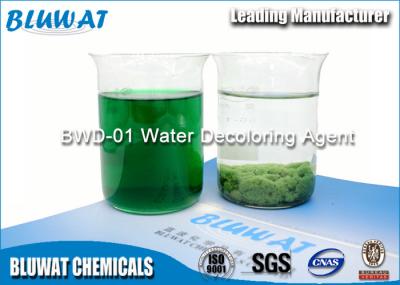
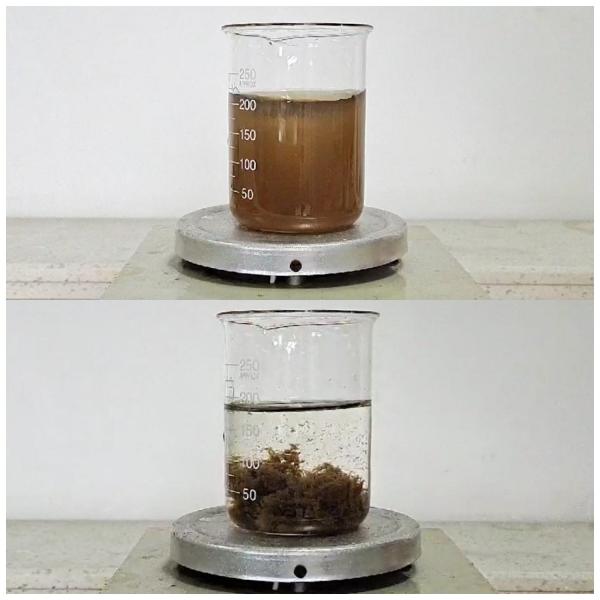
The resulting flocs are removed by sedimentation or air flotation, producing clearer treated water.
The BWD-01 TDS reports typical performance ranges in suitable applications. These are reference values rather than guaranteed results.
Actual performance depends on dye class, concentration, auxiliaries, pH, mixing, chemical sequence and separation equipment.
Compared with a high-dose inorganic-only program, BWD-01 may provide faster flocculation and settling and may reduce the inorganic contribution to sludge. Where sludge reduction is a project objective, compare dry solids, dewatering behavior and disposal cost.
For Asian textile markets, Bluwat supports drum and IBC shipments, production planning for regular consumption, and remote jar-test review using customer wastewater data and treatment photographs.
As an organic polymer, it may reduce the amount of inorganic solid introduced compared with high-dose mineral coagulants. Actual sludge reduction must be confirmed using the plant's own water and dewatering process.
It can be evaluated as a pretreatment color-removal step. Reuse suitability also depends on salts, dissolved organics, hardness and other parameters that BWD-01 is not designed to remove.
The TDS recommends dilution with 10 to 40 times water and identifies wastewater pH 7.5-8.0 as a useful starting range. Final dilution, pH and dose must be confirmed using the actual effluent.
No. BWD-01 and PAC should be prepared and dosed separately. PAC may be added before or after BWD-01 depending on the flocculation test and treatment process, but the concentrates should not be premixed.
Use a jar test with representative wastewater. Compare color, CODcr, turbidity, floc size, separation time and sludge volume. The best operating dose is the lowest stable dose that meets the plant's complete treatment objective.