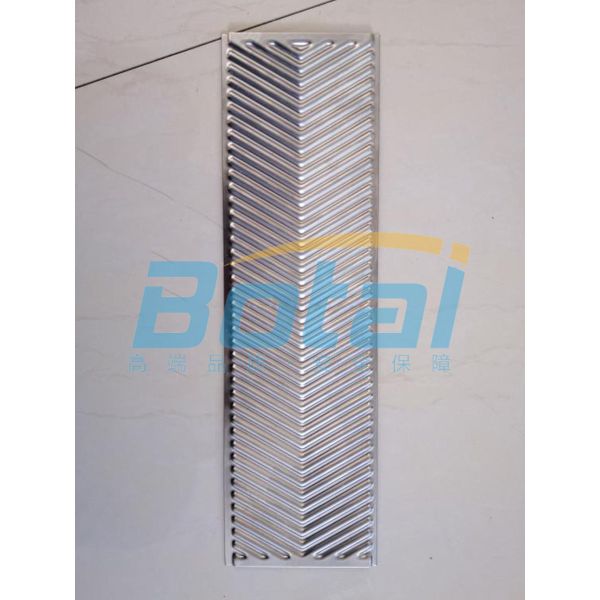
Plates and Gaskets for Plate Heat Exchangers
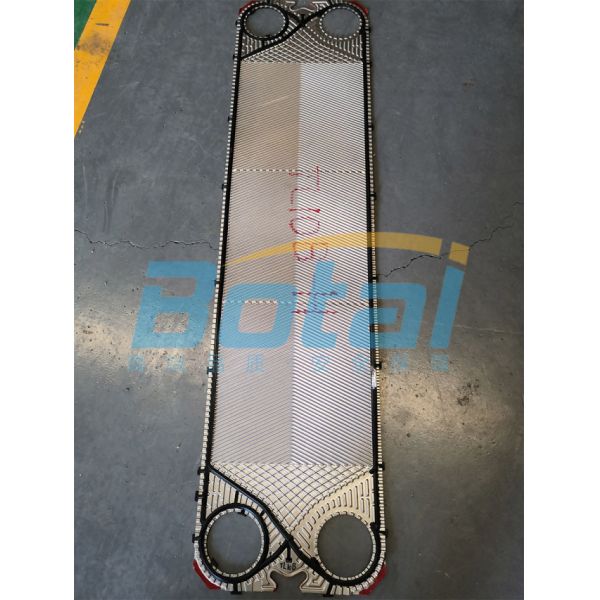
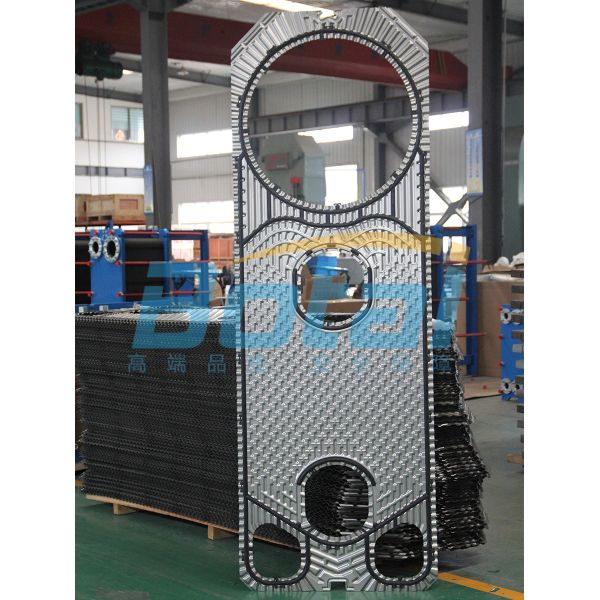
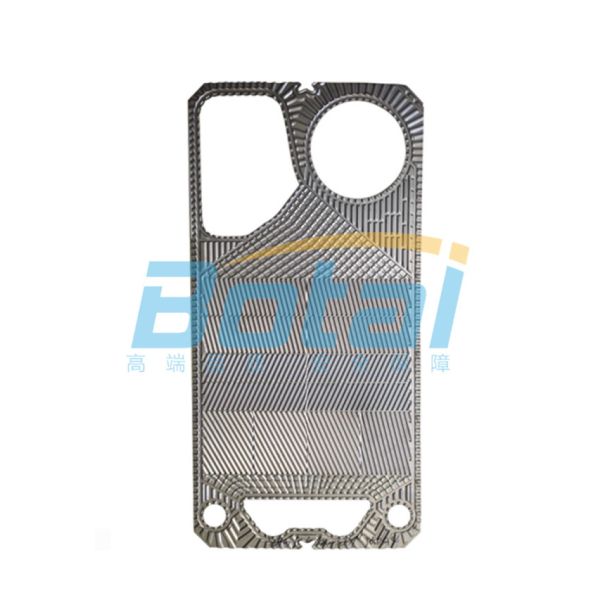
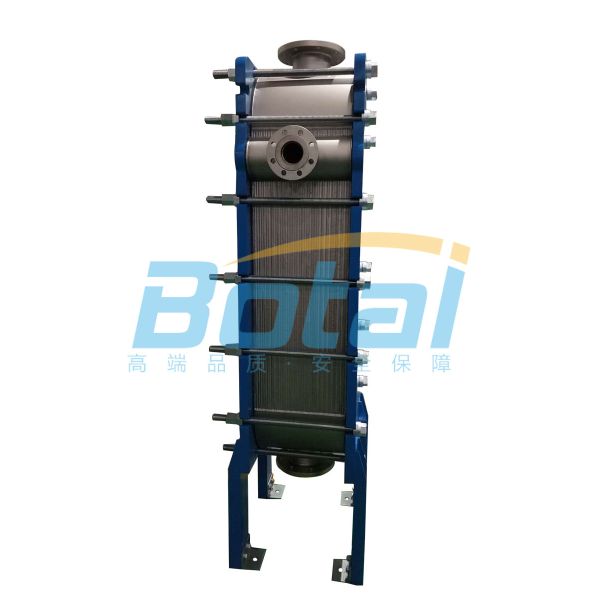
TS6-L plates and gaskets are essential components of plate heat exchangers, working together to ensure stable operation through two core functions:
|
Medium Isolation
Physical separation of plates combined with precise gasket sealing prevents cross-flow between hot and cold media, eliminating equipment failures and process contamination.
|
Efficient Heat Exchange
Special structural design enhances heat transfer efficiency, enabling precise temperature regulation by cooling hot media and heating cold media.
|
Plate Specifications and Characteristics
Composition and Structure
Each TS6-L plate consists of metal plate and sealing gasket components with complementary functions:
| Component |
Structural Design |
Core Functions and Advantages |
| Metal Plate |
Thin metal sheets with corrugations, sealing grooves, and corner holes via mold stamping |
- Heat Transfer Enhancement: Corrugated structure expands contact area and improves heat transfer coefficient
- Structural Reinforcement: Increases rigidity and pressure-bearing capacity
- Self-Cleaning: Turbulent flow reduces sediment accumulation
- Flow Channel Distribution: Corner holes and sealing grooves create dedicated fluid paths
|
| Sealing Gasket |
Custom-sized polymer gasket installed in plate groove |
- Sealing and Leakage Prevention: Fills plate gaps to prevent fluid leakage
- Flow Channel Partitioning: Seals corner holes to eliminate cross-flow risk
|
Material Selection for Plates
TS6-L metal plates are available in various corrosion-resistant materials for different industrial applications:
Stainless Steel Series
- 304/304L: General-purpose corrosion resistance for neutral media like water and air
- 316/316L: Superior acid and alkali resistance for chemical and food processing
- 254SMO: High-corrosion resistance for salt solutions and acidic wastewater
Special Alloy Series
- Titanium: Excellent corrosion resistance for seawater desalination and marine engineering
- Nickel: High-temperature and alkali resistance for caustic soda solutions
- Titanium-Palladium Alloy: Superior corrosion resistance for high-concentration strong acids
- Hastelloy: Resistant to extreme corrosive media for demanding industrial applications
Plate Manufacturing Process
TS6-L plates utilize one-time mold stamping forming with significant advantages:
- Ensures dimensional accuracy and structural consistency across all plates
- Enables uniform metal point contact for improved sealing stability
- Provides stable operation under high pressure and pressure shock conditions
Sealing Gasket Technical Parameters
Gasket Composition
TS6-L sealing gaskets are complex polymer composite systems with optimized components:
| Component Type |
Core Function |
Performance Impact |
| Rubber Polymer |
Base gasket material |
Determines basic elasticity, temperature resistance, and corrosion resistance |
| Vulcanizing Agent |
Crosslinks rubber molecules |
Enhances strength, hardness, and anti-aging properties |
| Filler |
Optimizes physical properties |
Improves wear resistance and pressure resistance while reducing costs |
| Anti-Aging Agent |
Slows aging rate |
Extends service life and reduces oxidation degradation |
| Processing Aid |
Improves manufacturing process |
Optimizes mixing, extrusion, and molding processes |
| Diluent |
Adjusts rubber compound viscosity |
Facilitates precise gasket forming and plate groove matching |
Rubber Material Performance Comparison
| Rubber Type |
Chemical Composition |
Core Performance Advantages |
Applicable Scenarios |
| Natural Rubber |
Extracted from Hevea brasiliensis latex |
Excellent elasticity, high mechanical strength, good wear resistance |
Normal temperature, low pressure, neutral media (civil HVAC systems) |
| Isoprene Rubber |
Polymerized from isoprene |
Performance similar to natural rubber with stable supply |
General conditions requiring stable supply and natural rubber performance |
| Styrene-Butadiene Rubber (SBR) |
Copolymer of butadiene and styrene |
Good aging resistance, better wear resistance, low cost |
General industrial sealing for non-strongly corrosive media |
| cis-Polybutadiene Rubber (BR) |
Polymerized from butadiene |
Excellent cold resistance, wear resistance, elasticity, and aging resistance |
Low-temperature environments and high dynamic load conditions |
Recommended Application Scenarios
TS6-L plates and gaskets adapt to various industrial heat exchange requirements:
Chemical Industry
Temperature regulation of acid-alkali solutions and chemical raw materials. Recommended: 316L, titanium alloy, or Hastelloy plates with corrosion-resistant gaskets.
Food and Beverage Industry
Sterilization, cooling, and preheating processes. Recommended: 304 stainless steel plates with food-grade rubber gaskets.
Water Treatment Industry
Seawater desalination and industrial wastewater treatment. Recommended: Titanium or 254SMO plates resistant to seawater/sewage corrosion.
HVAC Industry
Building heating and central air conditioning systems. Recommended: 304 stainless steel plates with standard temperature-resistant gaskets.
Low-Temperature Industrial
Heat exchange of chilled water and low-temperature fluids. Recommended: cis-polybutadiene rubber gaskets for low-temperature elasticity.