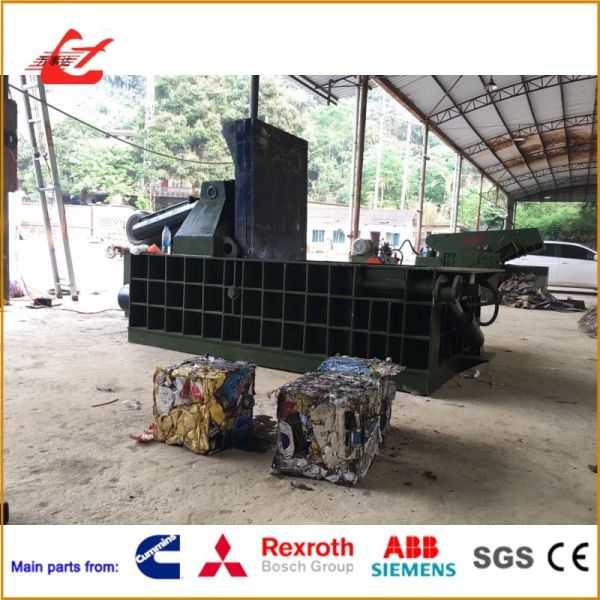
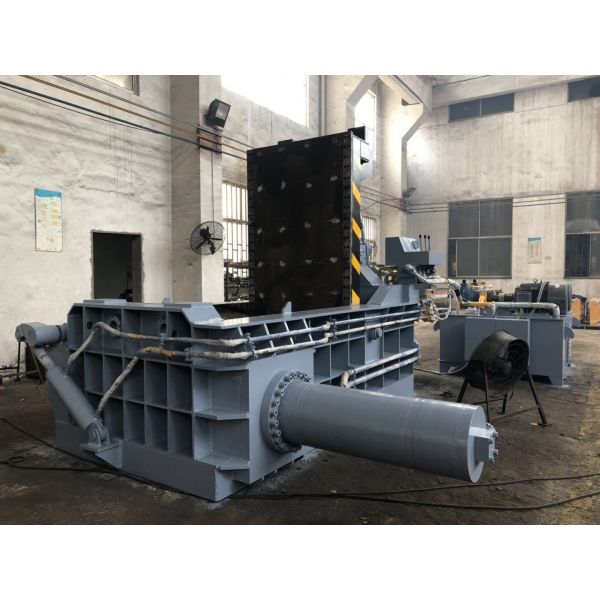
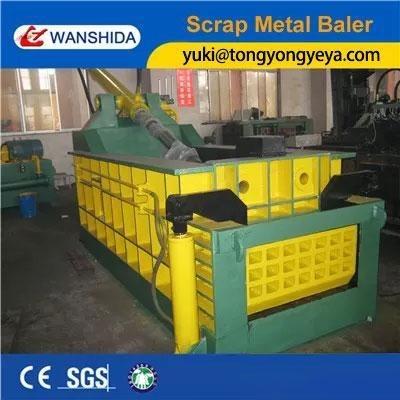
The Y83/T-160 scrap metal baler is built for recycling businesses that need a reliable and cost-effective solution to handle daily scrap processing.
With a strong 1600 kN pressing force and a practical chamber size, this hydraulic metal baler delivers consistent bale quality while keeping energy consumption low.
Its PLC semi-automatic system makes operation straightforward, even for teams without advanced technical experience.
Loose scrap metal creates more problems than it seems.
It takes up valuable yard space, increases transportation costs, and slows down handling efficiency. In many cases, companies rely too much on manual work or outdated machines, which leads to unstable output and higher operating costs.
Over time, these inefficiencies directly reduce profit margins.
This scrap metal baling machine addresses those challenges in a simple and effective way.
By compressing scrap into dense, uniform bales, it makes storage and transportation much easier. The push-out system ensures smooth bale discharge, while the fast cycle time helps maintain a steady workflow.
For medium-scale operations, it offers a balance between performance and investment.
| Item | Parameter |
|---|---|
| Model | Y83/T-160 |
| Nominal Force | 1600 kN |
| Chamber Size | 1600 × 1000 × 800 mm |
| Bale Size | 400 × 400 mm |
| Bale Density | >1800 kg/m³ |
| Capacity | 2000–3000 kg/h |
| Cycle Time | <80 s |
| Power | 22 kW |
| Bale Discharge | Push-out |
| Control | PLC Semi-Automatic |
This machine works well in:
It is especially suitable for businesses looking to upgrade from manual or low-capacity equipment.
Scrap metal is loaded into the chamber, where hydraulic cylinders apply pressure to compress it into compact bales.
Once the bale reaches the required density, the push-out system ejects it automatically, allowing the next cycle to begin without delay.
When selecting a metal baler, the key is to match the machine to your daily workload.
If your operation handles moderate volumes and needs stable output without high energy consumption, a 160 ton model is often the most practical choice.
It provides enough force for most materials while keeping investment under control.
Q1: What kind of scrap can it handle?
Steel, aluminum, copper, and other light metal materials.
Q2: Is it difficult to operate?
No, the PLC semi-automatic system is simple and user-friendly.
Q3: What about maintenance?
Routine hydraulic checks and basic servicing are enough for long-term operation.