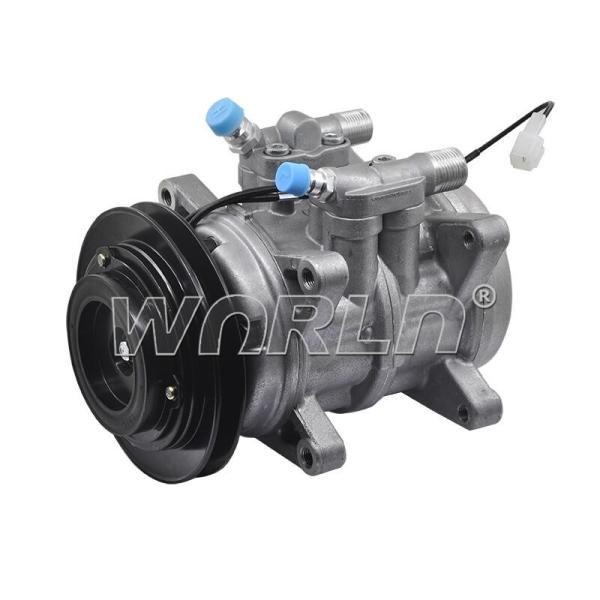
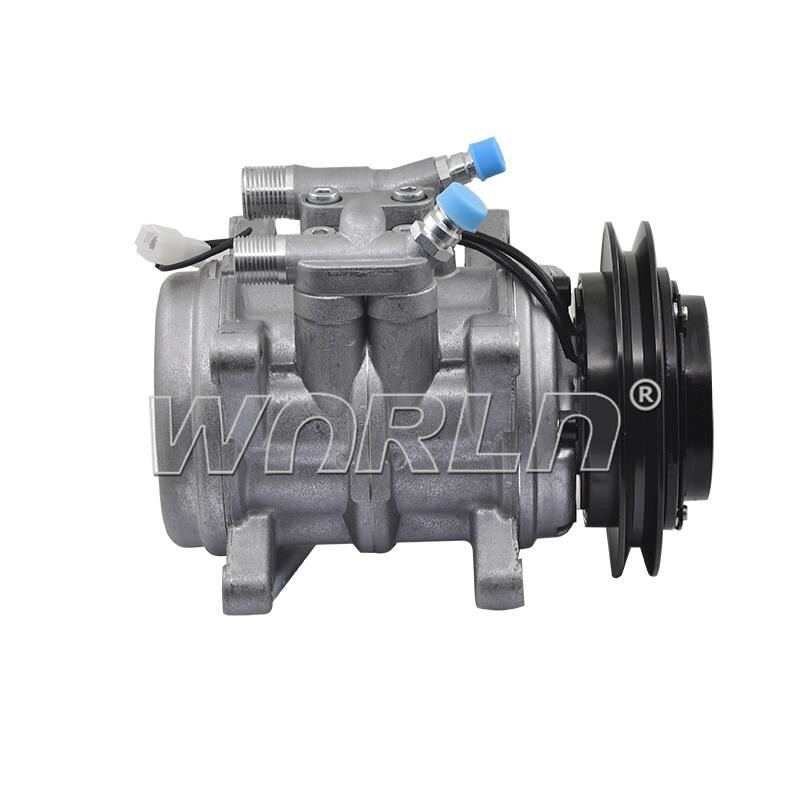
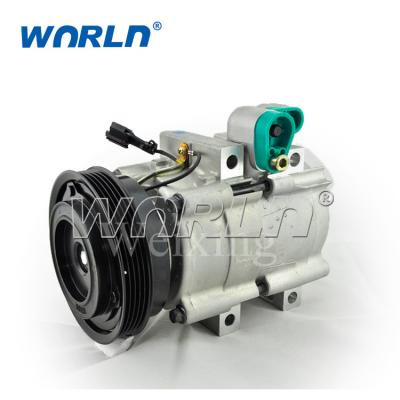
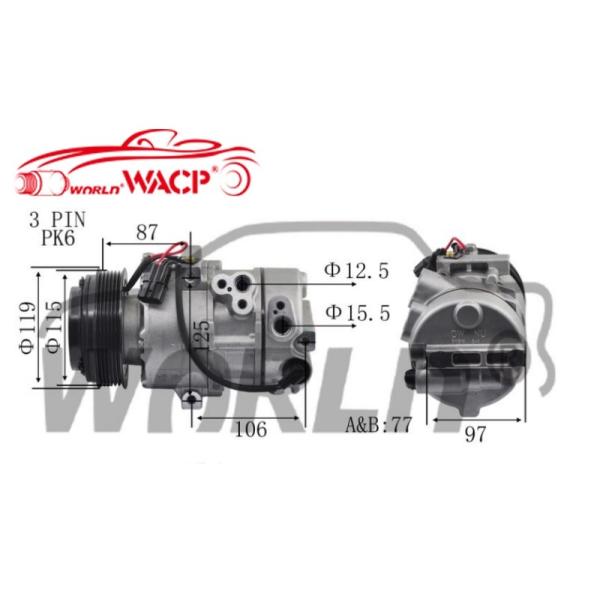
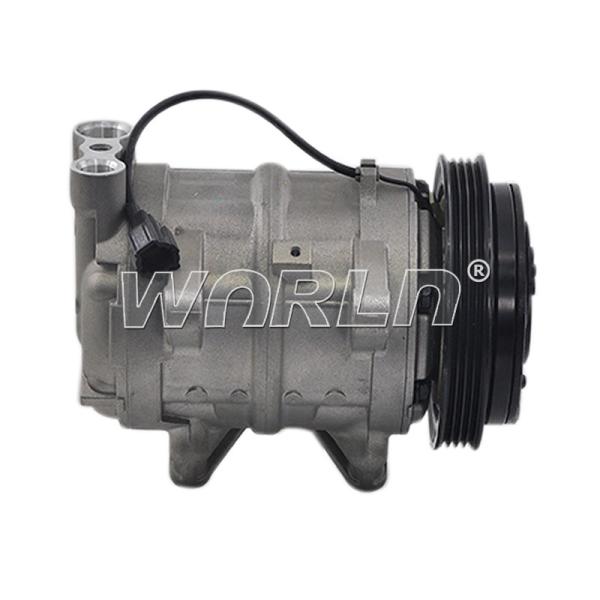
RC.600.159 82292901 BC4471009090 Car AC Compressor 10P15 For OREL For IMP WXVW046
The automobile compressor is the core component of the air conditioning system. It is responsible for compressing the refrigerant into high-temperature and high-pressure gas and cooling the air in the car through circulation. When you turn on the air conditioning switch in your car, the compressor will be activated and start working. It obtains power from the engine through an electromagnetic clutch and drive belt, and circulates refrigerant to the evaporator and condenser for heat exchange. This process cools and dehumidifies the air inside the car, providing a comfortable driving environment. The effectiveness and normal operation of the vehicle's air conditioning largely depends on the working status of the compressor.
Parameter:
| Model Number | WXVW046 |
| Car Model | For OREL For IMP |
| Type | Ac Compressor |
| Warranty | 1 year |
| Compressor type | 10P15 1A |
| OE No | 44717025502/44719007109C/82292901 |
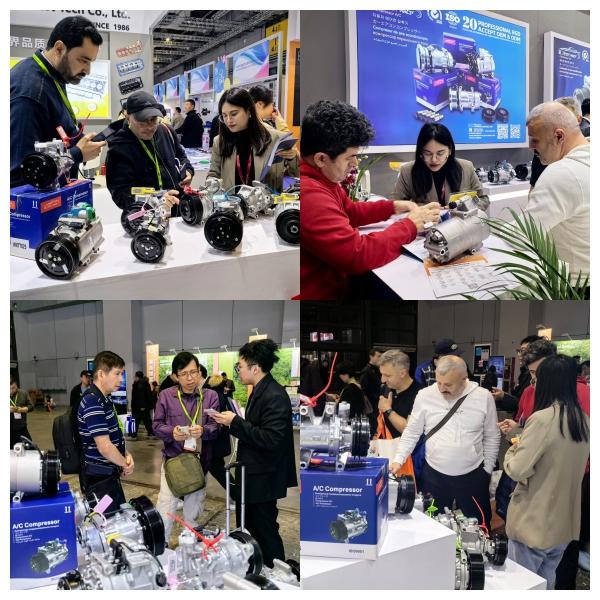
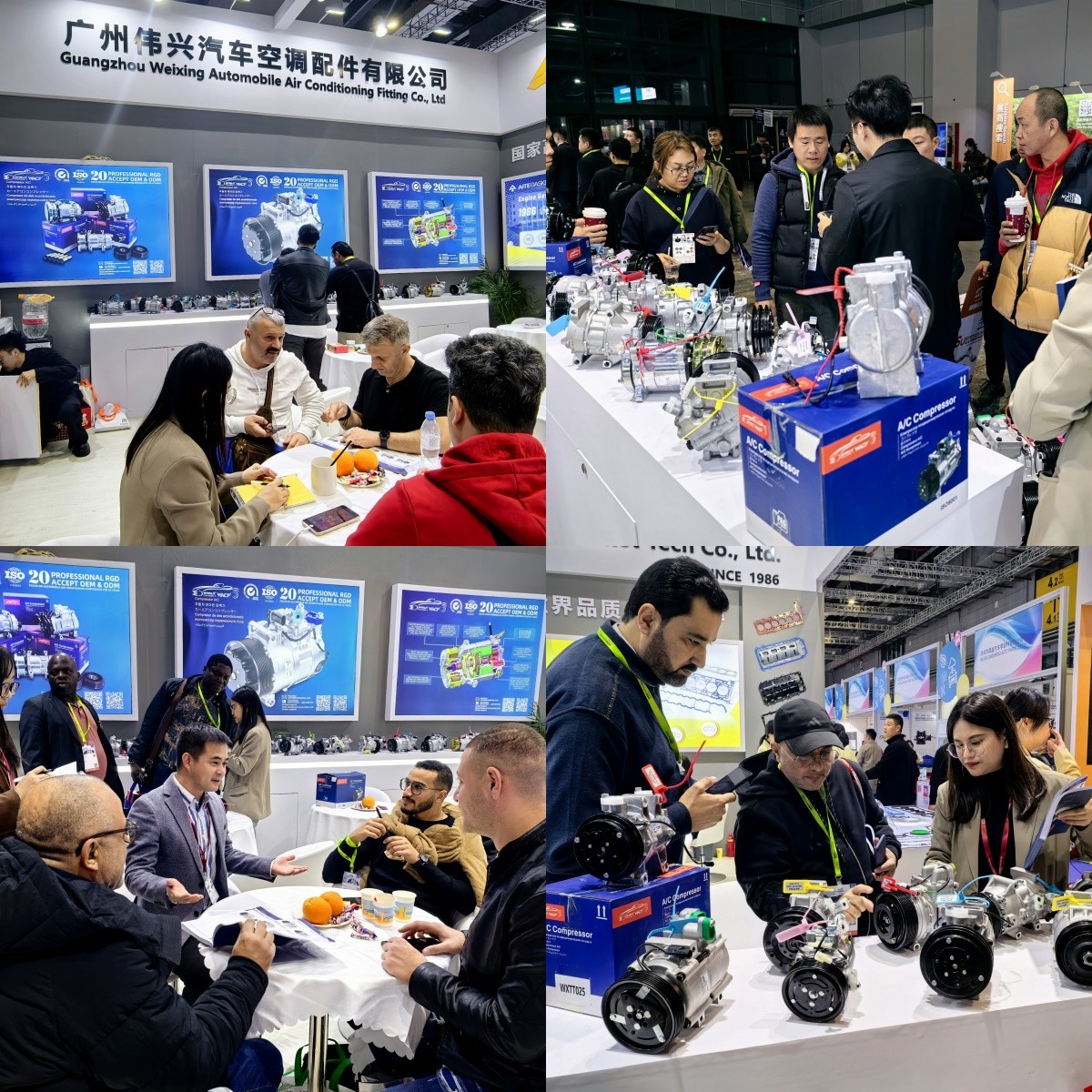
Attend Exhibitions


We have participated in many domestic and foreign exhibitions to demonstrate our high-quality team and attentive service and develop domestic and foreign markets. -----"We are the reliable company you want, and we are worthy of your trust."
Types of Automotive Air Conditioning (A/C) Compressors
1. Piston (Reciprocating) Compressors
- Mechanism: Uses pistons driven by a crankshaft to compress refrigerant.
- Subtypes:Fixed Displacement: Runs continuously when engaged (older designs).
- Variable Displacement: Adjusts piston stroke to match cooling demand (more efficient).
- Applications: Common in older and heavy-duty vehicles.
- Pros: Durable, simple design.
- Cons: Less efficient at variable speeds, more vibration.
2. Swash Plate Compressors
- Mechanism: Uses a rotating swash plate to drive multiple pistons in a parallel motion.
- Operation:Fixed-angle swash plate → Fixed displacement.Adjustable-angle swash plate → Variable displacement (e.g., Denso 7SB/10SB series).
- Applications: Widely used in modern cars (Toyota, Honda, etc.).
- Pros: Smooth operation, better efficiency than reciprocating types.
- Cons: Complex construction, sensitive to lubrication.
3. Rotary Vane Compressors
- Mechanism: Uses rotating vanes inside an eccentric chamber to compress refrigerant.
- Operation:Vanes slide in/out due to centrifugal force, creating compression chambers.
4. Scroll (Spiral) Compressors
- Mechanism: Uses two interleaved spiral-shaped scrolls—one fixed, one orbiting—to compress refrigerant.
- Operation: No pistons or valves, reducing mechanical wear.
- Applications: Increasingly used in hybrids/electric vehicles (e.g., Toyota Prius).
- Pros: Extremely efficient, low noise, minimal vibration.
- Cons: Expensive to manufacture, sensitive to debris.
5. Variable Displacement Compressors (e.g., Wobble Plate / Swash Plate Types)
- Mechanism: Adjusts displacement based on cooling demand (via valve control or swash plate angle).
- Operation:
- Reduces cycling, improving efficiency and comfort.
- No clutch in some designs (e.g., Harrison V5, Sanden SD7V16).
- Applications: Common in modern fuel-efficient vehicles.
- Pros: Better fuel economy, smoother temperature control.
- Cons: Complex, higher repair costs.
- Applications: Common in some European and Asian vehicles.
- Pros: Compact, quiet, and efficient at high speeds.
- Cons: Wear on vanes over time, requires precise lubrication.
Goods Picture