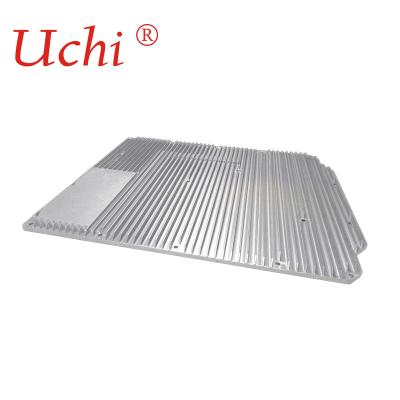
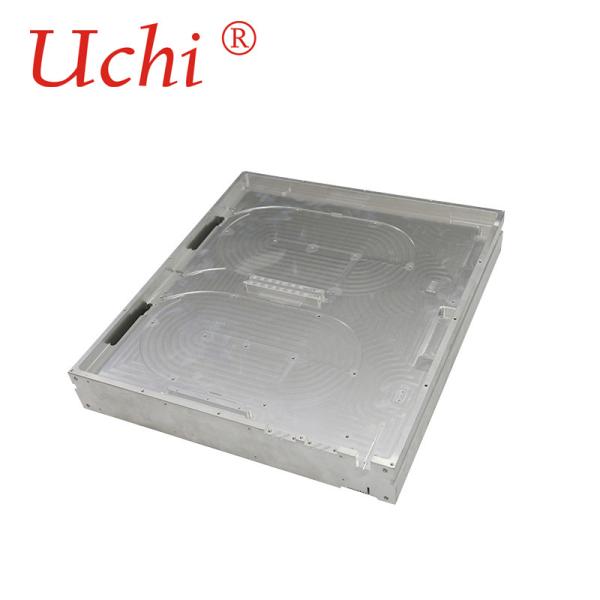
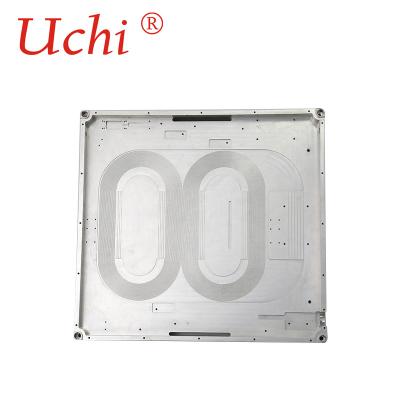
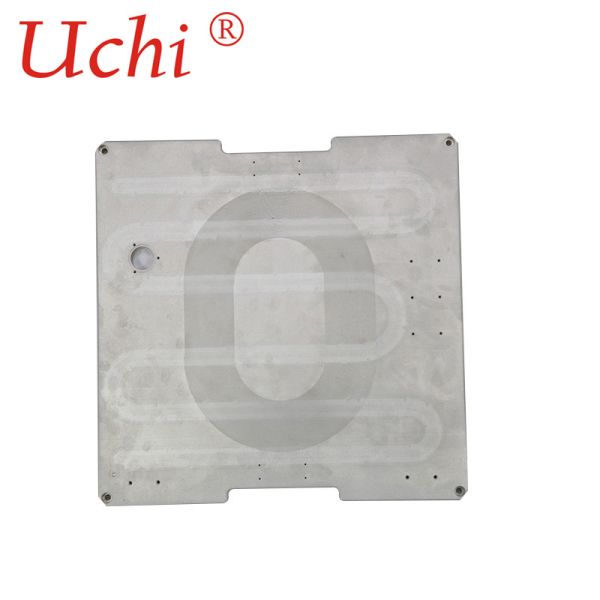
Liquid Cooled Cold Plate Heat Exchanger · Core Selling Points
I. Performance Advantages
Ultra-High Heat Dissipation Efficiency
With strong heat flux carrying capacity, its heat dissipation efficiency far exceeds that of air cooling in the same volume, easily meeting the cooling demands of high-power and high-heat-flux devices.
Ultra-Low Thermal Resistance Design
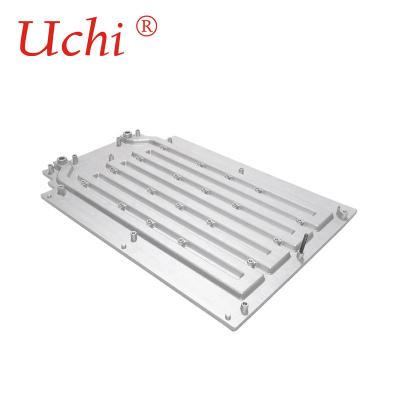
Adopting integrated flow channel / microchannel structure to reduce welding thermal resistance, enabling fast heat conduction from heat sources and rapid heat removal, with more stable temperature control.
Precise Temperature Control & Small Temperature Difference
Uniform liquid cooling heat transfer with small temperature fluctuations, effectively protecting core components such as chips, IGBTs and batteries, and extending their service life.
Adaptable to High Power Density
A single cold plate can support kilowatt-level heat dissipation, satisfying high-power consumption scenarios such as AI servers, new energy electronic controls and laser equipment.
II. Structural & Reliability Advantages
Compact Structure & Space-Saving
Slim design with small footprint, facilitating equipment miniaturization and high-density integration, suitable for limited space in cabinets and chassis.
Pressure-Resistant Sealing & Low Leakage Risk
Mature welding / diffusion bonding technology ensures strong pressure resistance, stable and reliable long-term operation, and reduces maintenance risks.
Selectable Materials & Wide Scenario Adaptability
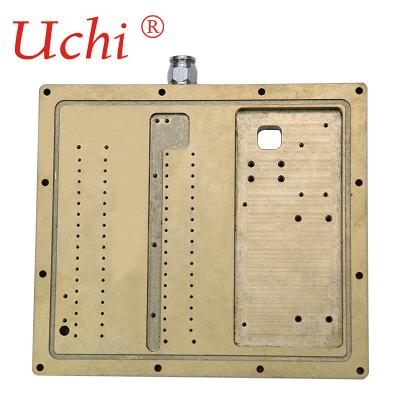
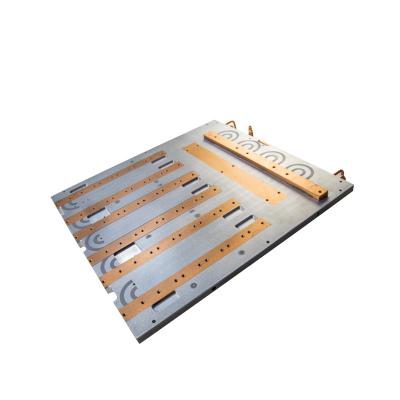
Lightweight and low-cost aluminum, or high-thermal-conductivity and high-performance copper; compatible with various coolants (water / glycol / dielectric fluid).
Highly Customizable Flow Channels
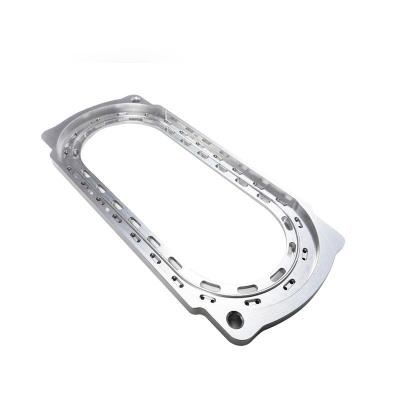
Flow channels can be designed according to heat source layout to achieve local enhanced heat dissipation, ensuring more uniform heat transfer without hot spots.
III. Application & System Advantages
Silent & Noise-Free
No noise from high-speed fans, ideal for environments with high silence requirements such as data centers, medical facilities and laboratories.
Energy Saving & Consumption Reduction
High heat exchange efficiency of liquid cooling systems lowers overall energy consumption, reduces data center PUE, and delivers more economical long-term operation.
Dust & Contamination Resistance & Easy Maintenance
Closed liquid cooling loop is immune to dust and oil, with low failure rate and much lower later maintenance cost than air cooling.
IV. Application Scenario Advantages
Universal for Multiple Fields
Suitable for new energy vehicle batteries / electronic controls, AI server GPU/CPU, laser equipment, industrial power supplies, photovoltaic inverters, medical instruments, etc.
Strong Adaptability to High-Temperature Environments
Less affected by ambient temperature compared with air cooling, maintaining excellent heat dissipation performance under high-temperature working conditions.