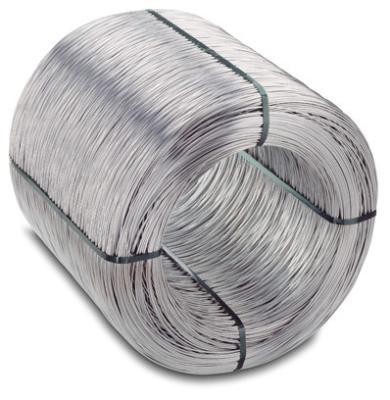
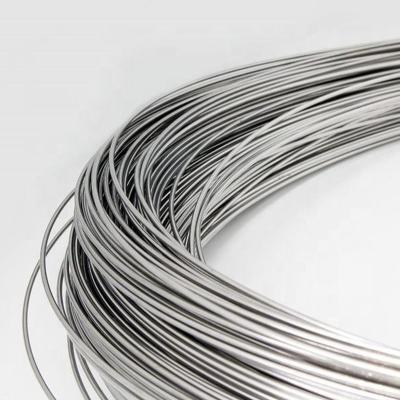
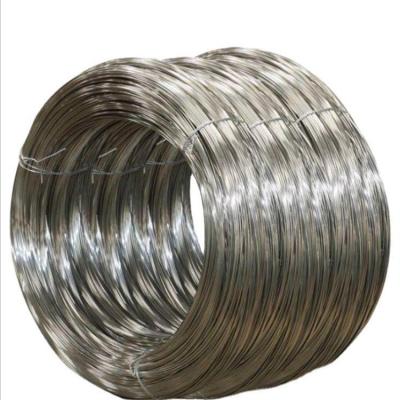
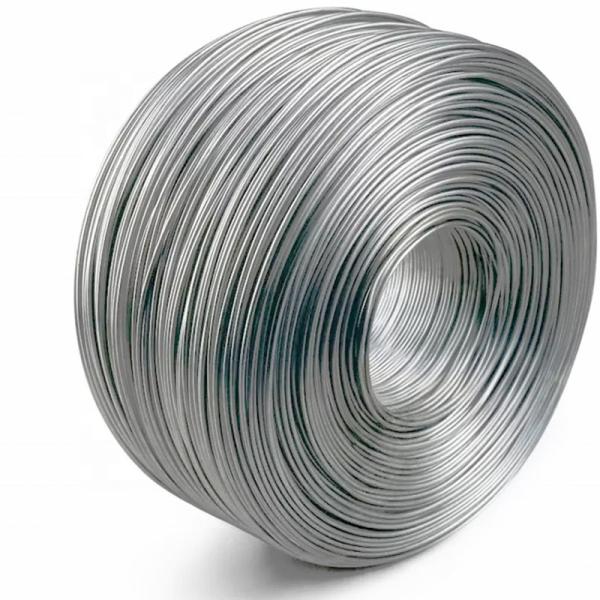
The 304 stainless steel forming wire is a round stainless steel wire designed for bending, forming and manufacturing various wire-formed components.
This product is available in a 0.15–12 mm diameter range with a bright surface. The wire can be processed through bending, cutting, forming, welding and other fabrication operations according to the finished component design.
AISI 304 / SUS304 stainless steel is widely used for wire-forming applications where corrosion resistance, surface condition and forming requirements need to be considered together.
For technical applications, wire selection should be based on the combination of material grade, diameter, dimensional tolerance, mechanical condition, surface finish and forming process rather than material grade alone.
| Item | Specification |
|---|---|
| Product Name | 304 Stainless Steel Forming Wire |
| Material Grade | AISI 304 / SUS304 |
| Diameter Range | 0.15–12 mm |
| Wire Type | Stainless Steel Forming Wire |
| Shape | Round Wire |
| Surface | Bright |
| Manufacturing Process | Cold Drawn / Drawing Process |
| Forming Processes | Bending / Cutting / Forming / Welding |
| Applicable Standards | AISI / ASTM / EN / DIN / JIS / GB |
| Applications | Wire Forms / Kitchen Hardware / Racks / Clips / Industrial Components |
| Supply Form | Coil / Spool / Customized |
| Packaging | Export Packing / Customized |
| Certification | ISO 9001:2015 |
The final diameter tolerance, tensile strength and mechanical condition should be confirmed according to the selected specification and application.
304 stainless steel is an austenitic stainless steel grade commonly used for general wire-forming applications.
For wire forming, the material needs to meet the requirements of the forming process as well as the service environment of the finished component.
304 stainless steel can be considered when the application requires:
Stainless steel corrosion resistance
Controlled wire dimensions
A defined surface condition
Bending or forming capability
Compatibility with welding or assembly processes
The actual material condition should be selected according to the required forming operation and finished-part specification.
The available diameter range is 0.15–12 mm, covering fine wire specifications through larger wire-forming applications.
Wire diameter affects the geometry, forming process and dimensional requirements of the finished component.
When ordering forming wire, buyers should specify:
Nominal diameter
Diameter tolerance
Material grade
Tensile strength or mechanical condition
Surface condition
Forming process
Finished component dimensions
For applications with tight dimensional requirements, the wire tolerance should be confirmed before production.
This product is supplied with a bright surface, which can be selected for wire-formed components where a clean metallic appearance is required.
Surface condition is also relevant to the forming process because stainless steel wire passes through guides, dies and forming tools during processing.
The appropriate surface specification should be considered together with:
Forming equipment
Tooling
Processing speed
Required surface appearance
Subsequent polishing or cleaning
Finished component requirements
For applications requiring additional lubrication during forming, a soap-coated surface may be considered instead of a bright surface.
304 stainless steel forming wire can be processed into customized wire forms according to drawings or specified dimensions.
Typical components include:
Hooks
Clips
Brackets
Retaining parts
Supports
Frames
Handles
Fixing components
Bright stainless steel forming wire can be used for kitchen-related wire products such as:
Cooking racks
Dish racks
Kitchen baskets
Storage racks
Appliance wire components
Material and surface requirements should be confirmed according to the finished product and service conditions.
The wire can be processed through straight bending, multi-axis bending and other forming operations according to the component geometry.
For complex shapes, the wire diameter, mechanical condition and bending radius should be considered together.
304 forming wire can be used for various industrial wire-formed components where stainless steel material is required.
Applications may include equipment components, brackets, retaining structures, fixtures and custom wire parts.
The stainless steel grade is selected according to the finished component's corrosion, mechanical and fabrication requirements.
The wire is processed to the specified diameter and surface condition.
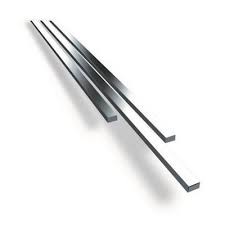
For certain applications, the wire can be supplied or processed in straightened and cut lengths.
The wire is formed according to the required geometry using suitable forming equipment.
For multi-piece components, welding or other joining methods can be applied according to the finished product design.
Finished wire components and raw wire should be checked against the required dimensional and technical specifications.
304 provides a widely used stainless steel material option for general wire-forming applications.
The diameter range covers fine wire and larger wire-forming specifications for different component designs.
The bright surface is suitable for visible wire-formed components where surface appearance is an important specification.
The wire can be considered for bending, cutting, forming and other fabrication processes according to the selected mechanical condition.
Material grade, diameter, tolerance, surface condition and applicable standards can be defined according to the finished component requirements.
Although both products are manufactured from stainless steel wire, their specifications are not necessarily the same.
| Selection Factor | Forming Wire | Spring Wire |
|---|---|---|
| Main purpose | Bending and wire forming | Spring manufacturing |
| Typical processing | Bending / cutting / forming | Coiling / spring forming |
| Mechanical condition | Application-dependent | Usually selected for spring requirements |
| Surface | Bright / other specified finish | Bright / soap coated |
| Application | Clips, racks, brackets, wire forms | Compression, extension, torsion springs |
| Key selection factors | Diameter, tolerance, forming geometry | Diameter, tensile strength, spring design |
The wire type should therefore be selected according to the manufacturing process and finished component rather than using “stainless steel wire” as the only specification.
For stainless steel forming wire, product quality should be evaluated through measurable specifications.
Typical inspection items include:
Stainless steel grade
Chemical composition
Wire diameter
Diameter tolerance
Tensile strength
Mechanical condition
Surface condition
Coil or spool dimensions
Packaging identification
Applicable standard
For OEM requirements, inspection documentation can be discussed according to the agreed technical specification.
Before purchasing stainless steel forming wire, manufacturers should confirm the following:
Specify AISI 304, SUS304 or another required grade according to the application.
Provide the nominal diameter and required tolerance.
A drawing or sample is recommended for components involving multiple bends, small bending radii or complex three-dimensional geometry.
The required tensile strength or mechanical condition should be matched to the forming equipment and finished component.
Bright, soap-coated or other surface conditions can be selected according to the forming process and finished appearance.
Consider moisture, temperature, cleaning chemicals and other exposure conditions when confirming the material grade.
TOPONE can evaluate customized stainless steel forming wire requirements according to drawings, samples or technical specifications.
For an OEM project, buyers can provide:
Stainless steel grade
Wire diameter
Diameter tolerance
Tensile strength
Surface condition
Finished component drawing
Forming process
Required quantity
Applicable standard
Packaging requirement
For complex wire forms, a detailed drawing is preferred because it provides information about bending angles, dimensions, tolerances and joining positions.
304 stainless steel forming wire can be used for clips, hooks, brackets, racks, baskets, supports and other customized wire-formed components.
The available diameter range is 0.15–12 mm.
Yes. It is intended for wire-forming applications, with the appropriate mechanical condition selected according to the required bending and forming process.
This product has a bright surface. Other surface conditions can be discussed according to the application.
Yes. Stainless steel wire can be supplied within the 0.15–12 mm production range, subject to the selected grade, tolerance and technical specification.
Some stainless steel forming wires can be used for spring-related applications, but spring manufacturing normally requires a specific spring-wire mechanical condition. The material and wire condition should therefore be confirmed according to the spring design.
Yes. Drawings, samples or detailed technical specifications can be provided for customized wire-forming requirements.