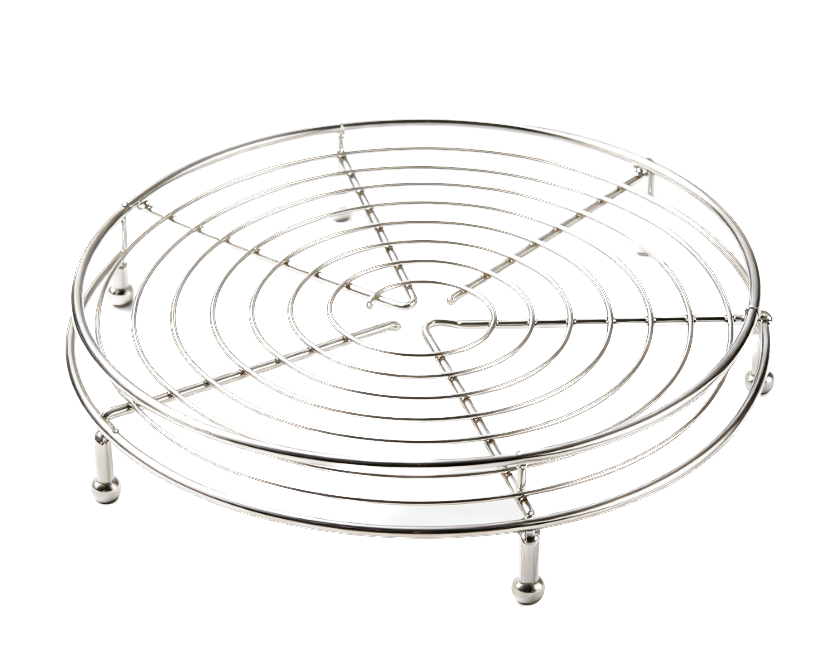
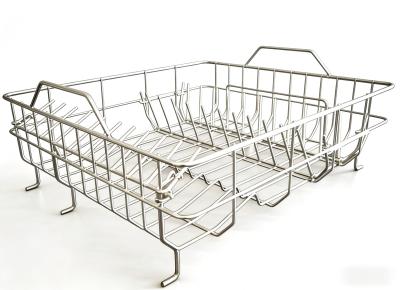
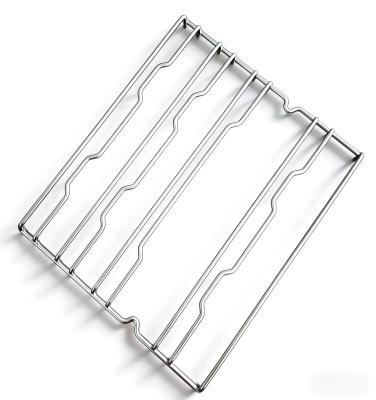
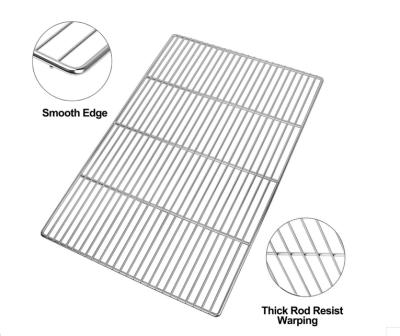
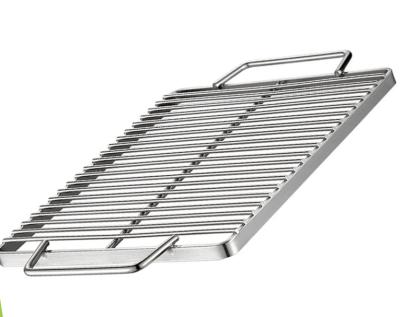
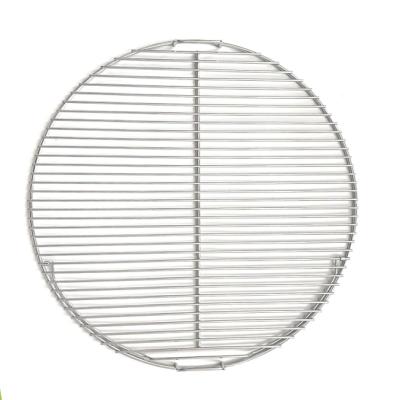
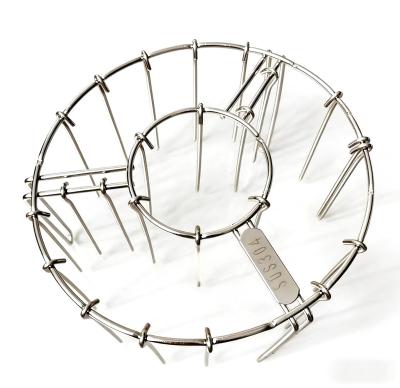
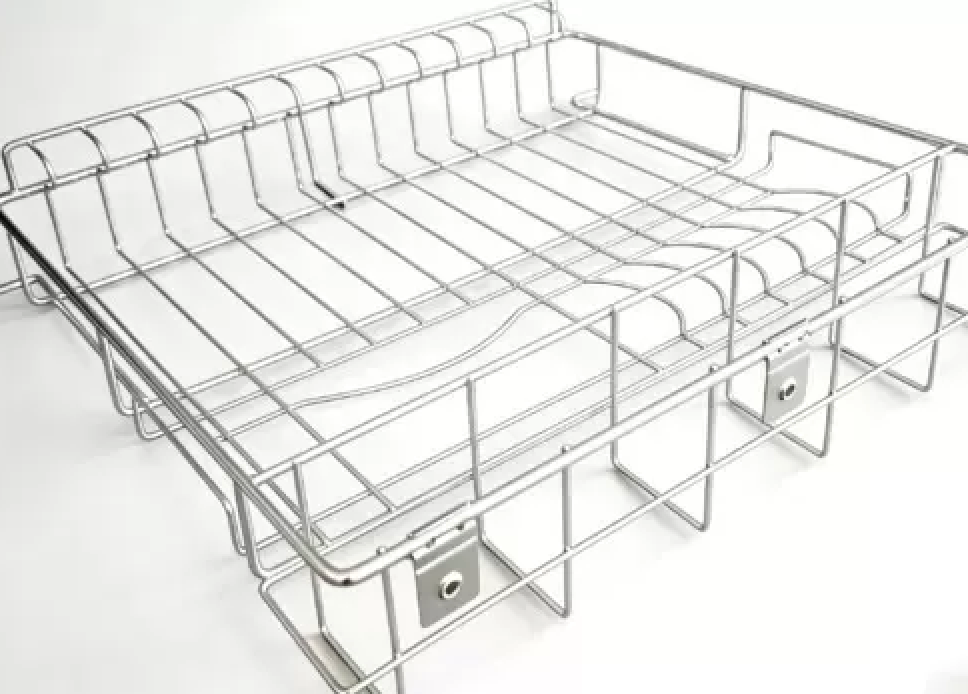
TOPONE 2.5mm stainless steel wire forming is designed for lower dish racks, kitchen storage racks, and other wire-formed components requiring a defined shape and consistent dimensions.
The product is manufactured by forming and bending stainless steel wire according to the required geometry. Different shapes, bending angles, lengths, and end configurations can be produced according to customer drawings or samples.
For dish rack applications, wire diameter and material grade should be selected according to the rack structure, load requirements, surface condition, and intended service environment. Stainless steel grades such as 304 and 316L can be considered for applications where corrosion resistance and a clean metal surface are important.
TOPONE supports customized stainless steel wire forming in different shapes and sizes. Its existing wire-forming product range covers approximately 0.3–16mm, with material and surface options selected according to the application.
| Item | Specification |
|---|---|
| Product Type | Stainless Steel Wire Forming |
| Application | Lower Dish Rack / Kitchen Rack |
| Wire Diameter | 2.5mm |
| Material | Stainless Steel |
| Available Grades | 201, 202, 301, 302, 304, 304L, 304H, 304N, 316L, 321, 410, 420, 430 |
| Forming Process | Wire Forming / Bending |
| Shape | Customized according to drawing or sample |
| Surface | Bright or Soap-Coated (Matt) |
| Standard | AISI, ASTM, DIN, EN, GB, JIS |
| Certification | ISO |
| Length | Customized |
| Packaging | Coil, Roll or Customized Packing |
Final material grade, dimensions, surface condition, tolerances, and packaging should be confirmed according to the customer's drawing or technical requirements.
Wire forming allows stainless steel wire to be processed into different two-dimensional or three-dimensional configurations. For dish rack components, the forming geometry may include straight sections, bends, hooks, loops, or other customized structures.
The forming parameters should be determined according to the wire diameter, material grade, bend radius, shape complexity, and dimensional tolerance required for the finished component.
The 2.5mm diameter specified for this product is suitable for wire-formed kitchen rack components where the final structure determines the required rigidity and load-bearing characteristics.
Rather than selecting wire diameter independently, buyers should evaluate the complete rack structure, including support spacing, component geometry, material grade, and expected loading conditions.
The primary application is the lower section of dish racks, where formed stainless steel wire can be used as a structural or supporting component.
The same wire-forming process can be adapted for kitchen storage baskets, shelves, holders, and other metal wire components.
Customized stainless steel wire forms can also be used for hooks, brackets, clips, frames, and other formed-wire parts where the required geometry can be produced from stainless steel wire.
The component can be formed according to a defined drawing or sample instead of using only standard straight wire. This allows the wire geometry to match the structure of the finished rack.
TOPONE's stainless steel wire-forming range includes several austenitic and ferritic stainless steel grades. Material selection can therefore be based on corrosion environment, forming requirements, mechanical requirements, and cost considerations.
Bright and soap-coated matt surfaces are available within the wire-forming product range. The appropriate surface should be selected according to the appearance and processing requirements of the finished component.
Wire diameter, overall length, bending geometry, and other component dimensions can be specified according to technical drawings or samples.
For kitchen and dish rack applications, material selection should consider the actual service environment.
304 stainless steel: A common option for general kitchen and household applications where corrosion resistance and surface appearance are important.
316L stainless steel: Can be considered for applications exposed to more demanding corrosive environments where a higher level of corrosion resistance is required.
201 stainless steel: Can be considered for applications where material requirements and operating conditions allow its use.
The final grade should be confirmed according to the actual environment, cleaning conditions, contact requirements, and applicable specifications rather than selected only by price.
For customized wire forming, providing the following information helps determine the appropriate manufacturing process:
Wire diameter
Stainless steel grade
Overall dimensions
Bending angle and radius
Finished wire length
Shape drawing or sample
Surface requirement
Dimensional tolerance
Application and expected loading condition
Required packaging
A technical drawing is especially useful for products with multiple bends or three-dimensional forming requirements.