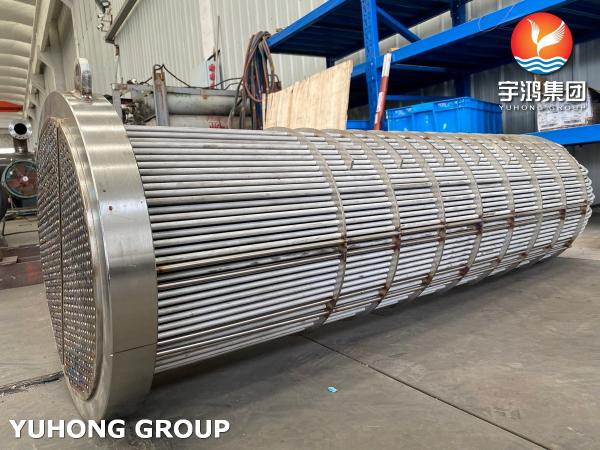
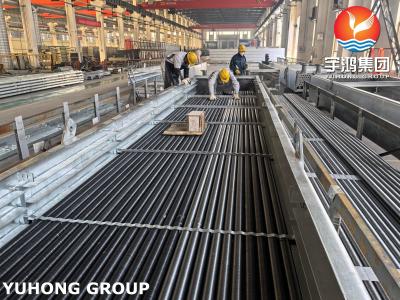
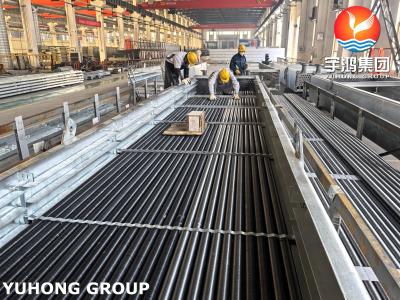
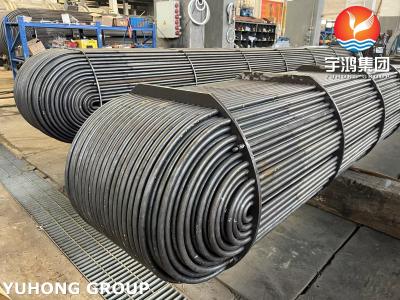
A tube bundle is a critical component of a shell-and-tube heat exchanger, which is one of the most common types of heat exchangers used in industrial applications. The tube bundle consists of a series of tubes through which one fluid flows, while another fluid flows around the tubes (on the shell side) to facilitate heat transfer between the two fluids.
The primary heat transfer surface. Made from materials with high thermal conductivity, such as copper, stainless steel, titanium, or carbon steel, depending on the application.
Flat plates that hold the tubes in place. Tubes are either welded, expanded, or rolled into the tube sheets to create a leak-proof seal. Tube sheets separate the shell-side and tube-side fluids.
Plates or rods that direct the flow of the shell-side fluid across the tube bundle. Improve heat transfer efficiency by creating turbulence and preventing stagnant zones. Common types include segmental, helical, and rod baffles.
Used to maintain the alignment and spacing of the tubes. Prevent vibration and damage to the tubes during operation.
Hold the baffles and tube bundle together. Ensure structural integrity.
Located at the ends of the tube bundle. Direct the tube-side fluid into and out of the tubes.
Smaller diameters increase heat transfer efficiency but may lead to higher pressure drops. Thicker tubes are used for high-pressure applications.
Tubes can be arranged in triangular, square, or rotated square patterns. Triangular layouts provide higher heat transfer efficiency, while square layouts are easier to clean.
Longer tubes increase the heat transfer area but may require more space. The number of tubes depends on the required heat transfer rate and flow rates.
Materials must be compatible with the fluids being processed to avoid corrosion or fouling. Common materials include stainless steel, copper alloys, titanium, and nickel alloys.
Baffle spacing and type affect heat transfer efficiency and pressure drop. Segmental baffles are the most common, but helical baffles can reduce pressure drop and vibration.
Differential thermal expansion between the tubes and the shell must be accounted for to avoid stress and failure. U-tube or floating head designs are used to accommodate expansion.
Tubes are fixed to the tube sheets at both ends. Simple and cost-effective but cannot handle large temperature differences between the shell and tube sides.
Tubes are bent into a U-shape, allowing for thermal expansion. Suitable for applications with high temperature differences.
One end of the tube bundle is free to move, accommodating thermal expansion. Ideal for high-temperature and high-pressure applications.
Similar to a floating head design but allows the entire tube bundle to be removed for maintenance.
Condensing steam from turbines.
Heating or cooling hydrocarbons in refineries.
Heat exchange in reactors and distillation columns.
Chillers and condensers.
Pasteurization and sterilization processes.
Deposits on the tube surfaces reduce heat transfer efficiency. Regular cleaning (mechanical or chemical) is required.
Material selection and protective coatings can help prevent corrosion. Inspect for pitting or cracking regularly.
Improper baffle spacing or flow rates can cause tube vibration and failure. Ensure proper design and operation.