New Energy-saving DC Electric Arc Furnace
1. Basic Equipment Structure
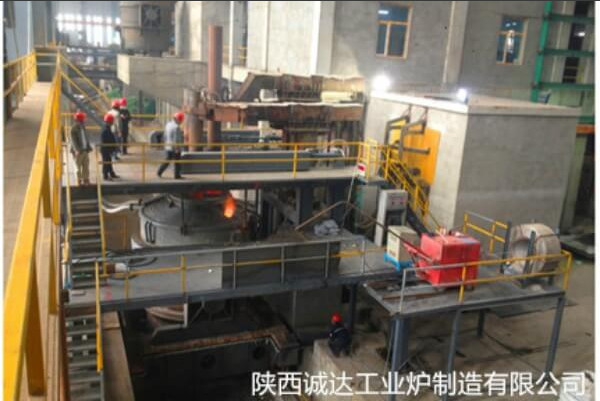
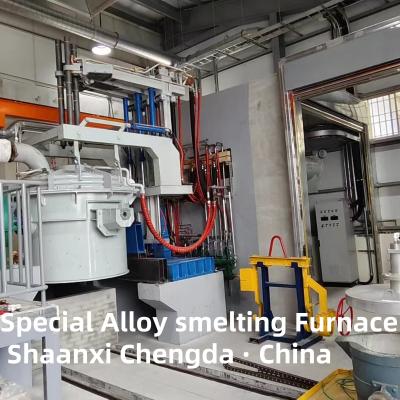
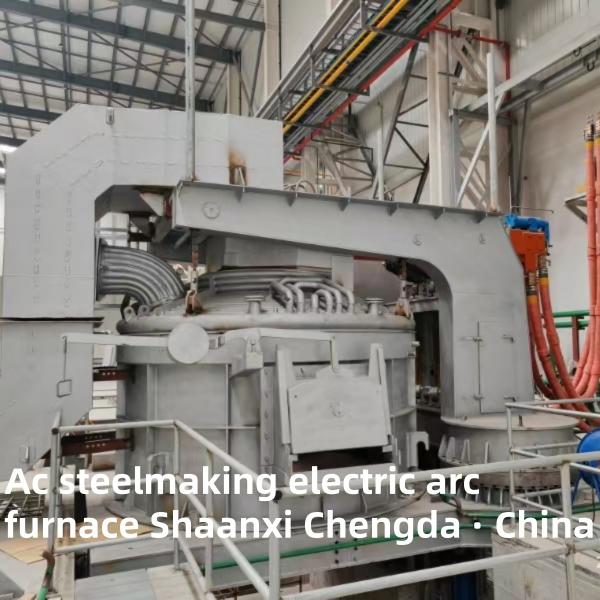
The new energy-saving DC electric arc furnace consists of seven core modules: furnace body, IGBT/thyristor rectifier power supply system, top graphite electrode, bottom conductive anode, water cooling system, hydraulic tilting mechanism and PLC intelligent control system.
- Electrode Configuration: The mainstream design adopts single top graphite electrode plus furnace bottom anode; the updated dual-electrode design without bottom anode effectively avoids furnace bottom burn-through. Compared with 3-electrode layout of AC furnaces, the electrode auxiliary structure is greatly simplified.
- Power Supply Upgrade: The latest generation is equipped with IGBT flexible rectifier power supply, an upgraded version of traditional thyristor power supply. It realizes full-digital closed-loop regulation, stepless voltage & current adjustment and online polarity switching without shutdown, supporting both submerged-arc and open-arc smelting modes for dual-purpose of arc furnace and submerged arc furnace.
- Intelligent Automatic Control: The PLC system enables one-key switching among constant power / constant current / constant voltage smelting modes. Soft start prevents power grid impact, with full protection against overvoltage, overcurrent, phase loss and overtemperature.
2. Core Energy-saving Technical Indicators (vs. Conventional 3-phase AC EAF)
| Items |
Energy-saving Index |
Technical Description |
| Power Consumption |
10%~15% electricity saving |
No alternating eddy current loss; power factor reaches 0.95~0.98 (0.7~0.9 for AC furnace requiring extra reactive power compensation), no extra power loss from arc extinction at zero-crossing current |
| Graphite Electrode Consumption |
30%~50% consumption reduction |
Free of alternating current skin effect; concentrated arc avoids furnace wall sweeping; side oxidation accounts for over 44% of total electrode loss on AC furnaces |
| Refractory Lining |
Service life extended over 30% |
DC arc deflection only 12° versus 45° of AC arc; arc rarely scours furnace lining with no local overheating hot spots |
| Production Efficiency |
Tap-to-tap cycle shortened by 8%~12% |
Self-generated electromagnetic stirring homogenizes molten steel temperature and composition for faster tapping; advanced furnaces achieve power consumption as low as 300kWh per ton of molten steel |
| Noise & Power Quality |
Noise reduced by 10~20dB; harmonic & flicker cut in half |
Balanced three-phase input minimizes grid disturbance and eliminates demand for large-capacity filter devices |
3. Fundamental Energy-saving Mechanism
- Reduced Circuit Loss: Alternating current induces alternating magnetic field and eddy heat loss; constant DC magnetic field eliminates eddy heating on short-net cables to cut invalid power waste.
- Stable Arc Combustion: DC current has no zero-cross point, maintaining continuous arc without intermittent extinction to improve thermal efficiency via concentrated directional heat input.
- Built-in Electromagnetic Stirring: DC current forms fixed-direction magnetic field to drive circulating molten bath, eliminating extra power-consuming external electromagnetic stirring equipment and accelerating raw material melting.
- Flexible Power Regulation: Modular IGBT rectifier outputs precise power on demand; intelligent current limiting during scrap collapse and impact-free arc reignition prevent instantaneous peak power waste.
4. Applicable Smelting Materials
- Ferrous Metallurgy: Scrap steel melting for carbon steel, stainless steel, alloy steel, bearing steel, die steel and pig iron production; short-process EAF steelmaking cuts around 1.6 tons of CO₂ emission per ton of scrap processed.
- Ferroalloy & Non-ferrous Metallurgy: Production of ferrosilicon, ferrochrome, ferromanganese, calcium aluminate, red mud-based iron smelting and precious metal refining.
- Solid Waste Recycling: Melting treatment of fly ash, metallurgical slag and hazardous solid waste for resource recovery, realizing multi-purpose single equipment.
5. New-generation Technical Advantages
- Reversible Polarity Technology: Real-time anode-cathode switching during smelting evens out furnace temperature distribution to eliminate overheating or cold zones, further lowering power consumption and improving finished product yield.
- Integrated Scrap Preheating System: Flue gas waste heat recovers to preheat incoming scrap, saving another 20~35kWh power per ton of steel.
- Digital Smelting Control: Real-time collection of arc voltage, arc current and furnace temperature data; AI self-adaptive power curve optimizes energy consumption to comply with low-carbon steelmaking policies.
6. Application Advantages & Industry Trend
- Capital & O&M Cost: Lower investment on matching electrodes, short-net cables and reactive power compensation facilities; comprehensive operating cost 18%~25% less than conventional AC furnaces.
- Policy Compliance: Short-process EAF steelmaking is core route for domestic low-carbon steel transformation; energy-saving DC furnaces are prioritized for scrap recycling and dual-carbon compliant projects in special steel & renewable metallurgy sectors.
- Full Size Range: Complete product lineup from 0.5t lab-scale furnace, 5t/10t/20t industrial furnace up to hundred-ton large-scale steelmaking furnace.