| Attribute | Value |
|---|---|
| Evaporation Capacity | 850 kg/h |
| Dehumidifier Power | 680 W |
| Model | SN-DO-10T |
| Input Capacity | 100-200 kg |
| Equipment Weight | 600 kg |
| Power Consumption | 5.5 kW |
| Equipment Dimensions | 1000 × 800 × 1800 mm |
High-Efficiency Hot Air Circulation System:
Industrial drying ovens typically employ hot air circulation systems that evaporate moisture from vegetables through the flow of heated air. Hot air circulates via fans, ensuring uniform heating across all vegetable layers and significantly enhancing drying efficiency.
Precise control over air circulation speed, airflow intensity, and temperature prevents localized overheating or uneven drying, guaranteeing consistent food quality.
Automatic Temperature and Humidity Control System:
Industrial dryers are equipped with advanced temperature and humidity sensors and control systems, enabling precise regulation of drying conditions. This is crucial for different vegetable types, as each requires specific drying temperatures and humidity levels.
Temperatures are typically set between 40°C and 80°C, while humidity control prevents over-drying that could lead to nutrient loss or excessive dryness.
Multi-Tier Design:
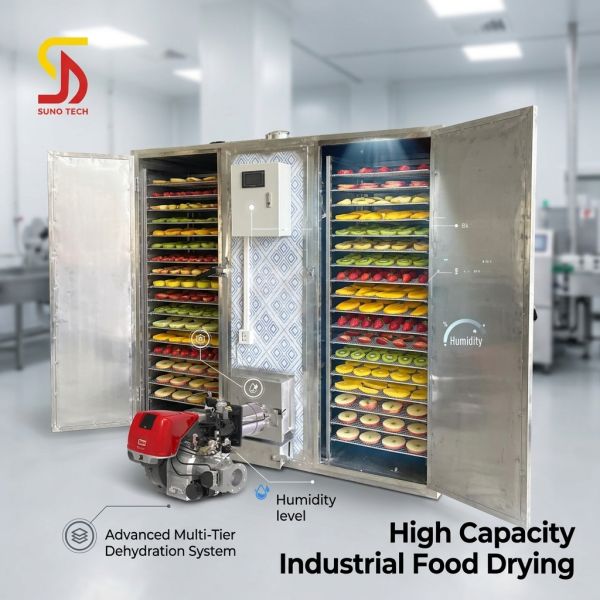
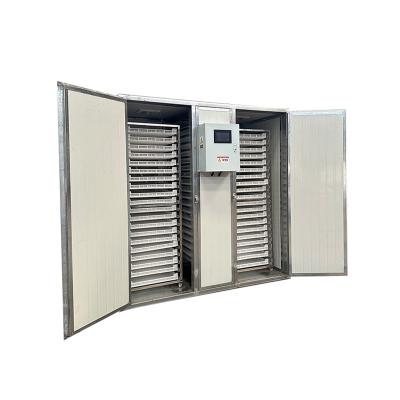
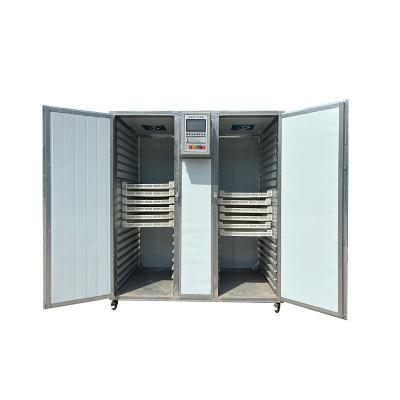
Industrial dryers generally feature multi-tier drying rack designs, enabling simultaneous processing of large volumes of vegetables. This configuration not only saves space but also enhances operational efficiency.
Each layer can be individually adjusted for temperature and airflow speed, ensuring uniform drying across all levels.
Large Capacity and High Efficiency:
Designed for large-scale production, industrial dryers far exceed the capacity of household models, typically processing hundreds of kilograms or even tons of vegetables in short periods.
High-efficiency heat sources (such as electric, steam, or gas heating) combined with powerful fan systems boost productivity while minimizing energy consumption.
Energy-Efficient Design:
Modern industrial dryers feature significant energy-saving advancements. Optimized heat recovery systems and intelligent cycle adjustments minimize energy waste.
Many units incorporate heat recovery systems that recapture thermal energy from exhaust air, further boosting efficiency.
Automated Control and Intelligent Management:
High-end models incorporate advanced PLC (Programmable Logic Controller) systems that automatically regulate parameters like temperature, humidity, and airflow while providing real-time monitoring of the drying process.
The intelligent systems in industrial dryers also enable remote control and data analysis for on-the-fly adjustments during drying, ensuring consistent product quality.