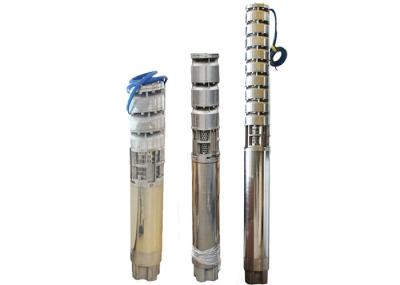
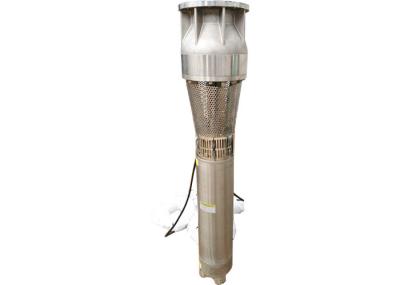
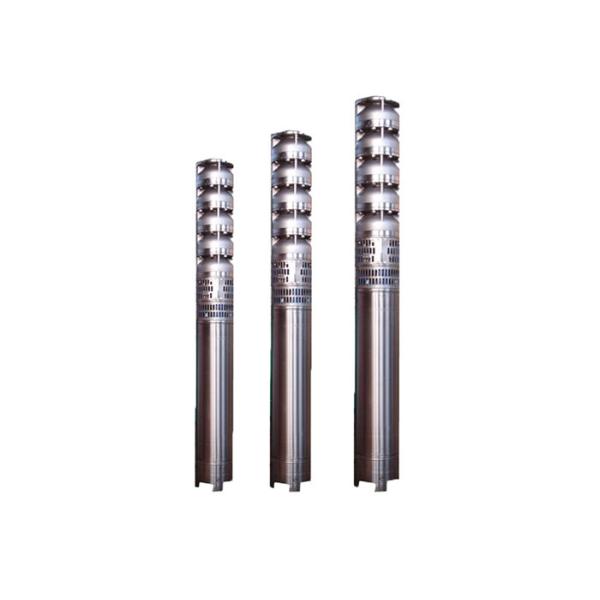
In the field of industrial fluid handling, the choice of material for a stainless steel submersible pump directly dictates the equipment’s lifespan and operational costs. The current market is dominated by four main materials: 304 Stainless Steel, 316L Stainless Steel, 2205 Duplex Steel, and Super Duplex Steel (2507/2506).
These materials differ significantly in corrosion resistance, mechanical strength, and application scenarios. Below is a detailed breakdown.
304 Stainless Steel (18% Chromium, 8% Nickel) is the most widely used base material. The passive film formed on its surface effectively resists weakly acidic media.
Case Study: A fruit juice processing plant reported that 304 pumps transporting cleaning wastewater containing citric acid (pH 3.5) operated continuously for 18 months without visible corrosion, extending the maintenance cycle by 3 times compared to cast iron pumps.
Limitation: 304 is sensitive to chloride ions. It is prone to pitting corrosion when chloride concentration exceeds 200mg/L, making it unsuitable for seawater or high-salinity environments.

By adding 2-3% Molybdenum, 316L Stainless Steel increases its pitting resistance by more than 3 times compared to 304. It can withstand extreme environments ranging from pH 2 to 12.
Case Study: At a seawater aquaculture base in Tianjin, a 316L submersible pump has operated in seawater with a chloride concentration of 2000mg/L for 2 years without rusting, improving water exchange efficiency by 15%.
Ideal Scenarios:
Seawater desalination and marine engineering.
Sulfur-containing wastewater treatment in chemical parks.
Water for Injection (WFI) transport in the pharmaceutical industry.
Duplex steel combines the advantages of austenite and ferrite. 2205 Duplex Steel boasts a yield strength of 450MPa (twice that of 304), while Super Duplex (2507/2506) maintains 90% operating efficiency even in deep-sea environments up to 600 meters.
Case Study: In a ship bilge drainage project, a 2507 Super Duplex pump operating in a sulfuric acid mist environment (pH 2.0) achieved a lifespan 4 times that of standard 316L, reducing annual maintenance costs by 60%.
Ideal Scenarios:
Deep-sea mining and oil & gas platforms.
Concentrated brine evaporation and crystallization systems.
High-temperature geothermal well drainage (≤120°C).
For urban water supply or farmland irrigation, 304 stainless steel is the preferred choice due to its 1.6MPa compressive strength and IP68 protection rating.
Performance: In a high-standard farmland project in Jiangsu, a 304 pump ran for 5,000 continuous hours in well water with 0.01% sand content, resulting in only 0.02mm of impeller wear.
Selection Focus:
Match the Flow-Head Curve (e.g., Q=50m³/h, H=20m).
Motor Insulation Class (Class F allows for temperatures up to 155°C).
Auto-coupling installation system (reduces deep-well maintenance difficulty).
Acid and alkali wastewater treatment requires strict material standards. A chemical plant using 316L pumps for sulfuric acid wastewater (pH 2.0) achieved 6 months of maintenance-free operation, reducing energy consumption by 18% compared to traditional PVC pumps.
Key Parameters:
Mechanical Seal: Silicon Carbide vs. Silicon Carbide (superior wear resistance).
Medium Temperature: 316L is suitable for ≤80°C (Select 2507 Duplex for higher temps).
Explosion-Proof Rating: Ex d IIB T4 (essential for solvent environments).
A comparative test at a South China Sea aquaculture base revealed:
304: Red rust appeared after 96 hours in salt spray testing.
316L: Lasted 720 hours.
2205 Duplex: Showed no corrosion after 1000 hours.
Recommendation: For ocean vessel ballast water systems, Super Duplex is recommended due to:
Chloride tolerance up to 50,000mg/L.
Fatigue strength 40% higher than 316L.
10-year replacement-free lifespan when paired with sacrificial anodes.
Media Analysis: Measure the three core parameters: pH value, Chloride ion concentration, and Temperature.
Environment Assessment: Check for shock loads or vibration (e.g., ship bilges require resistance to 6-8Hz vibration).
Life Cycle Costing: Calculated over a 5-year cycle, Duplex Steel has a 30% higher initial investment but reduces total life cycle costs by 45%.
Standard Certification: Ensure compliance with NSF 61 (Food/Water) or DNV (Marine).
304 Stainless Steel: Inspect for surface scratches before installation. Repair with 320-grit polishing paste. Use 304 stainless steel waterproof glands for cable joints.
316L Stainless Steel: In chemical environments, install PTFE gaskets to prevent galvanic corrosion caused by contact with dissimilar metals.
Duplex Steel: Fastening bolts must match the pump material (e.g., 2205 bolts for a 2205 pump body). Torque must be executed to the 80 N·m standard.
304 Pumps: Inspect impeller corrosion every 3 months.
316L Pumps: Inspection cycle can be extended to 6 months.
Duplex Pumps: typically maintenance-free for 12 months under normal conditions.
Pro Tip: Experience from a petrochemical firm suggests that injecting Food Grade Grease (NLGI Grade 2) every 2,000 hours can extend mechanical seal life by 50%.
Still facing selection challenges?
Contact us today. Our professional team provides complimentary selection services to ensure you get the perfect solution for your specific application.