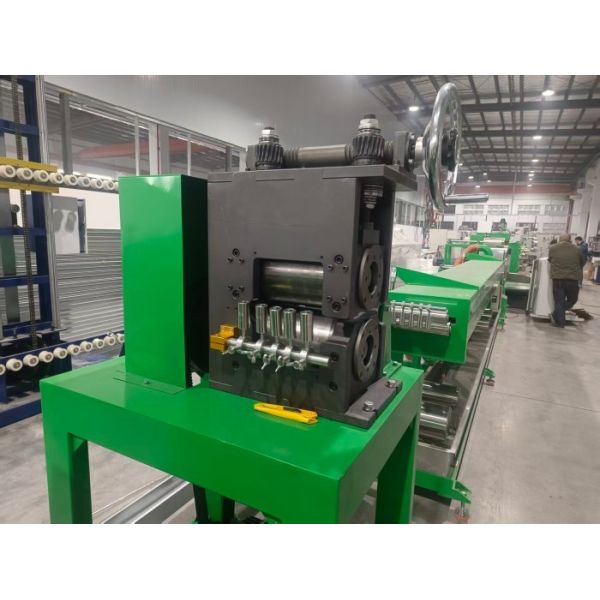
Easy Manual Adjustment, Reliable Pneumatic Control – User-Friendly Embossing Unit
Product Introduction
This embossing unit delivers high performance while prioritizing exceptional user experience. Key process parameters including pressure and gap are adjusted through intuitive handwheels and handles, making operation straightforward and easily understandable. No complex training is required to begin operation. The power system utilizes proven industrial pneumatic technology, providing stable and reliable power output. This combination of convenient manual adjustment and dependable pneumatic drive results in equipment that is simple to operate, easy to maintain, and runs consistently, significantly reducing operator challenges and equipment management expenses.
Main Specifications
- Operating Interface: Large handwheels, adjustment handles with scale markings, and clear pressure gauges
- Drive System: Standardized pneumatic components (cylinders, solenoid valves, pressure regulator filters)
- Safety Design: Pinch-point protection on adjustment areas, alarms for abnormal air pressure
- Maintainability: Pneumatic components are easily sourced and replaced, ensuring low maintenance costs
- Target Users: Production environments prioritizing ease of use, stability, and cost-effective maintenance
Technical Parameters
| Item |
Parameter / Description |
| Primary Adjustment Method |
Manual Mechanical Adjustment |
| Drive / Pressure Source |
Industrial Pneumatic System |
| Adjustment Mechanism |
Precision Lead Screw / Worm Gear paired with Handwheel |
| Pressure Display |
Precision Dial Pressure Gauge or Digital Display |
| Pneumatic Component Brands |
Renowned Industrial Brands (e.g., SMC, Festo, etc.) |
| Operator Training Requirement |
Low (basic mechanical operation knowledge sufficient) |
Customer Questions & Answers
Does manual adjustment imply lower precision? How does it compare to fully automatic adjustment?
Manual adjustment does not equate to low precision. We utilize high-precision mechanical transmission mechanisms (such as precision lead screws), paired with clear scale indications, fully capable of meeting the accuracy requirements of the vast majority of production processes. Its advantages lie in being intuitive, reliable, cost-effective, and responsive. Operators can quickly sense and make adjustments, avoiding potential issues with complex automated systems like cumbersome program setup or difficult troubleshooting. It is particularly suitable for applications with stable processes that do not require frequent automatic adjustments.