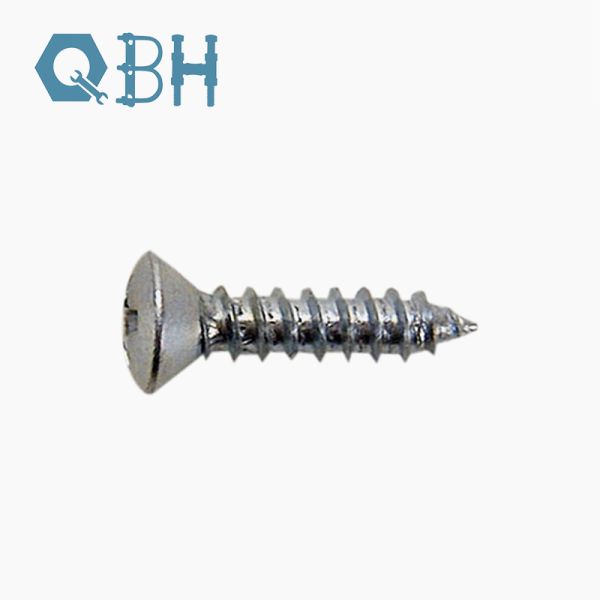
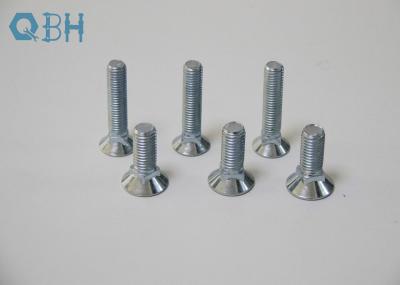
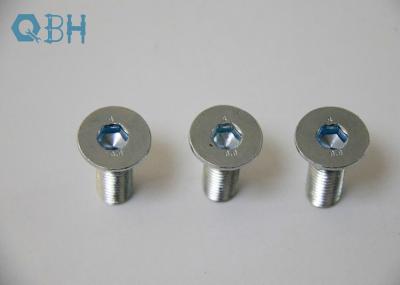
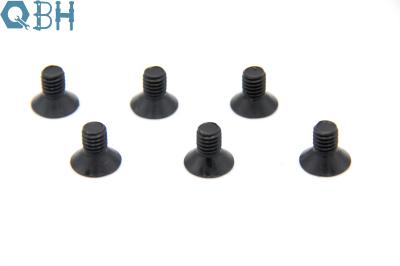
IFI 502 Metric Slotted Oval Countersunk Head Tapping Screws
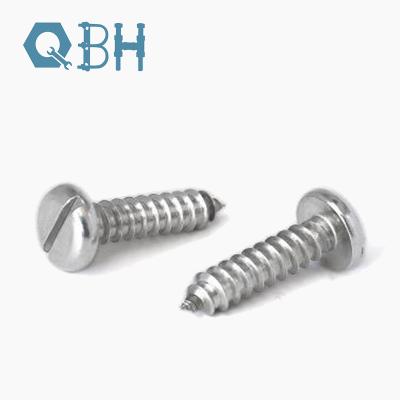
This product is a metric tapping screw manufactured to IFI 502 (equivalent to ASME B18.6.4), featuring a slotted oval countersunk head designed for flush mounting applications where a smooth, low-profile surface finish is required. The screw incorporates a self-tapping thread that cuts or forms its own mating thread when driven into pre-drilled holes in metal, plastic, or composite materials, eliminating the need for pre-tapped nuts or threaded inserts. Available in carbon steel (case-hardened) and stainless steel variants, with thread types including B (thread-forming), BF (thread-cutting with cutting slots), AB (coarse-thread forming), T (tri-lobular thread-forming), and D (thread-cutting with cutting edges), this product is suitable for blind-hole assembly and field installation where access is limited to one side of the joint.
| Style | Oval Countersunk Head Screws |
| Standard | DIN, ANSI, JIS, GB, BS, ISO, etc. |
| Size | / |
| Coating | black, zinc, HDG, Heat treatment, plain, etc. |
| Material | Carbon steel & Stainless Steel |
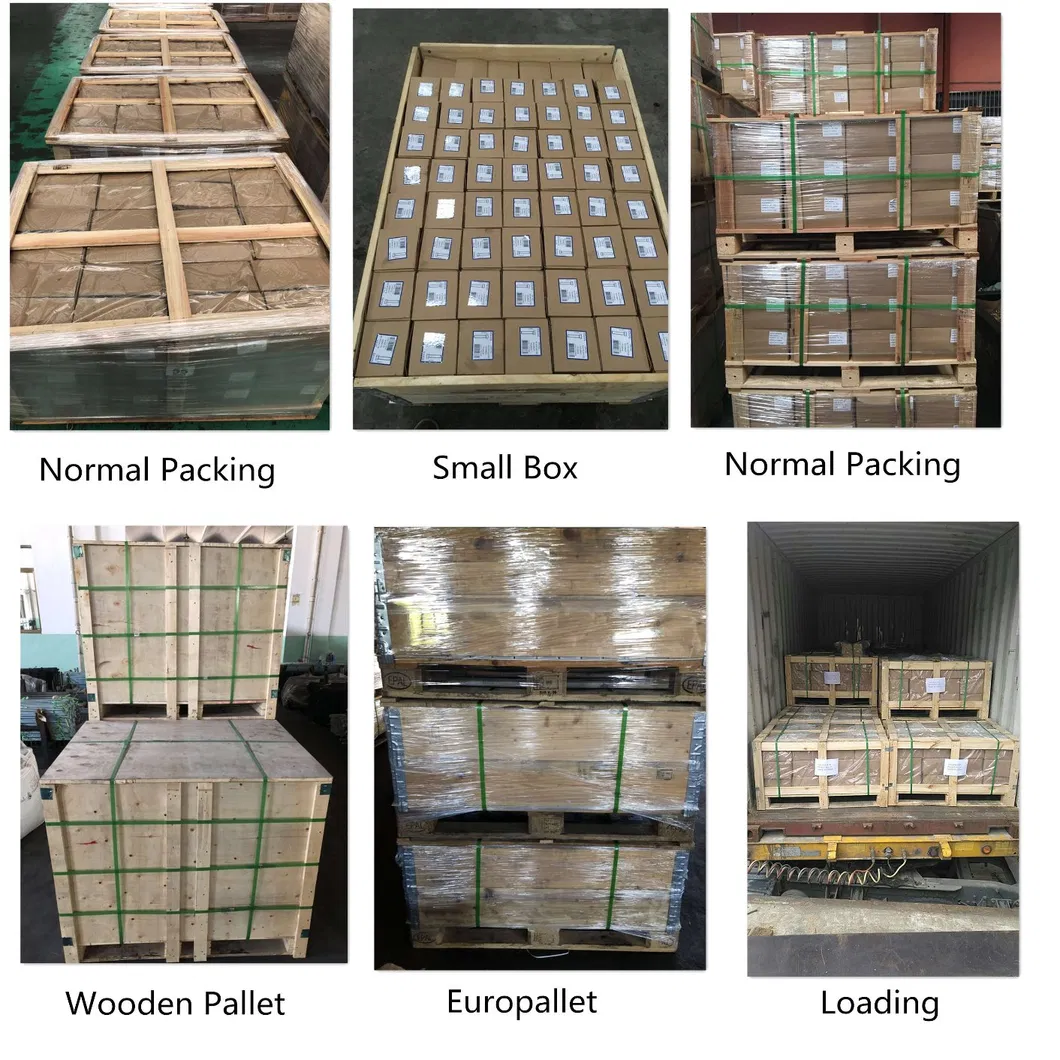
| Packing | bulk/ boxes in cartons, bulk in poly bags/ buckets, etc. |
| Pallet | solid wood pallet, plywood pallet, ton box/bag, etc. |
| Shipment Port | Shanghai & Ningbo |
What are the dimensional specifications and available thread sizes for IFI 502 slotted oval head tapping screws?
The oval head geometry features a countersunk bearing surface with a radiused top profile that sits slightly proud of the mating surface, providing a decorative finished appearance. The slotted drive allows torque application using a standard flat-blade screwdriver. Thread size availability depends on the specific thread type. For thread-forming and thread-cutting screws (Types B, BF, AB, and BP), sizes range from ST2.2 to ST9.5 (ST = self-tapping metric thread), with thread length and overall length specified in the IFI 502 tables. For metric machine screw size variants (Type D cross recessed), sizes range from M2 to M10, with standard ISO metric coarse pitch threads and specified head dimensions including head diameter (dk), head height (k), and slot width (n) per IFI 502 dimensional tables.
What material property classes and mechanical performance requirements apply to these screws?
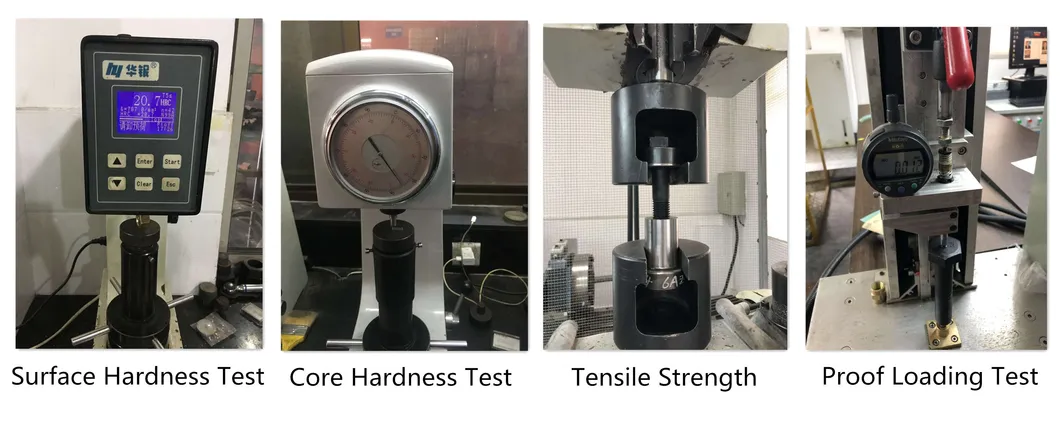
For carbon steel versions, the screw must be case-hardened to achieve a surface hardness sufficient for thread-forming or thread-cutting action while maintaining a ductile core to prevent brittle failure under torsional load. The typical core hardness requirement is in the range of HRC 28–38, measured on a cross-section at 1–2 times the nominal diameter from the screw tip. For stainless steel variants, material grades such as 304 (A2) and 316 (A4) are available, providing corrosion resistance for outdoor, marine, or chemically exposed environments. When installed into a test plate of semi-hard low-carbon cold-rolled steel with hardness 70–85 HRB, the screw must achieve the specified drive torque and strip torque values without thread stripping or head failure. Verification testing includes proof load, torsional strength, and case depth measurement per IFI 502 requirements.
How does the oval countersunk head design affect installation and surface finish compared to other head styles?
The oval countersunk head features a countersunk bearing angle (typically 82° or 90° depending on the standard variant) that mates with a corresponding countersunk hole, allowing the head to sit flush with or slightly above the workpiece surface. Unlike a flat countersunk (flat head) screw which sits completely flush, the oval head’s radiused top profile creates a slightly raised dome that provides a decorative appearance while still allowing smooth passage over the fastened surface. This makes it particularly suitable for applications such as cover plates, nameplates, hinges, trim panels, and architectural hardware where a visible fastener head is acceptable but a smooth, professional finish is required. The slotted drive, while compatible with standard tools, has lower torque transmission capability compared to cross recess drives (Phillips or Pozidriv), making it more suitable for light to medium-duty assembly where over-torquing is not a primary concern. Available surface finishes for carbon steel variants include zinc plating (clear, yellow, or black passivation), phosphate coating (grey or black), and mechanical zinc plating for enhanced corrosion protection.