Specifications
Brand Name :
YUHONG
Model Number :
ASTM A312 TP304
Certification :
ABS, BV, DNV, CCS, LR
Place of Origin :
China
MOQ :
1PC
Price :
Negotiable
Payment Terms :
T/T,L/C
Supply Ability :
10000 tons/month
Delivery Time :
According to the quantity
Packaging Details :
IRON FRAME CASE
Base Tube Material :
Stainless Steel, TP304
Length :
Max 34M/PC
Fin Wall thickness :
0.8-3mm
Fin pitch :
FPI: 3-25
Fin height :
5-30mm
Product Name :
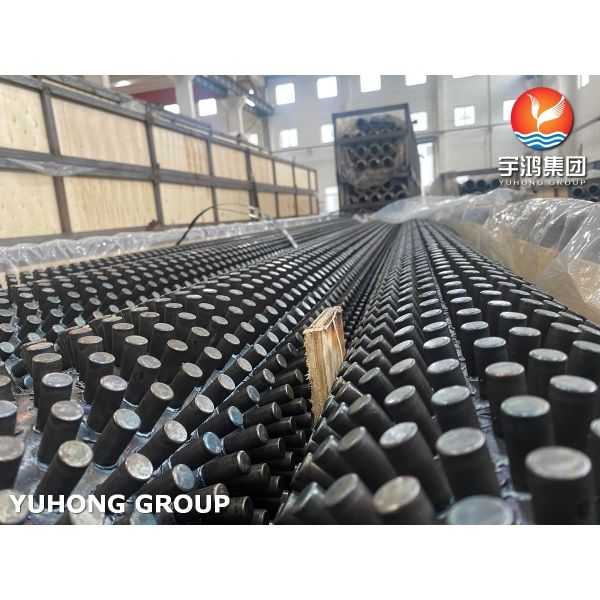
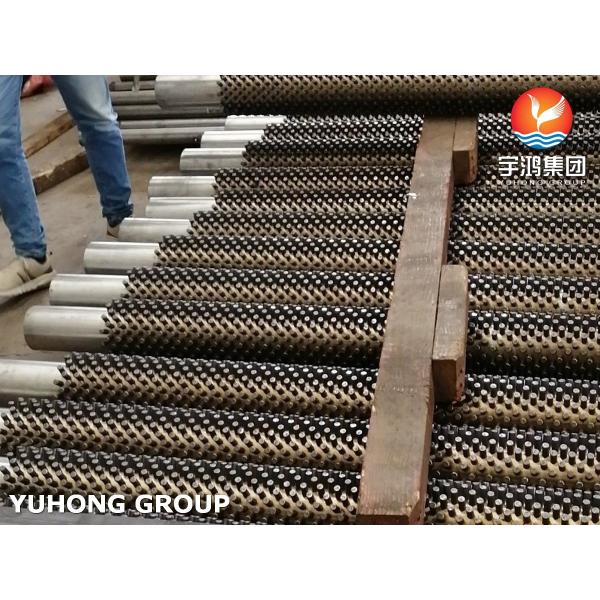
Stainless Steel Studded Tube
Description

Product Overview

The selection of ASTM A312 TP304 studded fin tubes for petrochemical Fluid Catalytic Cracking (FCC) units is a precise technical decision driven by extreme operating conditions and comprehensive performance requirements. The flue gas environment generated by FCC units is exceptionally complex, typically combining high temperatures (up to 400-650°C or more), corrosive components such as sulfur compounds (e.g., SO₂, H₂S), and continuous scouring by fine catalyst dust. To meet this challenge, the austenitic stainless steel pipe material specified by the ASTM A312 TP304 standard provides fundamental material assurance. The core mechanism lies in its approximately 18% chromium content, which forms a stable and dense chromium oxide passivation film on the surface. This film grants the material excellent high-temperature oxidation resistance and resistance to sulfur corrosion, ensuring the tube maintains its strength and structural integrity during long-term high-temperature service. This lays the foundation for achieving safe, stable, long-term, full-capacity, and optimized operation of the unit.

However, corrosion-resistant tubing alone is insufficient for efficiently recovering the vast waste heat from the flue gas, as the low convective heat transfer coefficient on the gas side is the primary bottleneck. This is where the studded fin structure plays its crucial role. By welding a large number of stud-like fins securely onto the outer wall of the TP304 base tube, it multiplies the heat transfer area on the flue gas side (typically by 8 to 15 times compared to a bare tube). This dramatically breaks through the heat transfer bottleneck and significantly enhances waste heat recovery efficiency. Furthermore, the unique arrangement of the studs creates wide and smooth gas passages. Compared to other compact fin types, this design is less prone to blockage by catalyst dust and offers a certain self-cleaning effect as gas flows through. Combined with the inherent strength and wear resistance of the welded structure, it is particularly well-suited for such dust-laden flue gas conditions. Therefore, the studded fin structure is the core design that transforms the corrosion-resistant potential of the TP304 tube into efficient and reliable heat transfer capability.


I. Core Foundation: Analysis of ASTM A312 TP304 Standard and Material

ASTM A312 is a standard specifically governing austenitic stainless steel seamless and welded nominal pipe. It goes beyond specifying chemical composition (like the "18-8" chromium-nickel ratio of TP304) to establish a comprehensive quality and performance assurance system that guarantees reliability in pressurized, high-temperature, and corrosive service environments.
For FCC units, selecting TP304 tubing conforming to this standard means:

  • Chemical Composition Assurance: TP304 contains about 18% Chromium (Cr) and 8% Nickel (Ni). Chromium forms the thin, dense passivation film (Cr₂O₃), which is the physico-chemical basis for its corrosion resistance, especially against sulfide oxidation. Nickel stabilizes the austenitic microstructure, providing good high-temperature strength and toughness.

  • Mechanical Performance Assurance: The ASTM A312 standard specifies minimum mechanical properties such as tensile strength and yield strength at both room and elevated temperatures, ensuring the pipe can withstand system pressure and thermal stress.

  • Manufacturing and Inspection Assurance: The standard imposes strict requirements on manufacturing processes (e.g., solution heat treatment) and non-destructive testing (e.g., eddy current testing, hydrostatic testing). This fundamentally prevents premature failures caused by internal material defects like lack of fusion or susceptibility to intergranular corrosion.

II. Precise Matching of Physical Properties to Environmental Demands

The environment in FCC units (particularly their waste heat boiler systems or CO boilers) is a classic "three-high" severe condition: high temperature, corrosion, and wear. The physical properties of TP304 match this precisely.

Environmental Demand/Challenge TP304 Material Physical Property Response Significance for Unit Operation
High Temperature (Flue gas up to 400-650°C or higher) Excellent high-temperature oxidation resistance: High chromium content ensures continuous formation of a stable oxide film at high temperatures.
Good high-temperature strength: The austenitic structure is less prone to creep deformation at elevated temperatures.
Ensures the heat exchange tube does not deform or collapse during long-term high-temperature service, maintaining structural integrity and heat transfer efficiency.
Corrosion (Flue gas contains SO₂, SO₃, H₂S, water vapor, etc.) Outstanding oxidation and sulfur corrosion resistance: The Cr₂O₃ passivation film effectively resists erosion from sulfur-bearing flue gas, preventing rapid oxidative thinning. Significantly extends equipment maintenance cycles, avoids unplanned shutdowns due to corrosion leaks, and safeguards the unit's long-cycle operation (a core economic indicator for petrochemical plants).
Wear (Flue gas carries catalyst dust) High hardness and good toughness: TP304 material itself possesses considerable hardness and wear resistance. While not matching dedicated wear-resistant steels, it performs reliably at appropriate gas velocities. Combined with the structural advantages of the studded fins (see below), it can withstand a certain degree of dust erosion.
Thermal Stress (Start-ups, shutdowns, load fluctuations) Low thermal conductivity, high thermal expansion coefficient: This necessitates careful design consideration for differential expansion. However, its excellent plasticity and toughness allow it to absorb thermal stress through minor deformation, offering good thermal fatigue resistance. With correct structural design (e.g., installing expansion joints, using flexible layouts), it can adapt to operational changes and avoid stress cracking.

III. Structural Enhancement: The Key Role of the Studded Fin Design

The studded fin is the critical design that unlocks the full potential of TP304 tubing in FCC applications, addressing the core contradiction in gas-side heat exchange.

  • Core Contradiction: The convective heat transfer coefficient of high-temperature flue gas is extremely low (typically only 1/10 to 1/50 that of water), forming the "bottleneck" that limits waste heat recovery efficiency.

  • The Studded Fin Solution:

    1. Geometric Extension, Breaking the Bottleneck: The densely welded studs on the bare tube expand the effective heat transfer area on the flue gas side by 8 to 15 times or more, directly multiplying efficiency on the bottleneck side.

    2. Anti-fouling and Self-cleaning Design: Compared to wound fins, the passages between studs are wider and smoother. For the fine but generally fluid catalyst dust in FCC flue gas, they are less prone to blockage. Gas flow also provides a degree of self-cleaning effect.

    3. Robust Structure, Wear Resistance: Each stud is securely welded to the base tube, resulting in high overall mechanical strength. This enables it to withstand continuous scouring by dust in the flue gas, offering far greater long-term operational reliability than other thinner, lighter fin types.

Send your message to this supplier
Send Now

Application of ASTM A312 TP304 Studded Tube in Petrochemical FCC Units

Ask Latest Price
Brand Name :
YUHONG
Model Number :
ASTM A312 TP304
Certification :
ABS, BV, DNV, CCS, LR
Place of Origin :
China
MOQ :
1PC
Price :
Negotiable
Contact Supplier
Application of ASTM A312 TP304 Studded Tube in Petrochemical FCC Units

YUHONG HOLDING GROUP CO., LTD

Verified Supplier
3 Years
ningbo
Since 1990
Business Type :
Manufacturer, Importer, Exporter, Trading Company, Seller, Other
Total Annual :
50M-70M
Employee Number :
50~800
Certification Level :
Verified Supplier
Contact Supplier
Submit Requirement