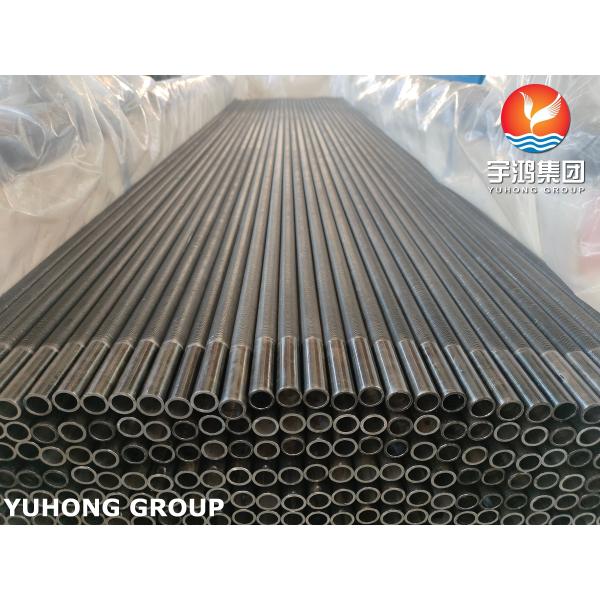
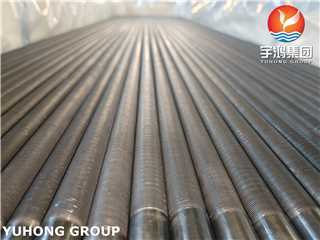
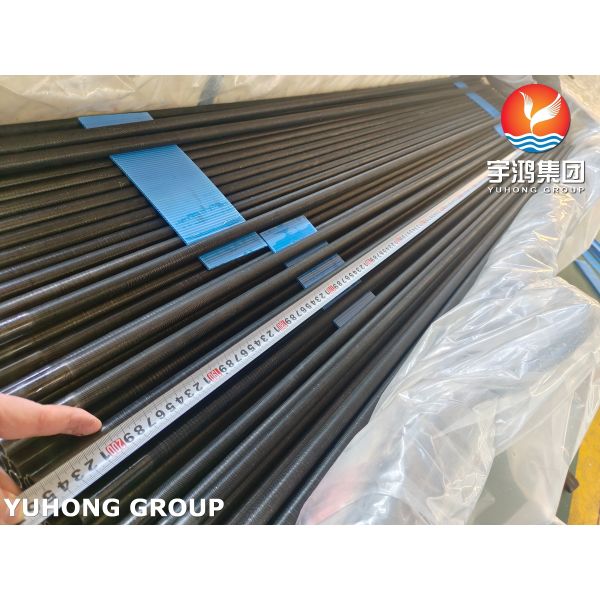
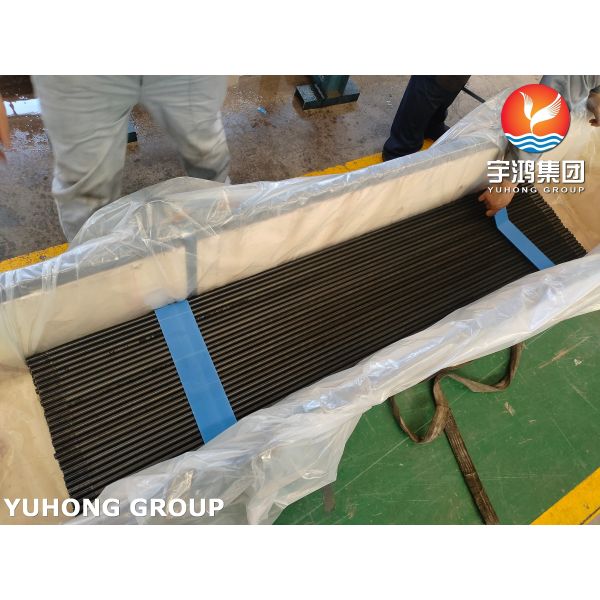
Product Description
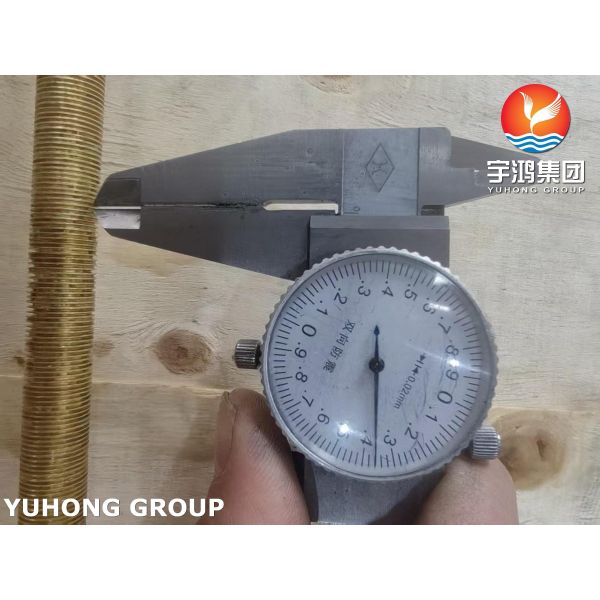
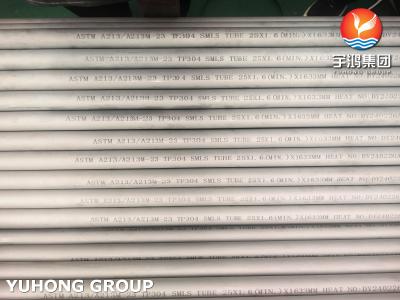
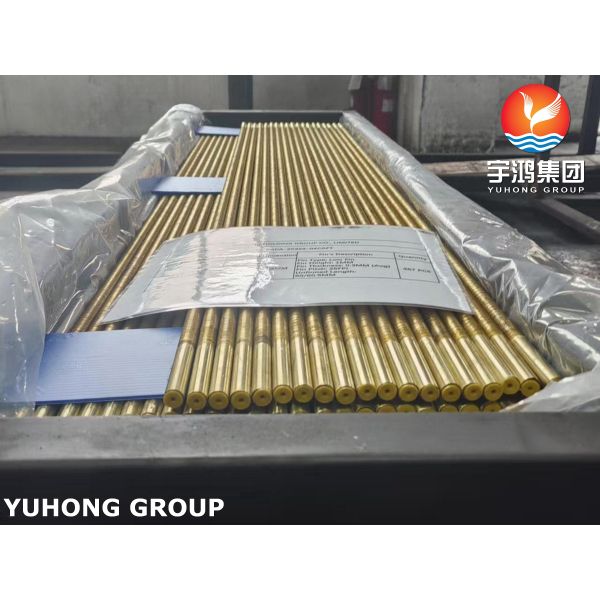
ASTM A334 Gr.1 low-finned tubes offer distinct application advantages in the natural gas industry, with their value stemming from the precise alignment of material standards and typical operating conditions. Manufactured in accordance with the ASTM A334 standard, this material is explicitly specified for low-temperature service down to -45°C, precisely covering critical processes such as the pre-cooling stage in natural gas liquefaction, BOG (Boil-Off Gas) treatment systems, and insulation circulation in LNG storage tanks. The standard mandates that the material must achieve an average Charpy impact energy of no less than 18J at -45°C, with no individual specimen falling below 13.5J. This toughness requirement effectively mitigates the risk of brittle fracture common in ordinary carbon steel pipes under low-temperature conditions, thereby providing fundamental assurance for the safe operation of natural gas facilities.
Chemical composition
Carbon (C): ≤ 0.30%
Manganese (Mn): 0.40-1.06%
Phosphorus (P): ≤ 0.025%
Sulfur (S): ≤ 0.025%
Element Explanations:
The low carbon content ensures the material maintains good plasticity at low temperatures.
The manganese content range is precisely controlled to avoid brittleness caused by excessive amounts or strength loss due to insufficient levels.
The low phosphorus and sulfur content reduces the risk of grain boundary embrittlement, which is crucial for preventing fractures in low-temperature environments.
Physical Properties
Tensile strength: ≥ 415 MPa
Yield strength: ≥ 240 MPa
Elongation: ≥ 30%
Performance Explanations:
The appropriate ratio between tensile strength and yield strength (approximately 1.73) ensures sufficient strain hardening capability of the material.
The minimum elongation requirement of 30% significantly exceeds that of ordinary carbon steel pipes (typically 20-25%), providing greater capacity for plastic deformation.
This balance between strength and plasticity is crucial for preventing low-temperature brittle fractures—excessively high strength compromises toughness, while insufficient strength affects load-bearing capacity.
Advantages of Low-Finned Structure in Natural Gas Applications
-
Enhanced Heat Transfer Efficiency
Technical Basis:
- The low-finned structure, built upon the ASTM A334 Gr.1 base material, significantly increases the heat transfer area.
- The high ductility (elongation ≥30%) of the standard material ensures the forming quality of the fins.
Value in Natural Gas Applications:
- Achieves efficient heat exchange within limited space, which is crucial for space-constrained LNG receiving terminals.
- Reduces heat exchanger volume, lowering the overall footprint and cost of LNG facilities.
- Improves BOG handling efficiency and minimizes natural gas losses.
-
Optimized Frost Resistance
Technical Basis:
- Combination of the fine-grained structure of ASTM A334 Gr.1 and the low-finned design.
- Compatibility between the material's coefficient of thermal expansion and the fin geometry.
Value in Natural Gas Applications:
- Reduces frost formation on heat exchange surfaces in LNG facilities, extending maintenance cycles.
- Maintains stable heat transfer efficiency, preventing system performance degradation due to frosting.
- Lowers operational costs and improves equipment availability at LNG receiving terminals.
-
Assurance of Welding Reliability
Technical Basis:
- ASTM A334 requires the material to have "good weldability."
- The moderate carbon equivalent (controlled by the standard chemical composition) ensures welding quality.
Value in Natural Gas Applications:
- Ensures reliability at critical connection points within LNG facilities.
- Reduces leakage risks caused by welding defects, enhancing the safety of natural gas infrastructure.
- Accommodates complex on-site welding conditions, guaranteeing construction quality.
Specific Application Scenarios in the Natural Gas Industry
-
BOG (Boil-Off Gas) Treatment System in LNG Receiving Terminals
Application Description:
- BOG systems handle naturally evaporated natural gas from LNG storage tanks, with operating temperatures typically ranging between -100°C and -40°C.
- A333 GR.1 low-finned tubes are used in BOG compressor coolers and reliquefaction unit heat exchangers.
Manifestation of Standard Advantages:
- The fine-grained structure ensured by normalization heat treatment enhances material stability under temperature fluctuations.
- The high elongation (≥30%) enables the material to withstand frequent temperature cycling within the BOG system.
- Low phosphorus and sulfur content reduces the risk of embrittlement during long-term operation.
-
Natural Gas Precooling Systems
Application Description:
- Prior to LNG liquefaction, natural gas undergoes multi-stage precooling, with the -45°C stage being a critical step.
- A334 GR.1 low-finned tubes are used in heat exchangers for this temperature stage.
Manifestation of Standard Advantages:
- The -45°C impact energy requirement (§8.2.1) is directly designed for this specific operating condition.
- The moderate manganese content range (0.29-1.06%) optimizes the balance between strength and toughness, adapting to pressure fluctuations during precooling.
- Strict surface quality requirements ensure defect-free tubes, preventing the propagation of micro-cracks within the precooling system.
-
LNG Storage Tank Insulation (Cold Conservation) Systems
Application Description:
- LNG storage tanks require multi-layer insulation systems to maintain the -162°C storage temperature.
- A334 GR.1 low-finned tubes are used in the interlayer nitrogen circulation cooling systems.
Manifestation of Standard Advantages:
- The 18J impact energy requirement provides a sufficient safety margin, preventing failures in the tank insulation system.
- The fine-grained structure (achieved through normalization) lowers the ductile-to-brittle transition temperature, ensuring safe operation within insulation systems operating around -45°C.
- Strict chemical composition control minimizes performance degradation over long-term operation.
-
Intermediate Cooling Stages in Natural Gas Liquefaction Plants
Application Description:
- The multi-stage cooling process in natural gas liquefaction includes stages operating near -45°C.
- A334 GR.1 low-finned tubes are used in heat exchangers for these temperature stages.
Manifestation of Standard Advantages:
- Compatibility with the ASME B31.3 Process Piping code simplifies the design approval process.
- The 30% elongation ensures the material can withstand the temperature fluctuations common in liquefaction processes.
- The clearly defined applicable temperature range (-45°C) provides a reliable design boundary.