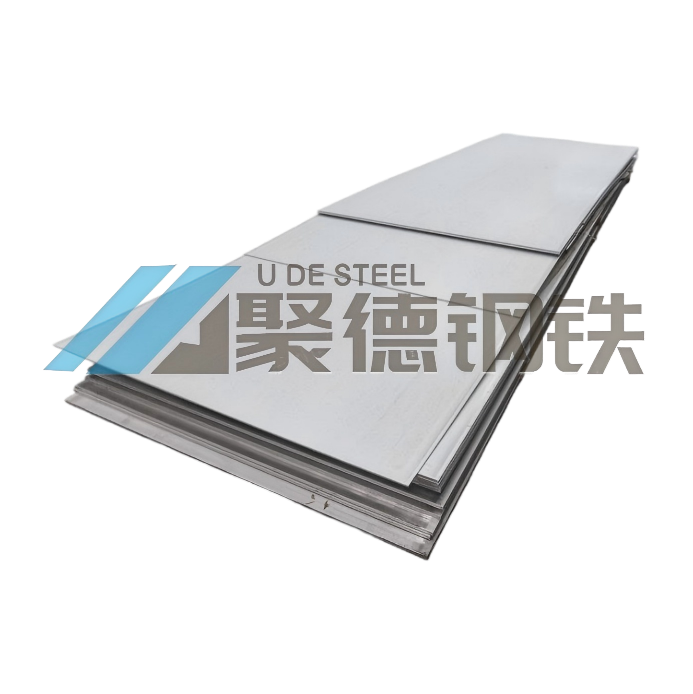
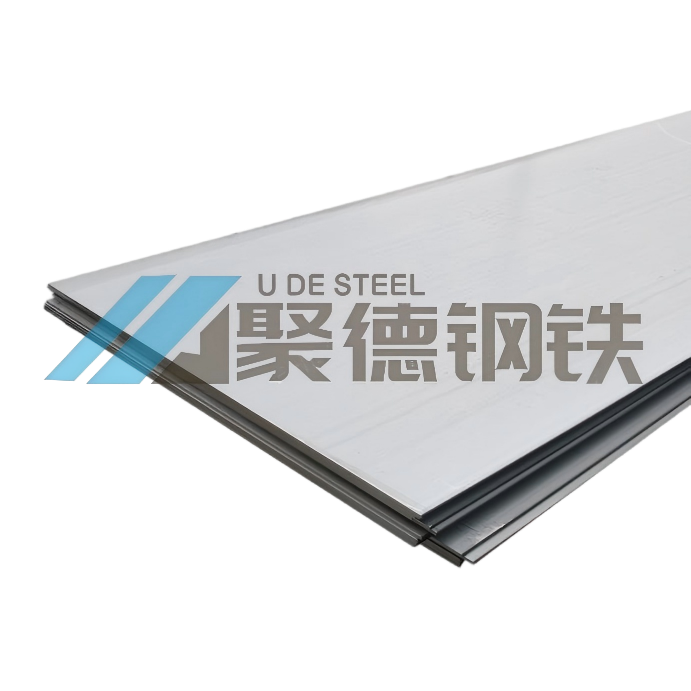
JUDE keeps 50,000 tons of regular-size stainless steel sheets/plates in stock all year round. We provide hot-rolled stainless steel plates with thicknesses of 3.0mm-100mm. For the sizes which have stock, we can even do same-day shipments.If the sheets/plates need to be cut into other sizes, please provide us specific size and quantity.
| Item | Specification |
|---|---|
| Product Name | SS316L Hot Rolled Stainless Steel Sheet |
| Grade | 316L |
| Material Number | EN 1.4404 |
| UNS | S31603 |
| Standard | ASTM A240 / ASME SA240 |
| Product Form | Sheet / Plate |
| Manufacturing Process | Hot Rolled |
| Surface Finish | No.1 |
| Thickness | 3–100 mm |
| Width | 1000–2500 mm |
| Length | 2000–12000 mm |
| Edge | Mill Edge / Cut Edge |
| Heat Treatment | Solution Annealed |
| Surface Treatment | Pickled / Descaled |
| Cutting | Laser / Plasma / Water Jet / Shearing |
| Inspection | MTC / Third-Party Inspection |
| Certification | EN 10204 3.1 Available |
Product Description
SS316L Hot Rolled Stainless Steel Sheet is a low-carbon molybdenum-bearing austenitic stainless steel manufactured according to ASTM A240 requirements. Also designated as UNS S31603 and commonly known as 316L stainless steel, it provides excellent corrosion resistance, good weldability, and reliable mechanical performance in demanding industrial environments.
With its low carbon content and molybdenum addition, 316L offers improved resistance to localized corrosion compared with 304 stainless steel, particularly in chloride-containing and chemical environments. The No.1 finish is a typical surface condition for hot-rolled stainless steel products, featuring a relatively rough, matte appearance suitable for industrial fabrication and further surface processing.
Our ASTM A240 316L Hot Rolled Stainless Steel Sheet is available in a wide range of thicknesses, widths, and lengths, with customized cutting, surface treatment, inspection, and export packaging available according to customer requirements.
Product Features
Name:SS316L Hot Rolled Stainless Steel Sheet
Thickness:3.0mm-100mm
Width:1000‑2500mm
Length:2000‑12000mm
Type: Plate
Material grade:Grade 316L
| Element | Composition (%) |
|---|---|
| Carbon (C) | ≤ 0.030 |
| Silicon (Si) | ≤ 1.00 |
| Manganese (Mn) | ≤ 2.00 |
| Phosphorus (P) | ≤ 0.045 |
| Sulfur (S) | ≤ 0.030 |
| Chromium (Cr) | 16.0–18.0 |
| Nickel (Ni) | 10.0–14.0 |
| Molybdenum (Mo) | 2.0–3.0 |
| Iron (Fe) | Balance |
| Property | Typical Requirement |
|---|---|
| Tensile Strength | ≥ 485 MPa |
| Yield Strength | ≥ 170 MPa |
| Elongation | ≥ 40% |
| Hardness | ≤ 95 HRB |
| Density | Approx. 8.0 g/cm³ |
| Elastic Modulus | Approx. 193 GPa |
No.1 Finish is a common surface condition for hot-rolled stainless steel plate and sheet.
The typical production sequence is:
Hot Rolling → Annealing → Pickling → Inspection
The resulting surface has a dull, matte, relatively rough appearance compared with cold-rolled 2B or BA finishes.
| Property | 316L Stainless Steel | 304 Stainless Steel |
|---|---|---|
| Stainless Type | Austenitic | Austenitic |
| UNS | S31603 | S30400 |
| Chromium | 16–18% | 18–20% |
| Nickel | 10–14% | 8–10.5% |
| Molybdenum | 2–3% | No intentional addition |
| Corrosion Resistance | Excellent | Very Good |
| Chloride Resistance | Better | Lower |
| Weldability | Excellent | Excellent |
| Carbon | ≤0.030% | ≤0.07% |
| Cost | Higher | Lower |
| Typical Applications | Marine, chemical, pharmaceutical | Food, architecture, general industry |
The combination of chromium, nickel, and molybdenum provides 316L with excellent resistance to many corrosive environments.
The addition of molybdenum improves resistance to pitting and crevice corrosion, making 316L particularly useful in chloride-containing environments.
The carbon content of 316L is limited to 0.030% maximum, reducing the risk of carbide precipitation during welding and making it suitable for welded structures.
316L can be readily welded using common stainless steel welding processes, including TIG, MIG, and other appropriate procedures.
As an austenitic stainless steel, 316L offers good ductility and can be formed into a variety of fabricated components.
316L is widely used in demanding environments involving chemicals, moisture, marine exposure, and industrial processing.
SS316L is a low-carbon austenitic stainless steel containing chromium, nickel, and molybdenum. It is designated UNS S31603 and is widely used where excellent corrosion resistance is required.
ASTM A240 is commonly used for chromium and chromium-nickel stainless steel plate, sheet, and strip for pressure vessels and general applications.
The primary difference is carbon content. 316L has a lower maximum carbon content of 0.030%, which provides advantages for welded applications by reducing the risk of sensitization.
Yes. The molybdenum content of 316L provides improved resistance to pitting and crevice corrosion compared with 304, making it suitable for many marine and coastal applications. However, severe chloride environments still require careful material selection.
No.1 is a typical hot-rolled stainless steel surface finish produced after hot rolling, heat treatment, and pickling. It has a relatively rough, matte appearance.
Annealed 316L is generally considered non-magnetic, although cold working can induce some magnetic response.
Yes. 316L has excellent weldability and can be welded using suitable TIG, MIG, and other welding processes. Proper procedures should be selected according to thickness and service requirements.
Yes. We can supply custom thicknesses, widths, lengths, and cut-to-size 316L hot rolled stainless steel sheets according to customer requirements.
Yes. EN 10204 3.1 Material Test Certificates can be provided according to the applicable ASTM specification and customer requirements.