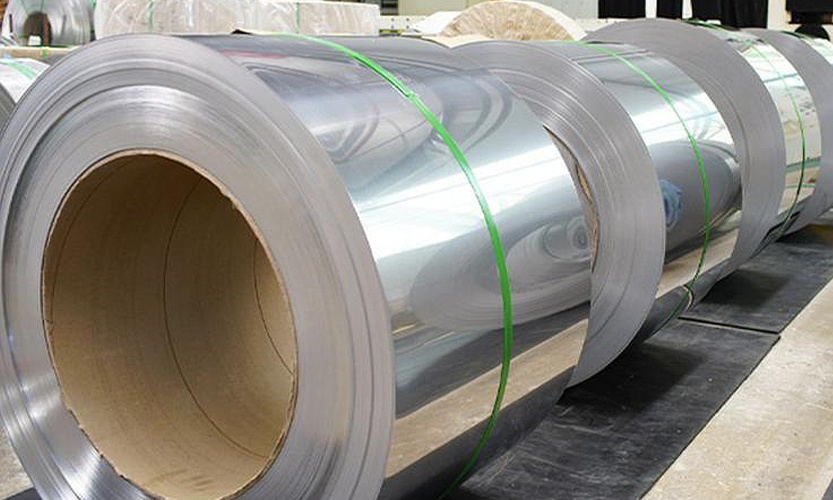
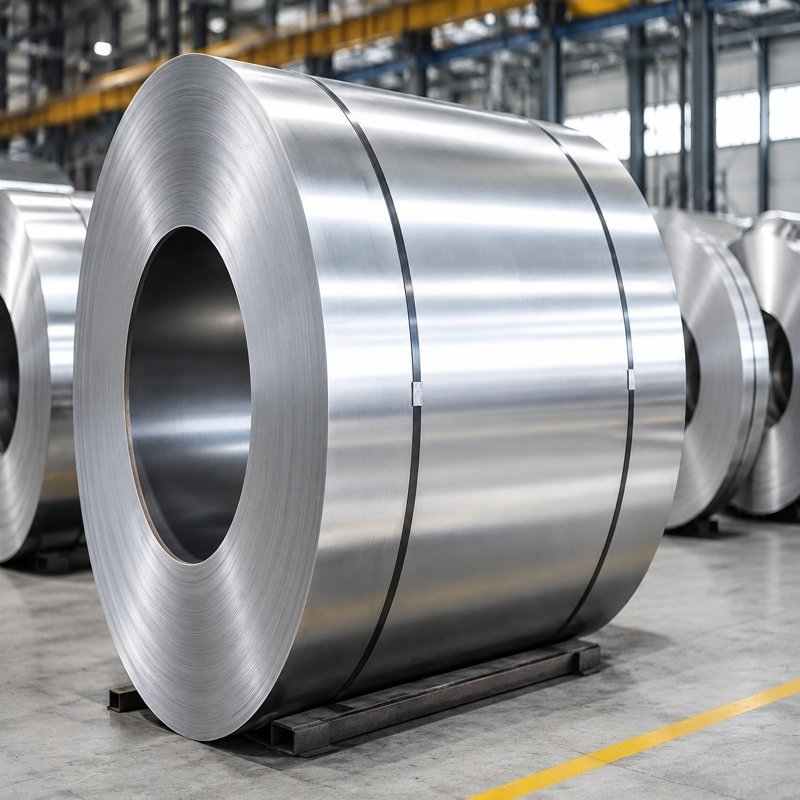
304L Stainless Steel Coil offers exceptional corrosion resistance and formability for industrial applications. This low-carbon variant of 304 stainless steel provides improved welding characteristics and reduced susceptibility to intergranular corrosion.
| Property | Value |
|---|---|
| Grade | 201 |
| Standard | ASTM A240 |
| Surface Finish | 2B, BA, No.4 |
| Thickness Range | 0.3mm - 3.0mm |
| Width Range | 600mm - 1500mm |
| Classification | Typical Grades | Chemical Composition | Characteristics | Typical Applications |
| Austenitic Stainless Steel | 304, 316 | Cr: 16-20%, Ni: 8-12%, C: ≤0.08% (316 includes Mo: 2-3%) | Non-magnetic, excellent corrosion resistance, ductility, moderate high-temp resistance (≤800°C) | Food processing equipment, chemical tanks, architectural cladding |
| Ferritic Stainless Steel | 430 | Cr: 10.5-27%, C: ≤0.15%, No Ni | Magnetic, cost-effective, resistant to chloride corrosion, low strength | Appliance housings, automotive exhaust systems, cookware |
| Martensitic Stainless Steel | 410, 420 | Cr: 11.5-18%, C: 0.1-1.2% | High hardness/strength, moderate corrosion resistance, excellent wear resistance | Cutting tools, bearings, valve components |
| Duplex Stainless Steel | 2205 | Cr: 21-23%, Ni: 4.5-6.5%, Mo: 2.5-3.5%, N: 0.1-0.3% | Dual-phase (austenitic + ferritic), high strength, excellent chloride resistance, weldability | Marine engineering, petrochemicals, desalination plants |
| Element | Primary Role |
| Chromium (Cr) | Forms Cr₂O₃ passive layer; essential for corrosion resistance (≥10.5% required for stainless steel) |
| Nickel (Ni) | Stabilizes austenitic structure, enhances toughness and acid resistance |
| Molybdenum (Mo) | Improves resistance to pitting/crevice corrosion (e.g., in 316 and 2205 grades) |
| Carbon (C) | Increases hardness but reduces corrosion resistance if excessive (risk of chromium carbide precipitation) |
| Nitrogen (N) | Enhances strength and corrosion resistance; partially substitutes Ni in duplex steels |
| Property | Description |
| Corrosion Resistance | Excellent in oxidative environments (e.g., air, freshwater); limited in reducing acids (e.g., HCl) |
| Formability | Austenitic grades: easy to shape; Martensitic grades: require heat treatment |
| Heat Resistance | Oxidation resistance up to 800–1000°C (varies with composition) |
| Surface Treatment | Compatible with polishing, sandblasting, or coatings for aesthetics/performance |