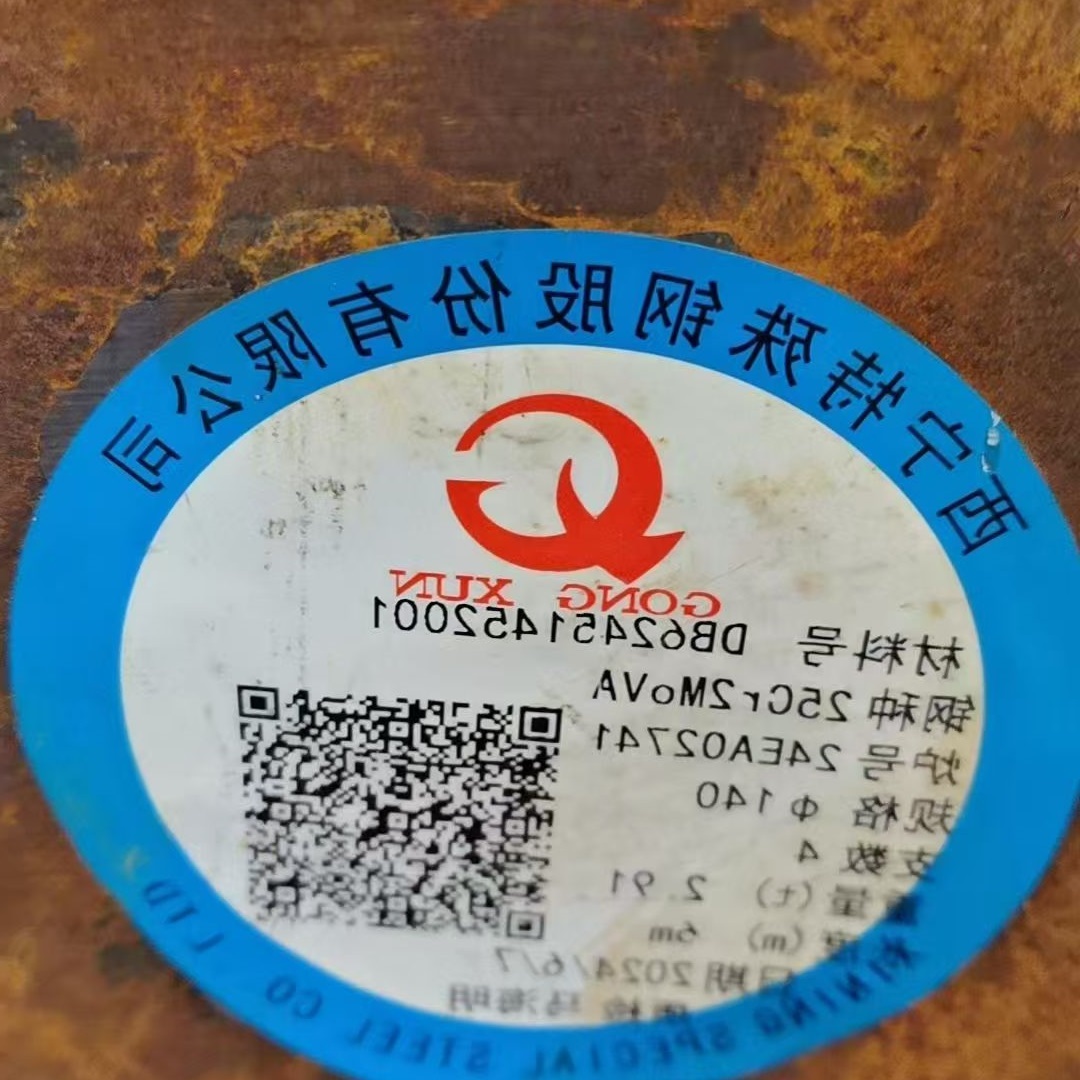
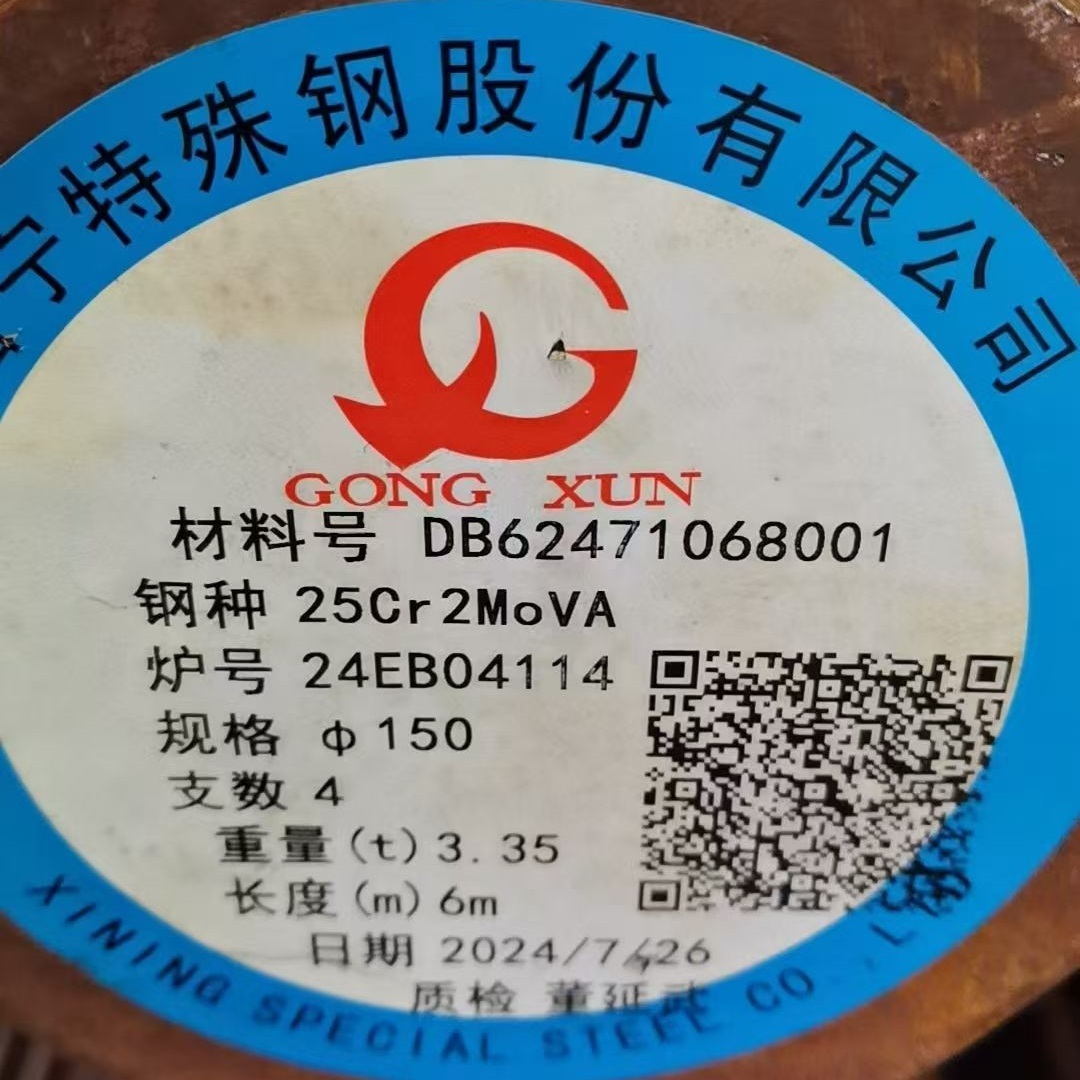
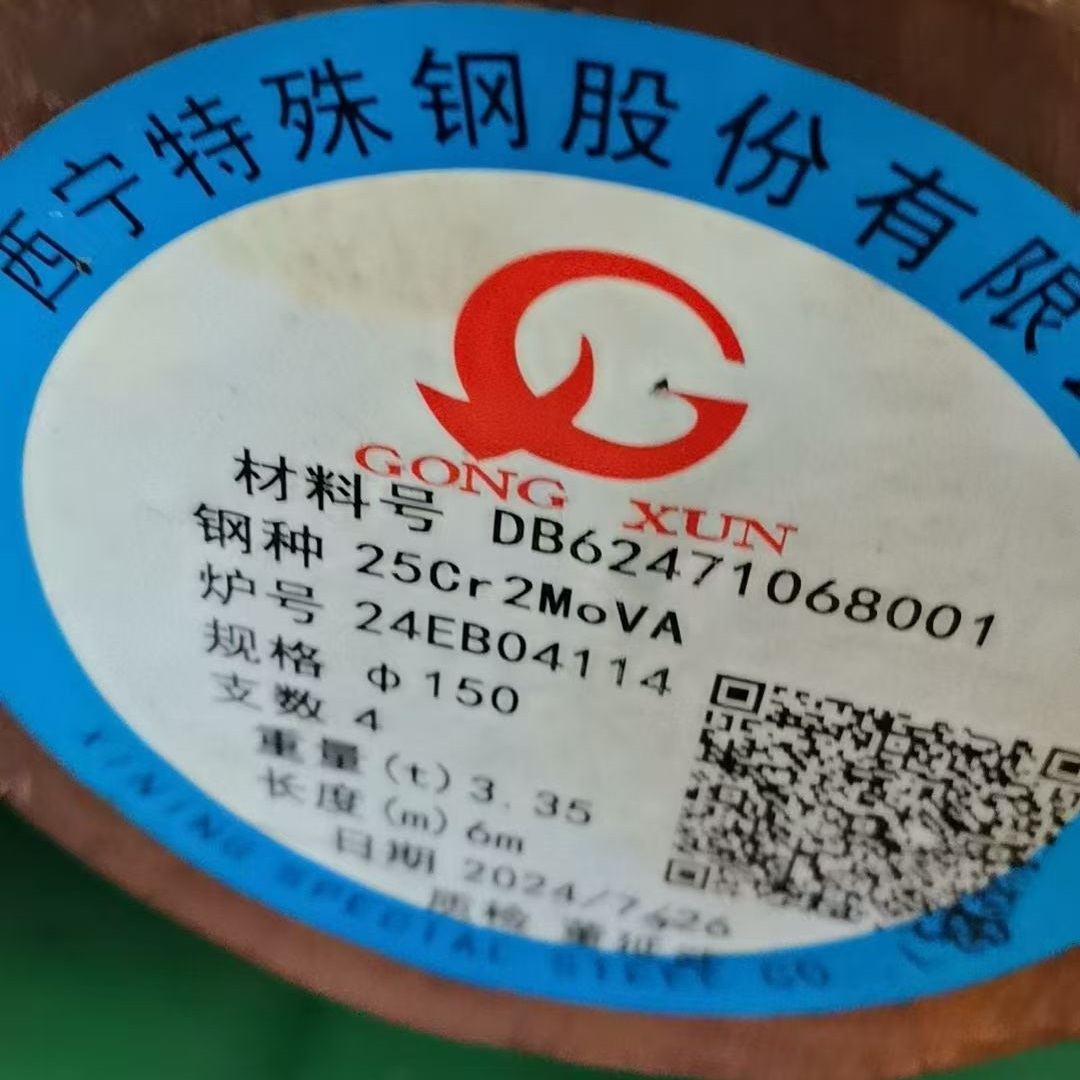
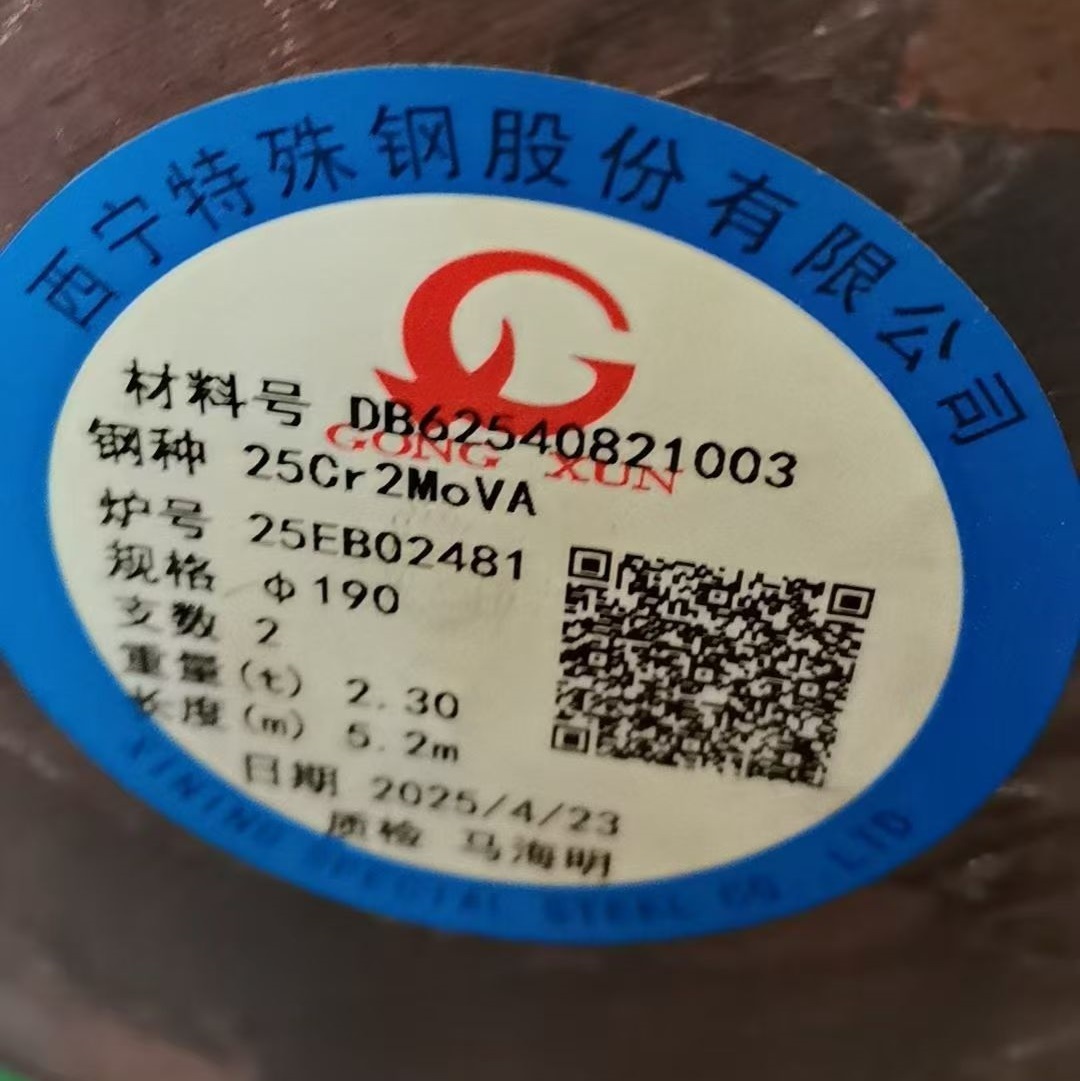
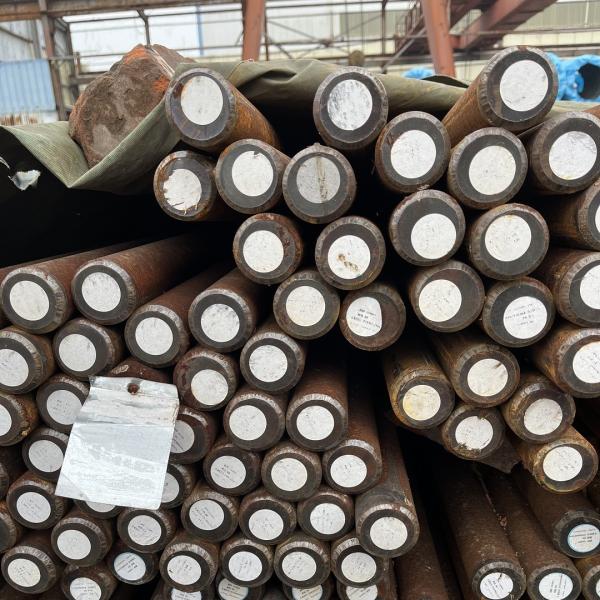
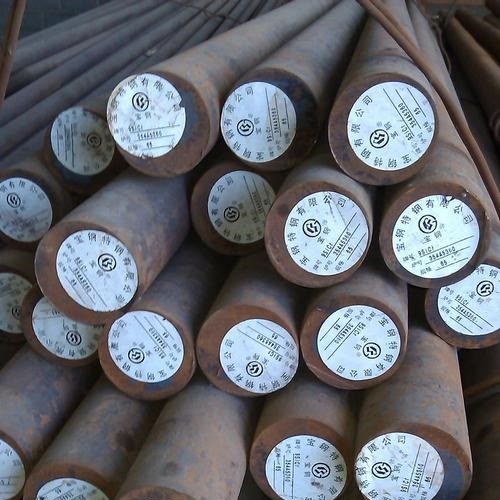
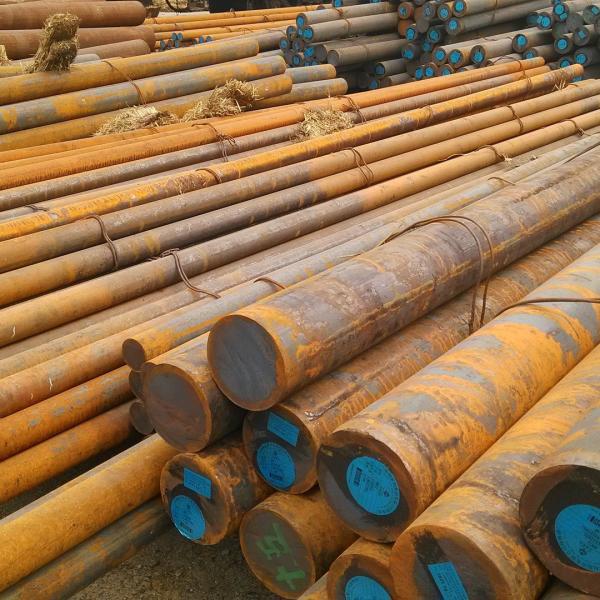
DIN 1.8159 (25CrMoVr6-4) Alloy Steel Round Barr High-Temperature Strength & Excellent Creep Resistance
Products Specification
|
Products Name
|
DIN 1.8159 (25CrMoVr6-4) Alloy Steel Round Bar
|
|
Diameter
|
10 - 300 mm
|
|
Length
|
6m or custom cutting any length as request
|
|
Type
|
Hot Rolled
|
|
Brand
|
BAOSTEEL DELTA DONGBEI HUAXI SHAGANG.etc
|
|
MOQ
|
1 Ton
|
|
Loading Port
|
Shanghai Port
|
|
Packing
|
packing by steel wire rope
|
|
Deliver time
|
5 - 7 days for stock materials
|
|
Other Grade
|
Q195,Q235,10#,20#,35#,45#,Q215,Q345,12Cr1Mov,15CrMo,304,3
16,20Cr,40Cr,20CrMo,35CrMo,42CrMo,40CrNiMo,GCr15,65Mn,50Mn,
50Cr,3Cr2W8V,20CrMnTi,5CrMnMo ,38CrMoAl, 31CrMoV9
|
|
Standard
|
ASTM GB EN DIN
|
|
Application
|
Structure and Industrial
|
Standard Size of our Steel Round Bar In Stock
| 10mm |
12mm |
15mm |
16mm |
18mm |
20mm |
| 25mm |
30mm |
35mm |
38mm |
40mm |
42mm |
| 45mm |
48mm |
50mm |
55mm |
60mm |
65mm |
| 70mm |
75mm |
80mm |
85mm |
90mm |
95mm |
| 105mm |
110mm |
115mm |
120mm |
130mm |
140mm |
| 150mm |
160mm |
170mm |
180mm |
190mm |
200mm |
| 210mm |
220mm |
230mm |
240mm |
250mm |
260mm |
| 270mm |
280mm |
290mm |
300mm |
310mm |
320mm |
DIN 1.8159 (25CrMoVr6-4) Alloy Steel Round Bar – High-Temperature Strength & Excellent Creep Resistance for Demanding Industrial Applications
Overview
DIN 1.8159, also designated as 25CrMoVr6-4 under the European EN standard, is a premium-grade chromium-molybdenum-vanadium alloy steel engineered specifically for applications requiring exceptional mechanical performance at elevated temperatures. This high-alloy steel round bar combines high tensile strength, outstanding creep resistance, and excellent fatigue endurance, making it a preferred choice in critical sectors such as power generation, aerospace, oil & gas, and heavy machinery.
Manufactured to stringent metallurgical controls, DIN 1.8159 round bars are typically supplied in quenched and tempered (Q&T) condition to achieve optimal microstructure—primarily tempered martensite or bainite—that delivers a balanced combination of hardness, toughness, and thermal stability.
Key Features & Benefits
- ✅ Superior Creep Resistance: Maintains structural integrity under prolonged stress at temperatures up to 550°C (1022°F).
- ✅ High Hot Hardness & Thermal Stability: Resists softening during high-temperature service.
- ✅ Excellent Fatigue Strength: Ideal for cyclic loading environments like turbine rotors and crankshafts.
- ✅ Good Weldability (with pre/post-heat treatment): Enables fabrication of complex components.
- ✅ Uniform Microstructure & Cleanliness: Produced via electric arc furnace (EAF) + ladle refining + vacuum degassing for minimal impurities (low S, P).
- ✅ Machinability in Annealed Condition: Can be precision-machined before final heat treatment.
Typical Chemical Composition (Weight %)
| Element |
C |
Si |
Mn |
Cr |
Mo |
V |
Ni |
P (max) |
S (max) |
| Range |
0.22–0.29 |
≤0.40 |
0.40–0.70 |
1.30–1.70 |
0.25–0.35 |
0.10–0.20 |
≤0.30 |
0.025 |
0.020 |
Note: Exact composition may vary slightly based on manufacturer specifications and customer requirements.
The synergistic effect of Cr, Mo, and V enhances hardenability, refines grain structure, and forms stable carbides that resist coarsening at high temperatures—key to long-term creep resistance.
Mechanical Properties (Quenched & Tempered Condition)
| Property |
Typical Value |
| Tensile Strength (Rm) |
900–1100 MPa |
| Yield Strength (Rp0.2) |
≥750 MPa |
| Elongation (A5) |
≥12% |
| Reduction of Area (Z) |
≥50% |
| Hardness |
28–34 HRC |
| Impact Toughness (Charpy V, -20°C) |
≥40 J |
| Creep Rupture Strength (at 500°C / 10⁵ h) |
~120 MPa |
Values are representative; actual properties depend on section size, heat treatment parameters, and testing standards (e.g., EN 10083-3).
Heat Treatment Guidelines
Proper heat treatment is critical to unlocking the full potential of DIN 1.8159:
- Stress Relieving: 600–650°C, slow cool — for machined parts prior to final hardening.
- Austenitizing: 860–890°C (soak time based on diameter), followed by oil quenching.
- Tempering: 600–680°C (typically 620–650°C for optimal creep/toughness balance), air cool.
- Double tempering recommended for critical applications to ensure dimensional stability.
Common Applications
DIN 1.8159 round bars are specified in components subjected to high thermal and mechanical loads, including:
- Steam turbine shafts and rotors
- High-pressure boiler tubes and headers
- Gas turbine blades and discs (non-bladed sections)
- Crankshafts and connecting rods in high-performance engines
- Downhole drilling tools in sour (H₂S-containing) environments
- Fasteners and bolts for power plant flanges
- Valve stems and spindles in petrochemical plants
Its resistance to hydrogen-induced cracking (HIC) and sulfide stress corrosion cracking (SSCC)—when properly processed—makes it suitable for use in aggressive environments per NACE MR0175/ISO 15156 guidelines.
Comparison with Similar Grades
| Grade (Standard) |
Key Alloying Elements |
Max Service Temp |
Primary Use Case |
| DIN 1.8159 (25CrMoVr6-4) |
Cr-Mo-V |
550°C |
Turbine rotors, high-temp shafts |
| DIN 1.7225 (25CrMo4) |
Cr-Mo (no V) |
500°C |
General high-strength shafts |
| AISI 4140 |
Cr-Mo |
425°C |
Oil & gas, automotive |
| ASTM A182 F22 Cl.3 |
2.25Cr-1Mo |
565°C |
Pressure vessels, piping |
| DIN 1.6959 (34CrNiMo6) |
Ni-Cr-Mo |
300°C |
High-toughness gears, axles |
1.8159 outperforms 25CrMo4 in creep resistance due to vanadium addition, which stabilizes fine carbides during long-term exposure.
Available Forms & Dimensions
- Form: Hot-rolled, forged, or cold-drawn round bars
- Diameter Range:
- Hot-rolled: Ø20 mm to Ø300 mm
- Forged: Ø100 mm to Ø800 mm (custom sizes available)
- Cold-drawn: Ø10 mm to Ø80 mm (for precision applications)
- Length: 3,000–6,000 mm (standard); cut-to-length upon request
- Surface Finish: Black (as-rolled), peeled, turned, or ground
- Certification: EN 10204 3.1 / 3.2, Mill Test Report (MTR), chemical & mechanical test data
Machining & Fabrication Tips
- Machinability: Good in annealed condition (~180 HB); use carbide tools, moderate speeds, and adequate coolant.
- Welding: Requires preheating (250–350°C) and post-weld heat treatment (PWHT at 650–700°C) to avoid hydrogen cracking and restore mechanical properties.
- Grinding: Standard procedures apply; avoid overheating to prevent surface rehardening or microcracks.
Quality Assurance & Standards Compliance
DIN 1.8159 round bars are manufactured in accordance with:
- EN 10083-3: Technical delivery conditions for alloy steels
- ISO 683-2: Heat-treatable steels, alloy steels
- ASTM A322 / A331 (equivalent US practices)
- Additional testing per customer request:
- Ultrasonic testing (UT) per EN 10228-3
- Macro/microstructure analysis
- Hardenability (Jominy test)
- Non-metallic inclusion rating (ASTM E45)
Why Choose DIN 1.8159?
In an era where energy efficiency and equipment longevity are paramount, DIN 1.8159 (25CrMoVr6-4) offers a scientifically optimized alloy system that bridges the gap between cost and performance. Its vanadium-enhanced microstructure ensures that components maintain dimensional accuracy and load-bearing capacity over decades of service—even under extreme thermal cycling.
Whether you're designing the next-generation combined-cycle power plant or upgrading offshore drilling equipment, this alloy steel provides the reliability, safety margin, and lifecycle cost savings that engineers demand.
Contact Us
For technical datasheets, custom heat treatment protocols, or bulk quotations on DIN 1.8159 alloy steel round bars, please contact our materials engineering team. We support global shipping with full traceability and compliance documentation.