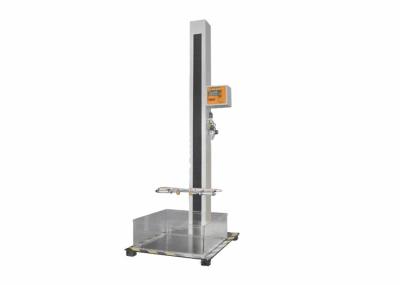
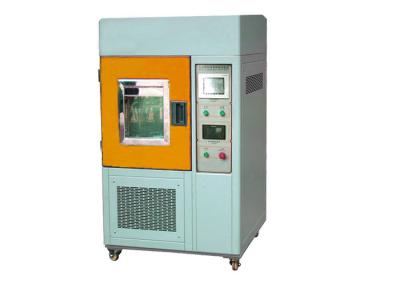
IEC 62133-2 Battery Crush and Nail Penetration Test Chamber for Lithium Battery Safety
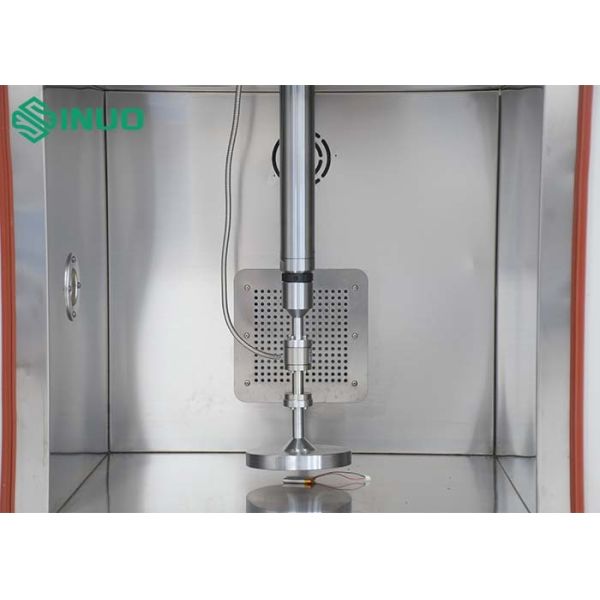
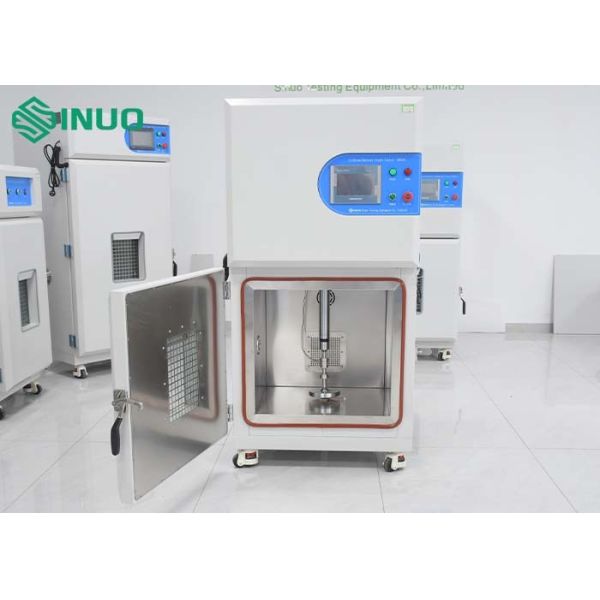
The Battery Crush and Nail Penetration Test Chamber is a professional lithium battery safety testing system designed to simulate extreme abuse conditions such as battery crushing, extrusion, and nail penetration. This advanced equipment evaluates battery safety performance under mechanical abuse conditions and is widely used for lithium-ion battery safety certification, EV battery testing, energy storage battery testing, and R&D reliability verification.
This system complies with international battery testing standards including IEC62133-1:2017, IEC62133-2:2017, and IEC60086-4:2019. The integrated platform combines crush testing, nail penetration testing, voltage monitoring, deformation monitoring, and explosion-proof protection into one intelligent testing solution.
Ideal for battery manufacturers, EV battery laboratories, certification agencies, universities, and third-party testing centers.
Compliance Standards
- IEC62133-1:2017 Clause 7.3.6
- IEC62133-2:2017 Clause 7.3.5
- IEC60086-4:2019 Clause 6.5.3
Advanced Battery Safety Testing System
- Integrated battery crush and nail penetration testing
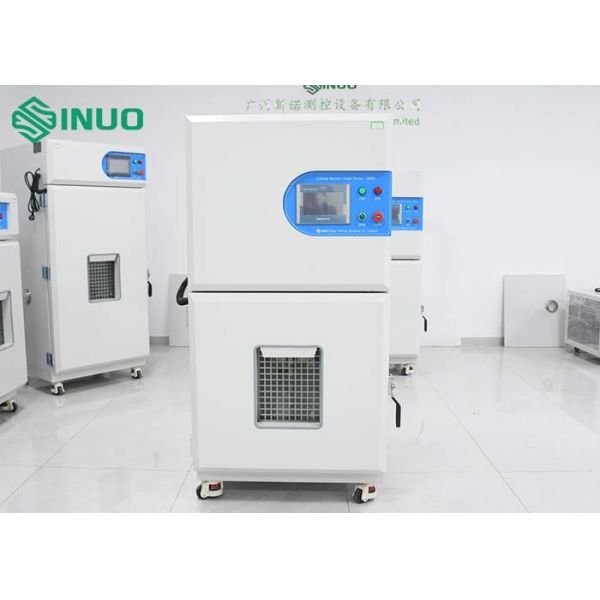
- PLC intelligent control with touch screen interface
- Real-time pressure, voltage, and deformation monitoring
- Automatic data recording and USB export function
- High-precision force and speed control system
- Adjustable crush force and penetration speed
Explosion-Proof Safety Protection Design
The chamber adopts a heavy-duty explosion-proof structure specially designed for lithium battery abuse testing.
Safety Protection Includes:
- Double-layer reinforced explosion-proof chamber door
- Explosion-proof tempered glass observation window
- Pressure relief explosion venting system
- High-temperature resistant flame-retardant structure
- Emergency stop safety switch
- Automatic power cut-off protection
- Fire-resistant exhaust ventilation system

High-Performance Exhaust & Ventilation System
The test chamber features an industrial-grade air exhaust system that effectively removes smoke, gas, and heat generated during battery abuse testing.
- Large airflow exhaust fan
- High-temperature resistant motor
- Integrated air collection hood
- Pressure release explosion-proof vent
- Fire-resistant ventilation structure
Professional Testing Functions
This lithium battery abuse tester supports:
- Battery crush testing
- Battery extrusion testing
- Nail penetration testing
- Voltage monitoring
- Deformation monitoring
- Multi-condition combined testing

Technical Parameters
Crush Test Parameters
| Item |
Specification |
| Force Range |
1KN ~ 50KN Adjustable |
| Force Accuracy |
≤±1% |
| Crush Range |
0~300mm |
| Unit Conversion |
Kg / N / Lb |
| Speed Range |
1~15mm/s Adjustable |
| Speed Accuracy |
1mm/s |
| Force Display Accuracy |
1N |
| Speed Error |
≤0.5% |
| Force Error |
≤±1% |
| Crush Pause Time |
0~99h 59min 59s |
Nail Penetration Test Parameters
| Item |
Specification |
| Force Range |
1KN ~ 50KN Adjustable |
| Penetration Speed |
1~20mm/s Adjustable |
| Speed Accuracy |
±0.5mm/s |
| Force Error |
±1% |
| Stroke |
0~300mm |
| Steel Needles |
Φ3×100mm ×3 pcs / Φ5×100mm ×3 pcs |
| Voltage Resolution |
1mv |
General Specifications
| Item |
Specification |
| Input Voltage |
AC 220V, 50Hz |
| Power |
1.5KW |
| Chamber Structure |
Vertical Pressure Structure |
| Maximum Test Space |
W500 × D520 × H450 mm |
| External Size |
Approx. 800W × 800D × 1700H mm |
| Chamber Weight |
Approx. 350kg |
| Control Method |
PLC + Touch Screen |
| Data Communication |
USB Export |
| Emergency Stop |
Included |
| Inner Material |
SUS304 Stainless Steel |
| Outer Material |
Powder Coated Cold Steel Plate |
| Observation Window |
300×300×10mm Double-Layer Explosion-Proof Glass |
| Exhaust Port |
100mm |
| Mobility |
4 Universal Wheels |
Key Design Features
- The test chamber is an independently sealed area, isolated from the power area at the bottom and the exhaust lighting area at the top, which prevents flames, high-temperature gases, and leakage gases from spreading to other areas.
- The test chamber is equipped with an exhaust system with air exhaust outlet at the top and air supply port at the bottom left side. The exhaust fan features a long-axis motor and steel wind wheel with large air volume, fire prevention, and high temperature resistance.
- The test chamber is entirely composed of high-temperature resistant and flame-retardant components with no plastic pipelines, wires, rubber gaskets, sealing rings, etc. The chamber door is sealed with high-temperature resistant sealing strips.
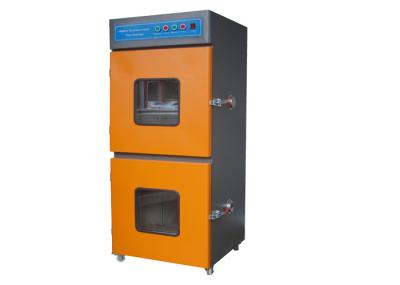
- The front door of the test chamber adopts a reinforced double-layer design with reinforced hinges and door locks. The window is made of double-layer explosion-proof tempered glass.
- The back panel uses a hinge on one side and a magnetically adsorbed openable door on the other side for effective explosion venting. When closed, it prevents gas leakage; during explosions, high-pressure gas can push open the pressure relief door to protect equipment and personnel.
- The internal bottom plate of the test chamber adopts an integrated design with no holes or gaps, making it easy to clean.
- Internal lighting is protected by a tempered glass protective cover to prevent damage from flames and projectiles, using standard detachable fasteners for easy replacement.
- The extrusion testing machine meets electrical safety standards. During accidents, the equipment automatically cuts off external input power.
- Self-protection pressure setting function prevents excessive crush pressure from damaging equipment. When pressure reaches the set value, the machine automatically stops and can only raise the crush fixture.
- The fixture can be flexibly disassembled for easy replacement.

Frequently Asked Questions
Q1: What battery standards does this equipment comply with?
A: The machine complies with IEC62133-1:2017, IEC62133-2:2017, IEC60086-4:2019, and related lithium battery safety testing standards.
Q2: What tests can this machine perform?
A: The equipment supports battery crush testing, extrusion testing, nail penetration testing, voltage monitoring, and deformation testing.
Q3: Is the chamber explosion-proof?
A: Yes. The chamber features reinforced explosion-proof doors, tempered glass windows, pressure relief devices, and fire-resistant structures for maximum safety.
Q4: Can the machine record testing data?
A: Yes. The system automatically saves pressure and voltage curve data and supports USB export.
Q5: What types of batteries can be tested?
A: The tester is suitable for lithium-ion batteries, lithium polymer batteries, EV batteries, pouch cells, cylindrical cells, and energy storage batteries.
Q6: Can the testing force and speed be adjusted?
A: Yes. Both crush force and penetration speed are fully adjustable through the PLC touch screen control system.