1. What Is A Nylon 46 Cable Tie?
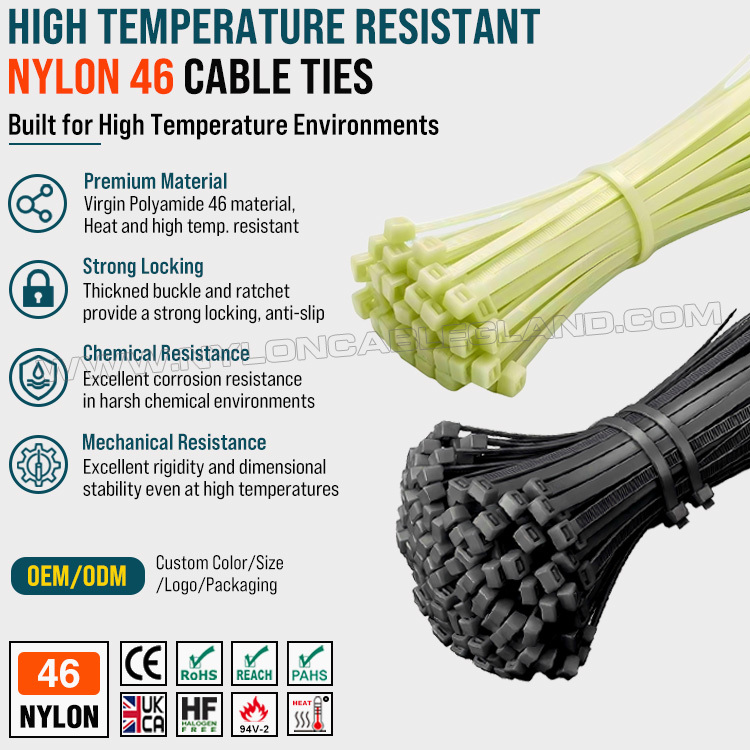
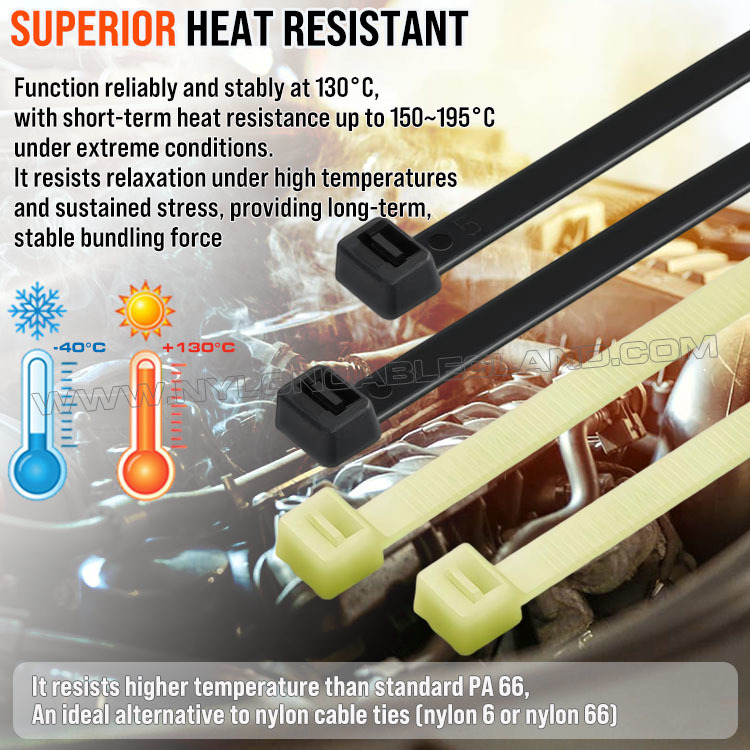
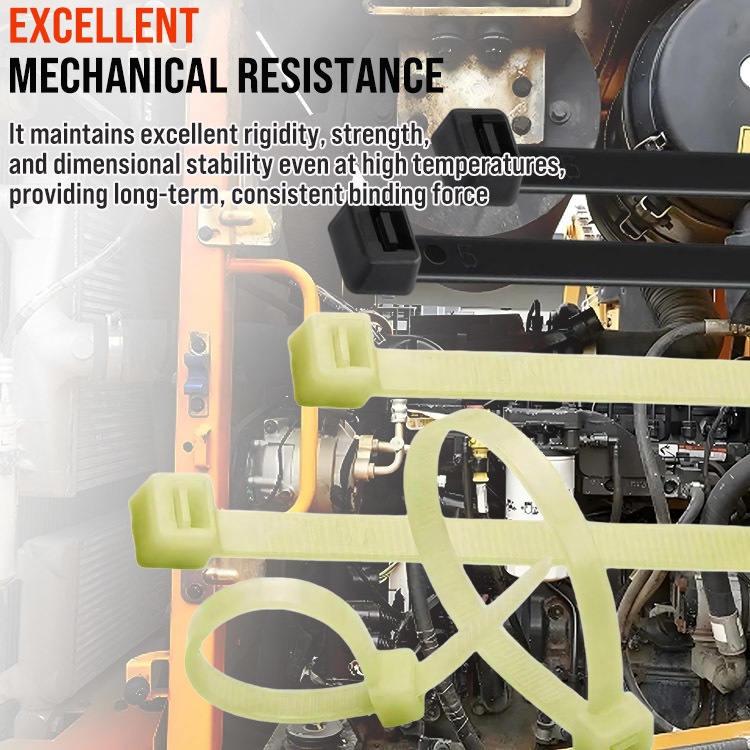
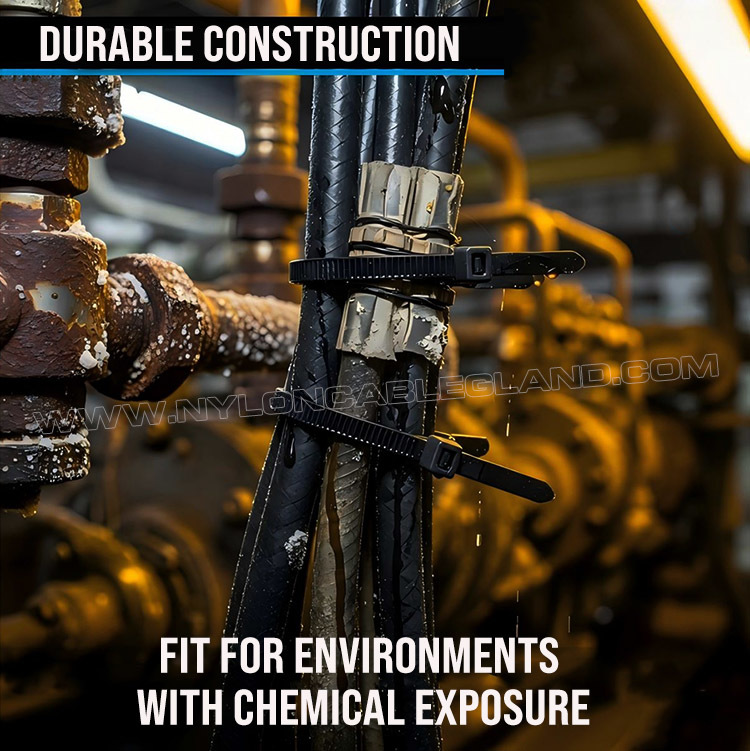
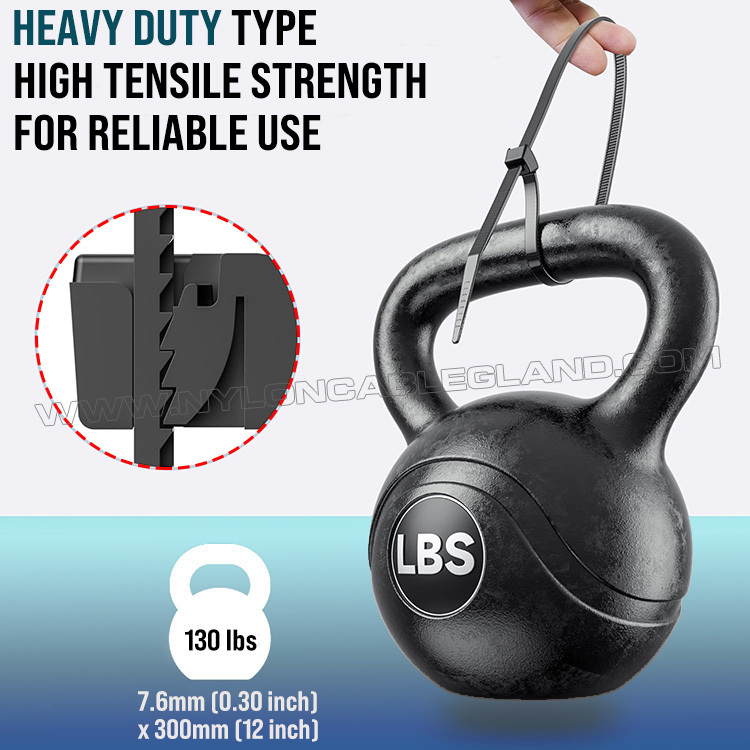
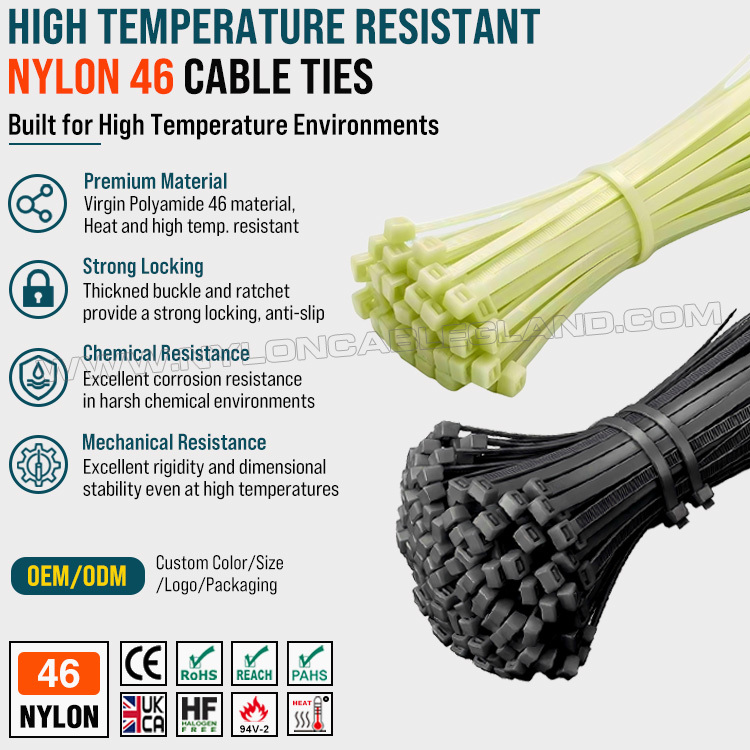
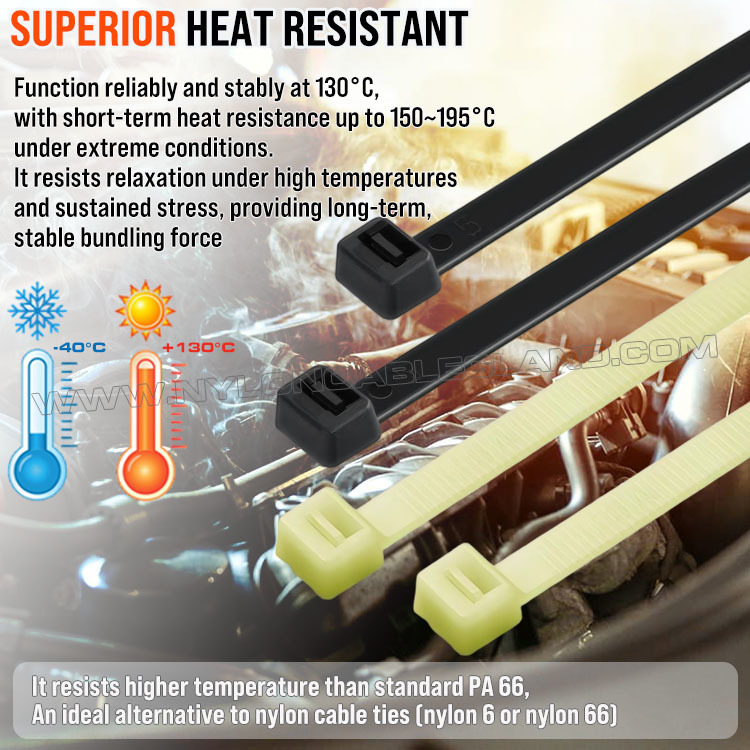
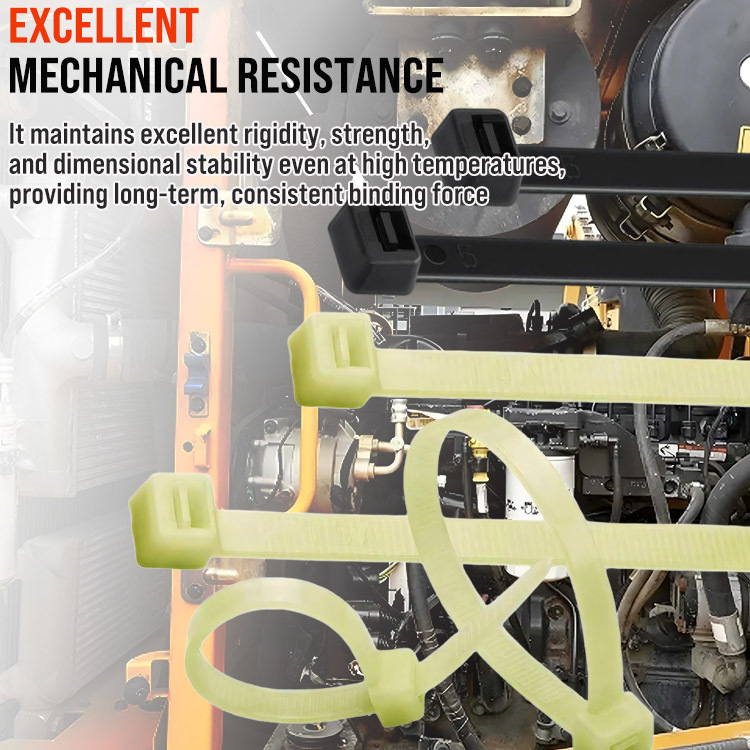
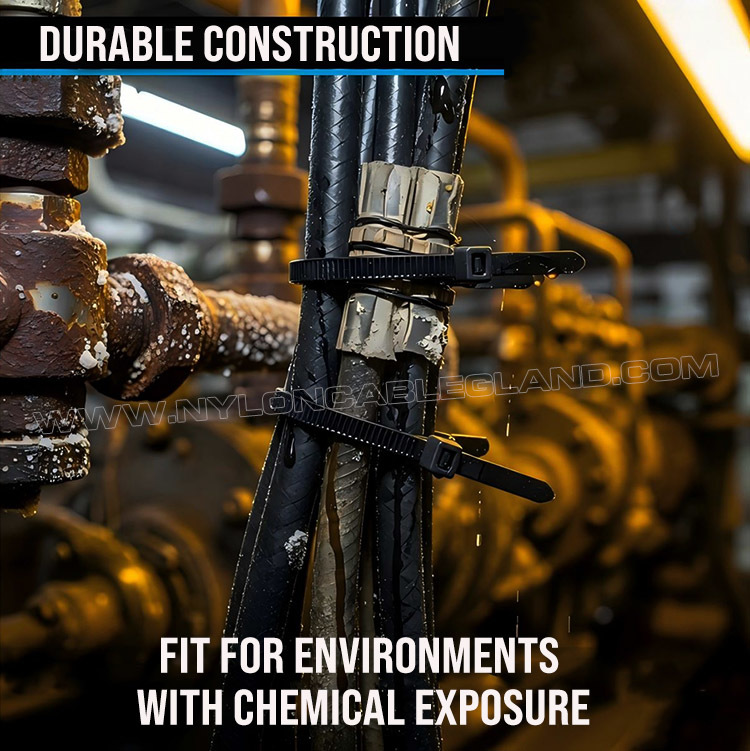
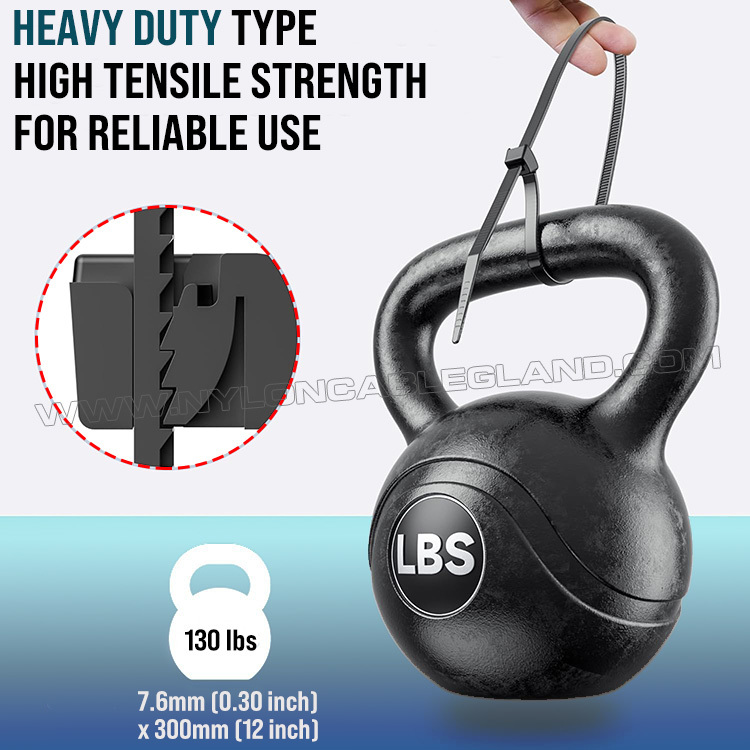
A Nylon 46 cable tie is a type of cable management fastener made from Polyamide 46 or PA46 material (high-performance engineering thermoplastic), it is produced by injection molding and is designed to bundle, secure, and organize wires, cables, hoses, and other components. Compared with conventional Nylon 66 (PA66) version, the PA46 version offers particularly strong performance under elevated temperatures, including better stiffness and dimensional stability. It also provides good mechanical strength, wear resistance, chemical resistance, and resistance to creep at high temperatures. These properties make the Nylon 46 version suitable for demanding environments where conventional version may gradually soften, deform, or lose mechanical performance. They are generally positioned as a high-temperature, high-performance alternative to standard nylon cable ties, rather than as a general-purpose replacement for PA66.
2. Main Characteristics & Advantages of A Nylon 46 Cable Tie
3. Difference Between Nylon 46 & Nylon 66
| Property | Nylon 46 (PA46) | Nylon 66 (PA66) |
|---|---|---|
| Polymer type | High-performance polyamide | General-purpose engineering polyamide |
| Melting temperature | ~295°C | ~260°C |
| High-temperature stiffness | Excellent | Good |
| Creep resistance at high temperature | Excellent | Good |
| Dimensional stability under heat | Very good | Good |
| Heat-performance margin | Higher | Lower |
| Typical cost | Higher | Lower |
| Typical application | High-temperature/demanding environments | General cable management |
The important distinction is that PA46 is not simply “stronger nylon 66”; it is especially valuable because it retains mechanical and dimensional performance better under prolonged thermal loading.
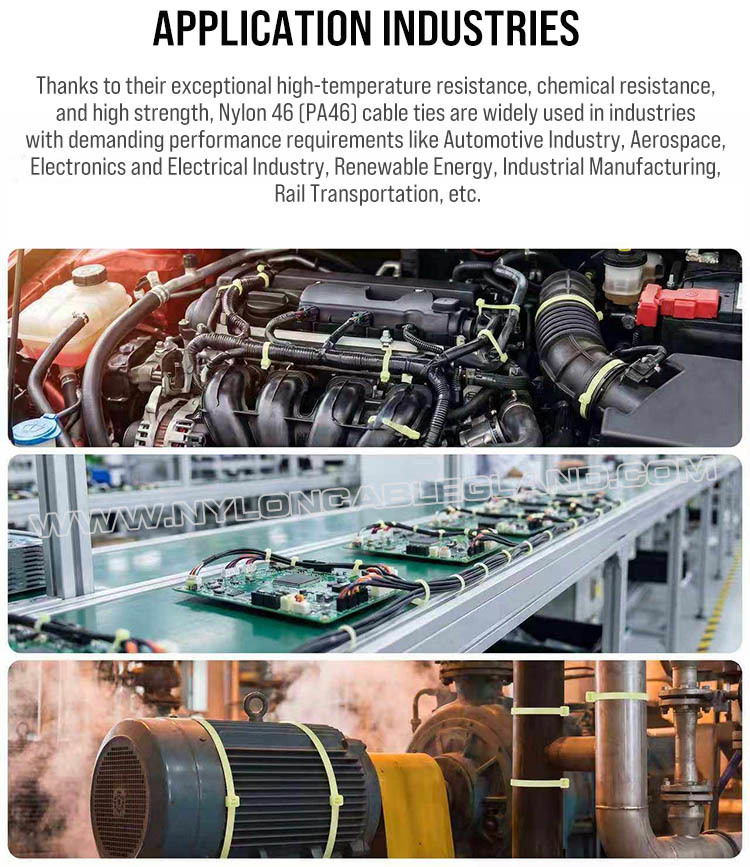
4. Where Is A Nylon 46 Cable Tie Used?
5. Conclusion
Nylon 46 cable ties are high-performance cable-management fasteners developed for applications where heat resistance, mechanical stability, and long-term reliability are important. Compared with conventional Nylon 66, PA46 has a higher melting temperature, higher crystallinity, and better resistance to creep and mechanical-property loss under elevated temperatures.
For ordinary indoor cable bundling, PA66 is usually the more economical choice. For automotive, railway, industrial, electrical, and other applications involving sustained high temperatures, PA46 can provide a significantly greater thermal-performance margin. As a practical purchasing guideline, high-quality commercial PA46 cable ties commonly target around +130°C long-term operation and up to +150°C for extended high-temperature exposure, with some products qualified for considerably higher short-term temperatures.