Product Overview
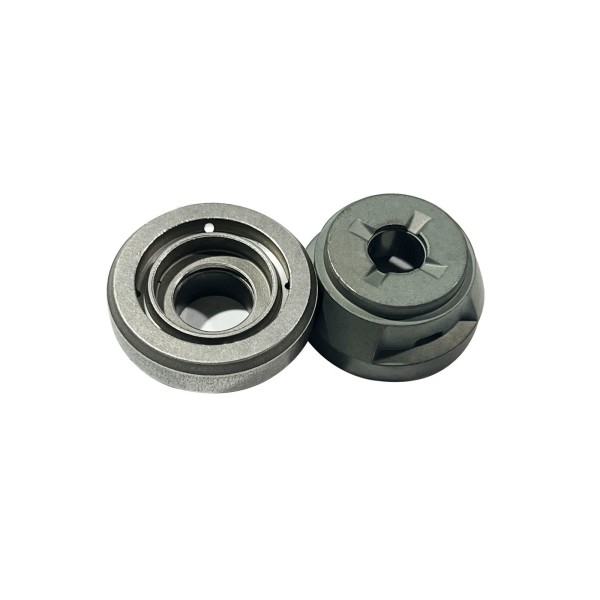
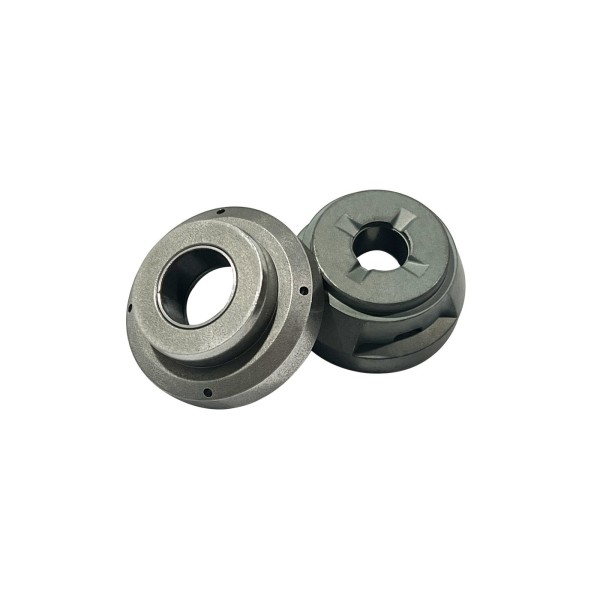
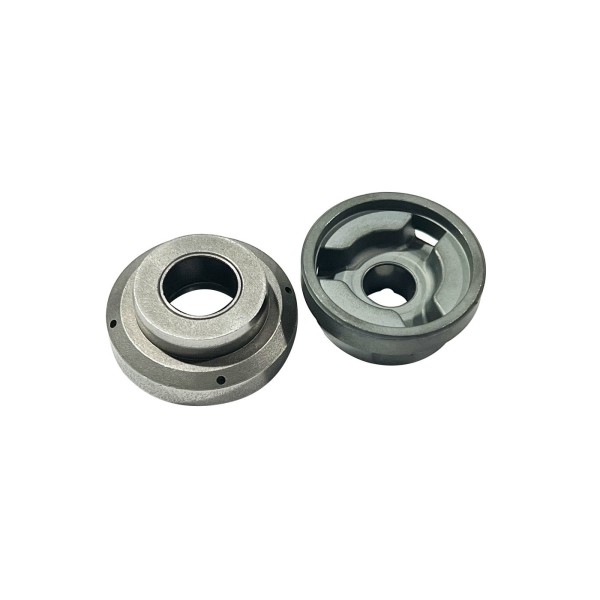
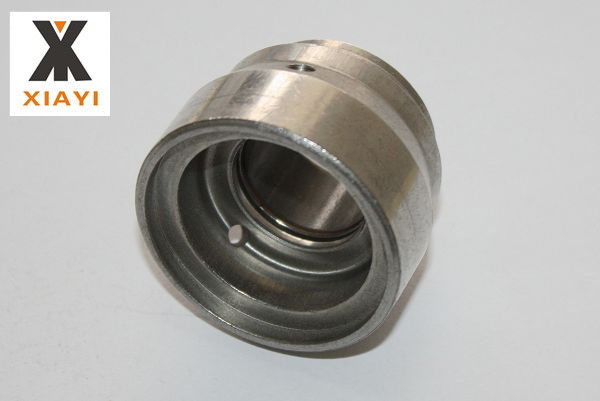
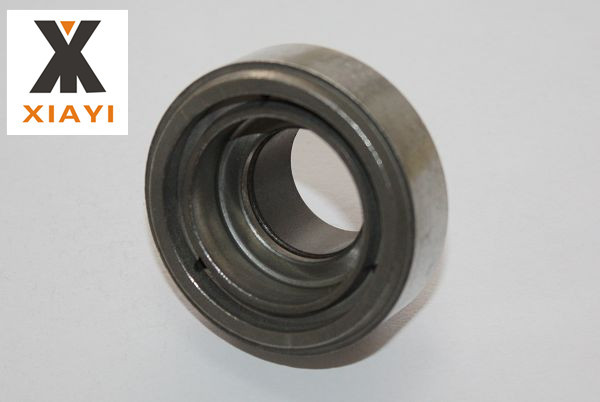
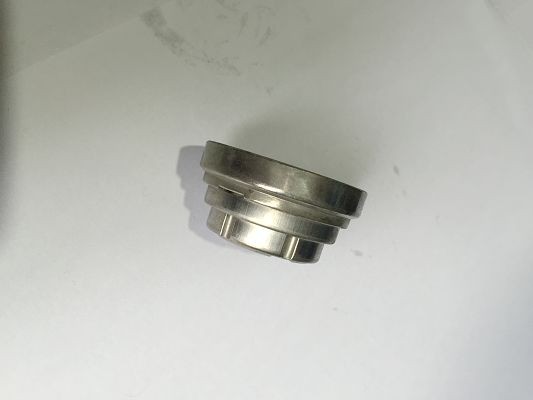
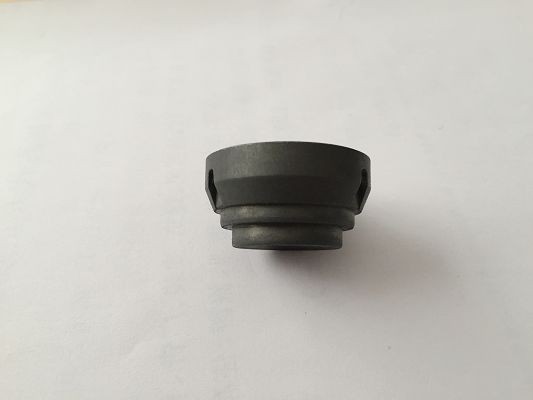
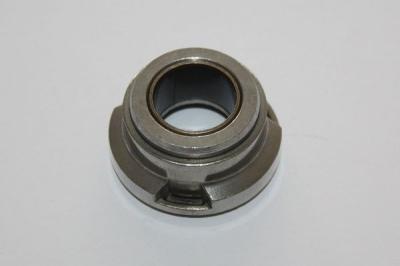
The FC-0208 Sintered Guide Assembly is a high-precision shock absorber component engineered for hydraulic damper systems in automotive and motorcycle applications. Manufactured through advanced powder metallurgy (PM) sintering technology, this rod guide integrates a DU plain bearing and a PTFE ring to deliver exceptional wear resistance, low friction coefficients, and extended service intervals. The FC-0208 material composition offers an optimal balance of structural strength, dimensional stability, and cost-efficiency - making it the preferred choice for OEM and Tier-1 suspension programs worldwide.
Each guide assembly undergoes rigorous quality control including sintering density verification, hardness testing, and precision dimensional inspection. With IATF 16949:2016 certified manufacturing processes, every unit meets the stringent demands of modern vehicle suspension systems.
Technical Specifications
| Type | Guide |
| Name | Powder Metal Piston for Auto and Motor Bicycle Shock Absorbers |
| Application | Automobile and Motor Bicycles |
| Material | FC-0205 / FC-0208 |
| Hardness | HRB 70-90 (HRC 30 MIN) |
| Technology Adopted | Sintered Metal Technology and Process |
| Weight | 89 g |
Key Features and Benefits
DU Bushing Integration
- Self-Lubricating Performance: The bonded PTFE layer on the DU bushing eliminates the need for external lubrication, reducing maintenance frequency and total cost of ownership for end-users.
- Low-Friction Operation: Coefficient of friction as low as 0.05-0.10 under dry conditions, ensuring smooth rod movement and minimal stiction during damper cycling.
- Wide Temperature Range: Effective operation from -40C to +120C, suitable for extreme climate conditions and high-temperature engine-bay environments.
Powder Metallurgy Advantages
- Material Efficiency over 97%: Near-net-shape compaction achieves industry-leading material utilization, significantly reducing waste compared to conventional machining.
- Consistent Batch Quality: Once compaction tooling and sintering parameters are established, PM delivers exceptional batch-to-batch uniformity - ideal for high-volume serial production programs.
- Complex Geometry Capability: Multi-level stepped profiles, internal undercuts, and non-circular bores can be formed directly during compaction, eliminating costly secondary operations.
- Controlled Porosity: Oil-impregnated porosity (12-18% by volume) provides embedded lubrication reserves, extending operational life under boundary lubrication conditions.
Manufacturing Process
- Mixing: Elemental and pre-alloyed powders blended to precise FC-0208 chemistry specifications.
- Compacting: High-tonnage mechanical and hydraulic presses (50T-800T) form green compacts to near-net shape.
- Sintering: Controlled-atmosphere furnaces bond powder particles at temperatures up to 1,120C, achieving target density and mechanical properties.
- Resizing / Calibration: Secondary coining operation ensures tight dimensional tolerances (typically IT7-IT8 grade).
- Cleaning and Vacuum Oiling: Ultrasonic cleaning removes all surface contaminants; vacuum oil impregnation fills interconnected porosity.
- Final Inspection and Packing: 100% dimensional verification on CTQ features before standard export packaging.
Manufacturing Capabilities
| Equipment | Specification |
| Auto Mechanical Press | 50T, 100T, 140T |
| Hydraulic Press | 100T, 315T, 600T, 800T |
| Sinter Furnaces | Including one Sinter-Hardening Furnace |
| Heat Treatment | Carbonitriding Quenching, High-Frequency Quenching |
| Surface Treatment | Ultrasonic Cleaning, Auto De-Burring |
| In-House Tooling | EDM, Wire Cutting Machine |
| Machining | Machine Center, CNC Milling, CNC Lathe, Two-End Lapper |
Quality Testing Capabilities
| Test Equipment | Purpose |
| Carbon Sulfur Determinator | Verification of chemical composition and carbon/sulfur content |
| Metallurgical Microscope | Microstructure evaluation, porosity distribution, and phase analysis |
| Hydraulic Universal Material Tester | Crushing strength, tensile properties, and radial crush testing |
| Hardness Testers | Apparent hardness (HRB/HRC) and microhardness traverse |
| Pneumatic Measuring Instrument | High-precision bore and OD measurement with sub-micron resolution |
| Measuring Projector | Non-contact profile and contour inspection for complex geometries |
| Gear Testing Instrument | Gear tooth profile, lead, and pitch verification |
| Electrical Profile Meter | Surface roughness (Ra, Rz) and waviness evaluation |
Application Industries
| Industry | Typical Components |
| Automotive | Shock absorber rod guides, piston assemblies, valve bodies, spring seats |
| Motorcycle | Front fork guide bushings, rear damper pistons, rebound spacers |
| Pump Systems | Wear plates, thrust washers, seal rings, cylinder liners |
| Locomotive | Primary/secondary suspension guide components, damping valve bodies |
| General Machinery | Structural sintered parts, bearing retainers, spacer sleeves, timing pulleys |
| Tooling | Powder metallurgy inserts, wear-resistant guides, precision fixtures |
Competitive Advantages
| Advantage | Details |
| Quality Guarantee | Electronic balance for density verification; dedicated test equipment for crushing strength; QC and PQC teams ensuring tight tolerances and accurate dimensions on every production lot |
| Design Capability | In-house engineering team develops various models of gears, bearings, bushings, and structural components; capable of manufacturing from customer-provided drawings or physical samples |
| Certifications | IATF 16949:2016 certified for automotive quality management; full PPAP Level 3 documentation available on request |
| Flexible MOQ | Minimum order quantity starting from 500 pcs, with competitive pricing for medium-to-high-volume programs |
| Global Supply | Established export channels to Korea, America, and Japan; standard export packaging with customized options available |
Frequently Asked Questions
Q: What is the difference between FC-0205 and FC-0208 material grades for this guide assembly?
FC-0205 and FC-0208 are both iron-copper-carbon powder metallurgy grades. FC-0208 contains a higher copper content (typically 7.0-9.0% vs. 4.0-6.0% for FC-0205), resulting in improved strength, better wear resistance, and higher dimensional stability after sintering. For demanding shock absorber applications with high cyclic loads, we generally recommend FC-0208. Both grades are available, and our engineering team can assist with material selection based on your specific operating parameters.
Q: How does the DU bushing improve performance compared to a standard plain bearing?
The DU bushing consists of a steel backing, a porous bronze sintered interlayer, and a PTFE-lead bearing surface. This construction provides three key advantages: (1) the PTFE surface delivers self-lubricating, low-friction operation without external grease; (2) the bronze interlayer provides high load capacity and excellent thermal conductivity; and (3) the steel backing ensures structural rigidity and press-fit retention in the guide assembly bore. Compared to standard bronze or steel bushings, DU bushings offer longer maintenance-free service life and better performance under boundary and mixed lubrication conditions.
Q: What is your typical lead time for sample orders and bulk production?
For new sample development (including tooling design and manufacturing), standard lead time is 15-30 days. For repeat production orders using existing tooling, delivery is typically 20-35 days depending on order volume and current production scheduling. Rush orders can be accommodated with prior arrangement. Mould fabrication alone requires approximately 25 days for new custom geometries.
Q: Can you produce guide assemblies according to customer-specific drawings or samples?
Yes, absolutely. Our in-house tooling department (EDM, wire cutting, CNC) and experienced application engineering team can develop custom guide assemblies based on your 2D drawings, 3D CAD models (STEP/IGES), or physical reference samples. We also provide Design-for-Powder Metallurgy (DFPM) feedback to optimize your design for PM production, potentially reducing tooling costs and improving part performance.
Q: What quality documentation do you provide with each shipment?
Every production lot is accompanied by a detailed inspection report including: dimensional verification results (CMM or pneumatic measurement), material chemistry certification (OES), hardness test data (HRB/HRC), and visual inspection records. For new program launches, we provide full PPAP Level 3 documentation including PFMEA, Control Plan, MSA studies, and initial process capability studies (Ppk/Cpk at least 1.67). Certificates of conformance and material test certificates are standard with every shipment.
Q: What payment terms and shipping methods do you support?
We accept T/T (bank transfer), Western Union, and L/C (Letter of Credit). For international shipments, we use sea freight (FOB/CIF), air freight, and express courier services (DHL, FedEx, UPS) depending on order urgency and volume. Standard export packaging is used for all shipments; custom labeling and palletization are available for large-volume orders upon request.