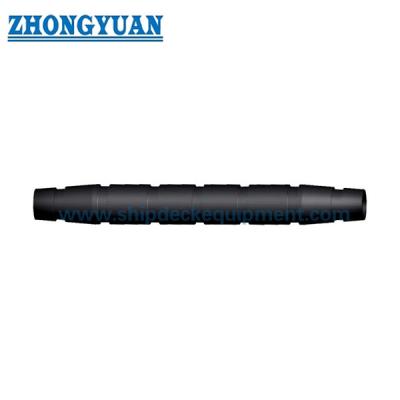
D Type Rubber Fender for Ships and Marine Terminals
Product Overview
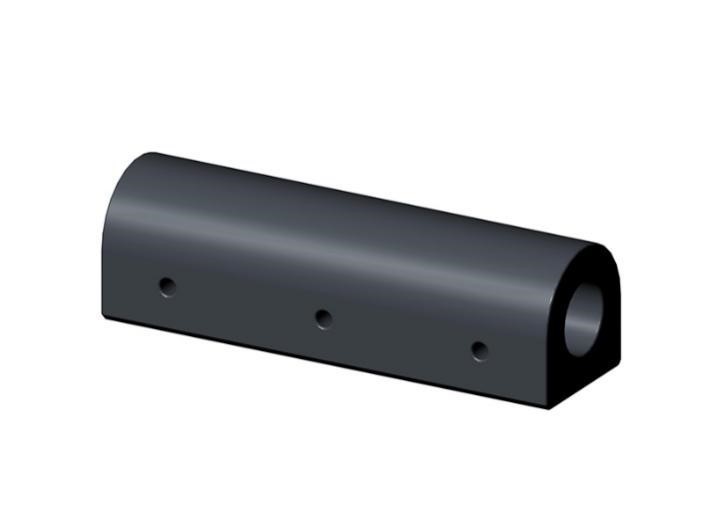
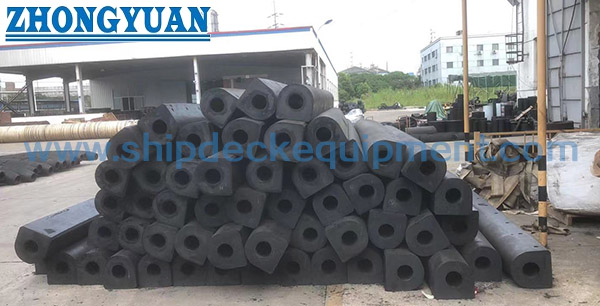
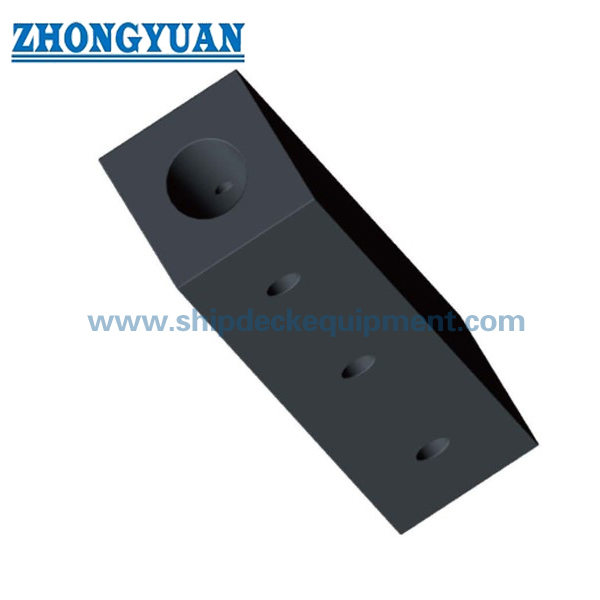
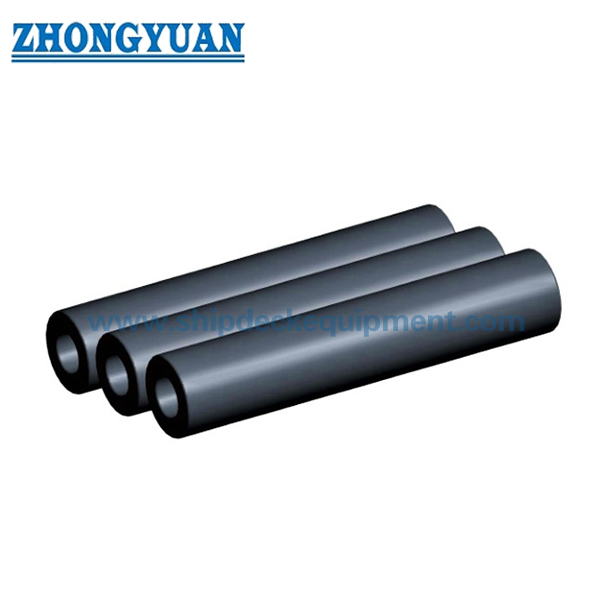
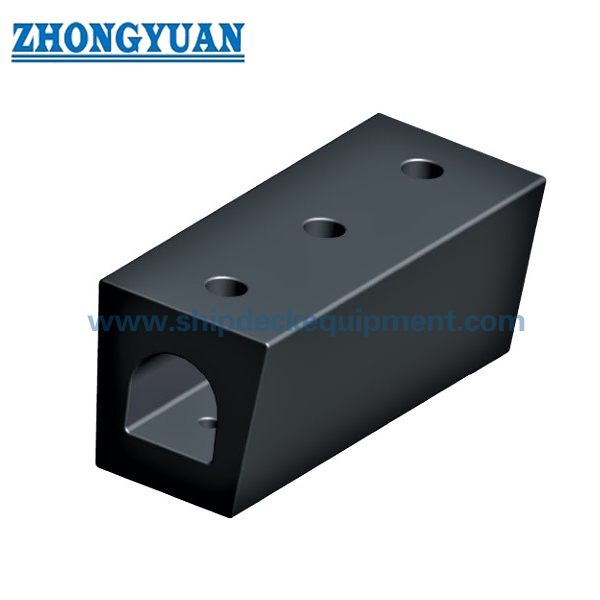
D Type Rubber Fender for Ships and Marine Terminals is a compact solid-rubber profile fender for vessel-side, frame-dock and quay protection. The family includes DD and DC profile variants: the DD configuration uses a D-shaped outer profile with a D-shaped internal opening, while the DC configuration uses a D-shaped outer profile with a circular center bore.
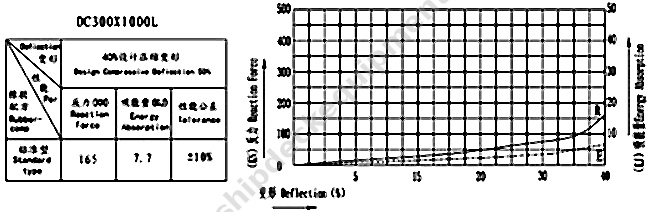
The supplied dimensional range covers nominal sections from approximately 125 to 500 mm, with 1,000 mm catalogue reference lengths and project-specific longer lengths available by arrangement. The supplied DC performance series provides reaction force and energy absorption at 40% design compression for DC150 through DC500.
Quick Specifications
Structure & Configuration
DD: D-shaped external profile with D-shaped internal opening | DC: D-shaped external profile with circular center bore | DO-B: special open-sided / arch-like profile supplied as a separate dimensional variant within the wider D-profile family.
D and DC fenders are treated as moulded and vulcanized solid-rubber products. The earlier generic winding-process wording is not used for this family.
Main Technical Specifications:
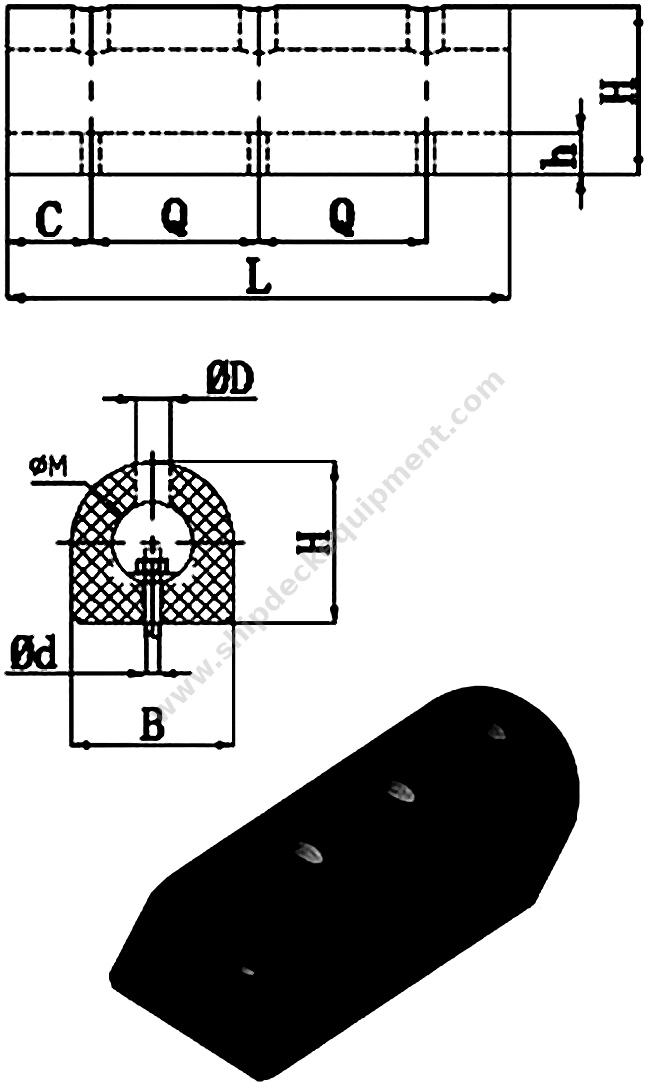
| Type | H | B | I | Holes | Q | C | h | D | d |
| D125 X125 X 1000 | 125 | 125 | 1000 | 3 | 300-400 | 100-150 | 32.5 | 45 | 20 |
| D150X150X1000 | 150 | 150 | 1000 | 3 | 300-400 | 100-150 | 37.5 | 60 | 25 |
| D200X1S0X1000 | 150 | 200 | 1000 | 3 | 300-400 | 100-150 | 38 | 60 | 25 |
| D200X200X 1000 | 200 | 200 | 1000 | 3 | 300-400 | 100-150 | 50 | 60 | 30 |
| D200X250X 1000 | 250 | 200 | 1000 | 3 | 300-400 | 100-150 | 50 | 60 | 30 |
| D250X250X 1000 | 250 | 250 | 1000 | 3 | 300-400 | 100-150 | 62.5 | 65 | 32 |
| D300X300x1000 | 300 | 300 | 1000 | 3 | 300-400 | 100-150 | 75 | 6S | 35 |
| D350X350X1000 | 350 | 300 | 1000 | 3 | 300-400 | 100-150 | 87.5 | 80 | 38 |
| D380X380X1000 | 380 | 380 | 1000 | 3 | 300-400 | 100-150 | 95 | 80 | 40 |
| D400x400x1000 | 400 | 400 | 1000 | 3 | 300-400 | 100-150 | 100 | 80 | 40 |
| D500x500x1000 | 500 | 500 | 1000 | 3 | 300-400 | 100-150 | 125 | 90 | 45 |
| TYPES | M | H | B | L | Holes | Q | C | h | D | d | Remarks |
| DC150X1000 | 75 | 150 | ISO | 1000 | 3 | 300-400 | 100~150 | 37.5 | 60 | 25 |
Fenders of other specification and size can be discussed w ith customers |
| DC200XI000 | 95 | 200 | 200 | 1000 | 3 | 300-400 | 100~150 | 50 | 60 | 30 | |
| DC250X1000 | 125 | 250 | 250 | 1000 | 3 | 300-400 | 100~150 | 62.5 | 65 | 32 | |
| DC300X1000 | 150 | 300 | 300 | 1000 | 3 | 300-400 | 100~150 | 75 | 65 | 35 | |
| DC350X1000 | 150 | 350 | 350 | 1000 | 3 | 300-400 | 100~150 | 87.5 | 80 | 38 | |
| DC400X1000 | 200 | 400 | 400 | 1000 | 3 | 300-400 | 100~150 | 100 | 80 | 40 | |
| DC500X1000 | 250 | 500 | 500 | 1000 | 3 | 300-400 | 100~150 | 125 | 90 | 45 |
| TYPES | Performance | |||
| Design compressive deflection (%) |
Reaction Force (KN) |
Absorption Energy (KJ) |
Tolerance % |
|
| DC150X1000 | 40 | 82 | 1.9 | ±10 |
| DC200X1000 | 109 | 3.4 | ||
| DC250X1000 | 136 | 5.4 | ||
| DC300X1000 | 165 | 7.7 | ||
| DC350X1000 | 189 | 10.5 | ||
| DC400X1000 | 218 | 14 | ||
| DC500X1000 | 273 | 21.5 | ||
Selection & Inquiry Guide
Step 1 – Confirm the required profile: DD, DC or DO-B according to vessel / dock geometry and replacement requirement.
Step 2 – Confirm section size and total length. For performance-based selection, use the DC 40% table only where the selected profile and length correspond to the published series.
Step 3 – Provide installation drawing, fixing-hole arrangement, support material and available edge distance.
Step 4 – State operating contact direction, abrasion condition, expected vessel movement and any replacement-interchange requirement.
Step 5 – Confirm quantity, documentation, inspection scope and delivery destination.
Key Engineering Advantages
Installation & System Interface
D-profile fenders are normally fixed to steel or concrete support structures through bolted or project-specific mounting arrangements. Final bolt size, hole spacing, backing structure, edge distance and local reinforcement must match the selected profile, service load and support material.
Inspection & Documentation
Baseline quality control includes visual inspection, dimensional verification and rubber physical-property testing. Where a quantified reaction-force / energy-absorption table is part of the agreed product specification, full-scale compression testing can be included in the project ITP to verify the guaranteed performance under defined test conditions.
PIANC Fender Guidelines 2024 (MarCom WG211) are used as the current engineering reference for fender-system design, manufacturing and testing principles. Type approval, product certification, third-party witnessing and class documentation are stated only when the corresponding scope has been agreed and documented.
Applications
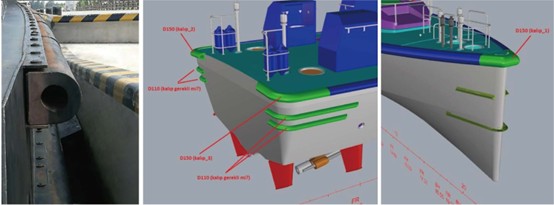
Ship sides | tug and workboat side protection | frame docks | floating docks | quay edges | yacht / escort vessel protection | replacement fender projects
Drawing & Photos


FAQ
Q1: What is the difference between DD and DC fenders? — Both use a D-shaped outer profile. DD uses a D-shaped internal opening, while DC uses a circular center bore.
Q2: Can the listed 40% DC performance be applied to every D-profile variant? — No. Use the published values only for the corresponding DC series unless a separate performance verification is provided.
Q3: Can custom lengths be supplied? — Length and fixing arrangement can be discussed for the project, but performance and structural fixing should be verified for the final configuration.