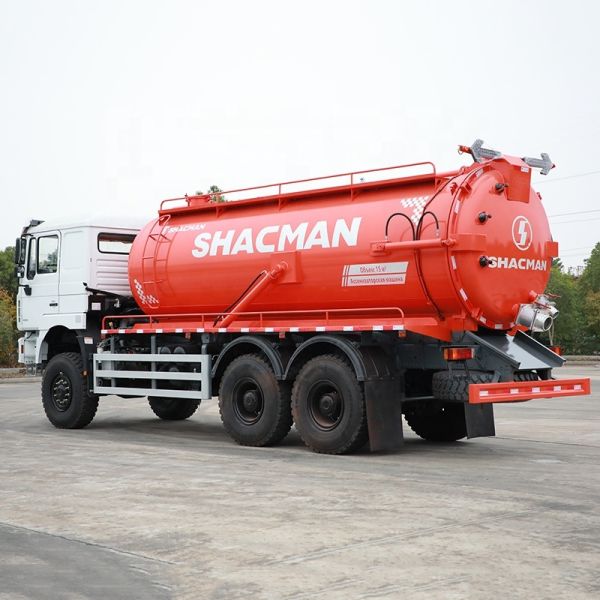
Suction sewage truck is a new type of sanitation vehicle that collects, transfers and cleans sludge and sewage to avoid secondary pollution. Suction sewage truck can suck and discharge itself, with fast working speed, large capacity and convenient transportation. It is suitable for collecting and transporting liquid substances such as feces, mud and crude oil.
SHACMAN sewage suction truck adopts the vacuum pump of the sewage suction truck, which is advanced in domestic technology, with large suction and long suction distance, and is especially suitable for the suction, shipment and discharge of sludge in sewers, especially for the suction of sewage mud, silt, stones, bricks and other large objects.


A: To ensure the vacuum truck aligns with your operational needs and delivers optimal efficiency, focus on the following three critical specifications—each directly influences its performance and ability to address practical challenges:
-
Tank Volume: This specification dictates the maximum amount of waste the truck can hold per trip, which in turn affects the frequency of trips to disposal sites and overall work efficiency. When choosing, factor in your daily waste handling volume and the distance to the nearest waste disposal facility. Common industry options range from 5 cubic meters (suitable for small-scale daily operations) to 15 cubic meters (ideal for large-volume tasks like industrial sludge collection). A mismatched tank volume—too small leading to frequent, time-consuming trips, or too large causing unnecessary fuel waste—will directly push up operational costs.
-
Vacuum System Pressure (Suction Intensity): The vacuum degree is a direct indicator of the truck’s suction strength. A higher vacuum pressure enables the truck to draw waste from greater depths (such as deep sewage wells or underground pipelines) and handle high-viscosity substances like thick sludge, sediment, or even small debris. For scenarios involving sticky, dense waste (e.g., industrial sludge or aged septic waste), a strong vacuum system is non-negotiable to avoid suction blockages and ensure smooth operation.
-
Integrated High-Pressure Washing Unit: Unlike optional accessories, a built-in high-pressure cleaning system is a core functional component that solves a common operational pain point. It serves two key purposes: before suction, it flushes pipelines to loosen stubborn, caked waste (preventing clogs during suction); after suction, it cleans residual waste from the suction hoses and tank interior. This not only ensures "one-time thorough cleaning" (avoiding the need for rework) but also extends the service life of the truck’s pipeline system by reducing corrosion from leftover waste.