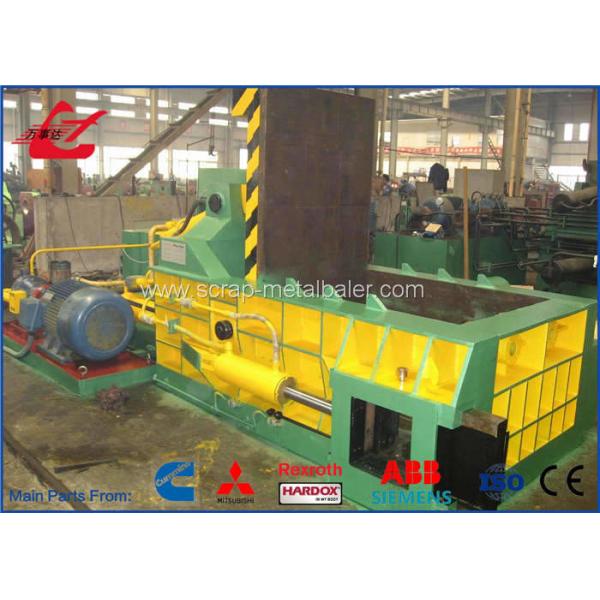
Y83-160 160 Ton Hydraulic Metal Baler for Steel and Aluminum Scrap Compression
The Y83-160 hydraulic metal baler is designed for compressing steel scrap, aluminum scrap, iron scrap, and other light metal scrap into compact bales for easier storage, handling, and transportation. It is suitable for scrap yards, recycling plants, and manufacturing facilities that need a stable baling solution for medium-scale scrap compression work. The current product page identifies this model as a 160 ton hydraulic metal baler with PLC semi-automatic control, 1600 kN nominal force, and a 1600 × 1000 × 800 mm press box size.
In practical operations, loose scrap often occupies too much floor space, reduces workshop organization efficiency, and increases transport cost. This is especially common with aluminum scrap, light steel offcuts, and mixed light metal materials. The Y83-160 helps solve this problem by compressing scrap into regular bales that are easier to stack, store, transfer, and load for downstream recycling or resale. Google’s content guidance favors this kind of practical, user-centered explanation over keyword-heavy generic copy.
With 1600 kN nominal force, 22 kW motor power, about 160 seconds cycle time, and bale size up to (400–600) × 400 × 400 mm, this model is a practical choice for buyers handling medium-density steel and aluminum scrap. The current page also states a capacity of 2000–3000 kg/h and a maximum recommended scrap thickness of 4 mm, which makes this machine more suitable for light-to-medium scrap compression rather than heavy thick-section scrap.
The Y83-160 is best positioned as a 160 ton hydraulic metal baler for steel, aluminum, and light metal scrap compression. It is not a heavy-duty baler for thick oversized ferrous scrap. Instead, it is more suitable for buyers who need a compact baling solution for light steel scrap, aluminum offcuts, and mixed light metal materials generated in scrap yards, recycling plants, and manufacturing workshops.
This model is suitable for the following materials:
The current page lists steel scrap, aluminum scrap, iron scrap, and light metal scrap as application materials, though one of those entries contains a typo that should be corrected from “Teel Scrap” to “Steel Scrap.”
Loose light steel and aluminum scrap often occupies too much storage space. This baler helps convert loose scrap into compact bales for easier yard management.
Aluminum scrap is often low-density and bulky. Compression helps improve loading efficiency and reduce transport cost.
Metal offcuts from stamping, cutting, or machining can accumulate quickly and affect workflow. This model helps standardize waste handling and improve workshop organization.
Before shipment or resale, compressed bales are easier to load and transport than loose scrap.
| Parameter | Value |
|---|---|
| Model | Y83-160 |
| Machine Type | Hydraulic Metal Baler |
| Nominal Force | 1600 kN |
| Press Force | 160 ton |
| Press Box Size | 1600 × 1000 × 800 mm |
| Bale Size | (400–600) × 400 × 400 mm |
| Motor Power | 22 kW |
| Capacity | 2000–3000 kg/h |
| Cycle Time | Approx. 160 s |
| Hydraulic Pressure | 25 MPa |
| Max. Scrap Thickness | 4 mm |
| Application Materials | Steel scrap, aluminum scrap, iron scrap, light metal scrap |
| Application Industries | Scrap yard, recycling plant, metal processing, manufacturing |
| Overall Size | 4680 × 3000 × 2450 mm |
| Machine Weight | About 10000 kg |
| Control Method | PLC semi-automatic |
| Certification | CE and ISO9001 |
The 1600 kN nominal force is suitable for compressing light steel scrap, aluminum scrap, and similar medium-density materials.
Bales up to (400–600) × 400 × 400 mm are easier to store, stack, and transfer than loose scrap.
PLC semi-automatic control provides more stable operation than purely manual systems while keeping the machine practical for medium-scale operations.
The listed capacity of 2000–3000 kg/h makes this model suitable for medium-scale scrap compression work.
By compressing loose light scrap into dense bales, the machine helps improve storage and transport efficiency. This is the kind of practical benefit Google expects product pages to explain clearly for users.
Yes. The current page specifically lists steel scrap, aluminum scrap, iron scrap, and light metal scrap as suitable materials.
The bale size should be written clearly as (400–600) × 400 × 400 mm, which is more accurate than only writing 400 × 400 mm.
The current page lists the capacity as 2000–3000 kg/h.
The page states a maximum recommended scrap thickness of 4 mm, which indicates the model is more suitable for light-to-medium scrap, not heavy thick-section scrap.
Yes. The machine uses PLC semi-automatic control, which helps simplify operation for regular scrap compression work.
If you are looking for a 160 ton hydraulic metal baler for steel and aluminum scrap compression, send us your scrap type, scrap thickness, target capacity, and site conditions. We can recommend a suitable baling solution based on your actual operating requirements.