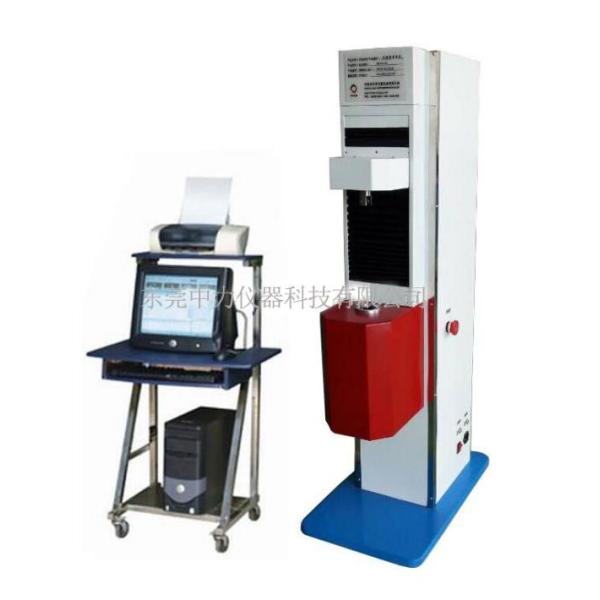
The Solid Porosity Tester (Gas Method) is an advanced analytical instrument designed for measuring opening ratio, closed cell ratio, and related porosity parameters in foaming materials, rigid foam, cores, metals, and similar materials using the gas expansion method. Constructed with stainless steel metal piping, this automated system serves insulation materials, sound insulation materials, metal materials, and petroleum exploration industries, capable of testing polyurethane foam, phenolic foam, cores, metal blocks, soil blocks, and other materials.
The instrument features a built-in control system with touch screen operation for complete functionality.
| Parameter | Specification |
|---|---|
| Test Accuracy | Accuracy error ≤ ±0.02%, repeatability error ≤ 0.02%, resolution: 0.0001g/cm³ |
| Pressure Range | 100KPa-200KPa (user-configurable maximum pressure) |
| Pressure Accuracy | High-precision imported silicon film capacitive pressure sensor with 0.15% of actual reading accuracy |
| Test Speed | 5-10 minutes for complete test process |
| Test Range | Opening and closing porosity of foaming materials, metal materials, cores, etc. |
| Sample Tube | Standard 26×26×51mm specification (GB/T10799-2008 compliant) |
| Test Gas | High purity helium (≥99.999%) or nitrogen |
| Core Components | Original imported valve and silicon film pressure sensor |
| Data Processing | Built-in software, no computer required, USB data export capability |
| Dimensions | 560mm (L) × 350mm (W) × 400mm (H), Net weight: 20kg |
The instrument operates on the Archimedes principle - gas expansion displacement method. Using small molecular inert gas (He or N₂) as the medium, it calculates the volume of gas displaced from the sample in the test chamber through the ideal gas state equation: PV=nRT. This enables precise measurement of the sample's true volume (including closed cells), from which opening and closing porosity are calculated based on the material's apparent volume and volume before foaming.
The gas expansion replacement method measures sample volume by replacing liquid with gas, avoiding test errors caused by sample dissolution in immersion methods while preserving sample integrity. Since gas penetrates into microscopic pores and irregular surface pores, the measured sample volume closely approximates the true volume, providing accurate open and closed porosity calculations.