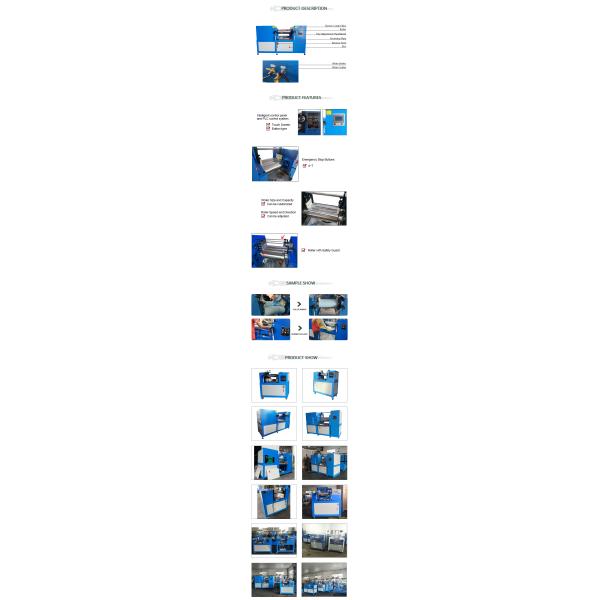
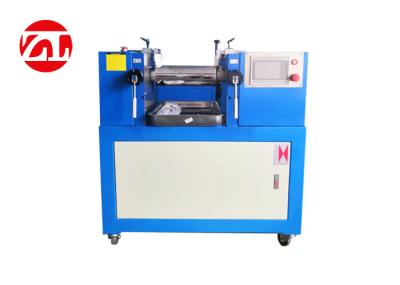
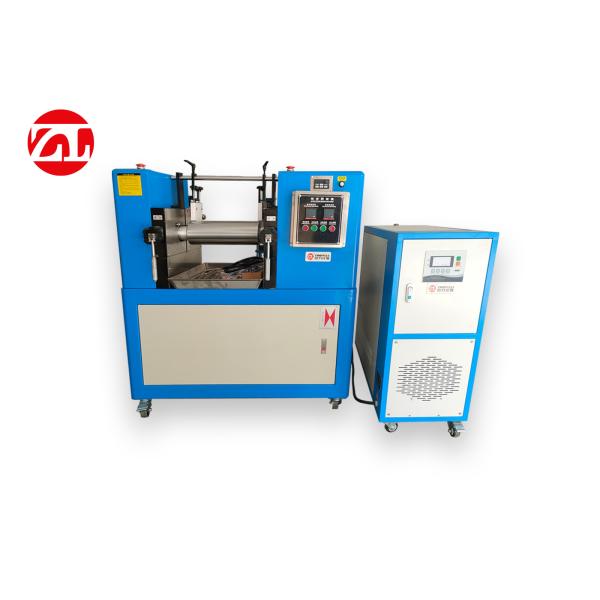
16-Inch Industrial Two Roll Rubber Open Mixing Mill
This professional rubber mixer and dispersion kneader delivers unmatched performance for masticating and kneading natural rubber, synthetic rubber, EVA, or PVC pellets with various chemical materials. Primarily used for plasticizing, hot milling, and mixing of natural and synthetic rubber in rubber product manufacturing facilities.
Key Features & Benefits
- Automatic feeding oil or grease lubrication for easy maintenance and machine protection
- Brake and emergency stop devices ensure personnel and equipment safety
- Frame, frame cap, and base are welded and treated by annealing for stress relieving
- Multiple roll gap adjustment methods: manual or electric operation
- Rolls constructed from chilled cast alloy iron with hardness reaching 70HB
- Versatile roll construction options: drilled roll, bored roll, grooved roll
- Customizable speed ratio designed according to customer formulas and processing requirements
Intelligent Control System
Advanced PLC control system with intelligent control panel featuring:
- Real-time data recording and export of kneading time, temperature (mixing chamber and front/rear rotors), ram pressure, current, torque, and recipe code
- Control system configurable for up to 20 mixing steps with 20 recipe storage spaces
- Remote process recipe import and data monitoring capability
- Ethernet communication interface for MES integration
- 20% control points reserved for future expansion with touch screen interface
Technical Specifications
| Model | ZL-3018-76 | ZL-3018-120 | ZL-3018-160 | ZL-3018-200 | ZL-3018-230 | ZL-3018-300 | ZL-3018-400 |
| Diameter of roll (mm) | 76 | 120 | 160 | 200 | 230 | 300 | 400 |
| Length of roller face (mm) | 300 | 350 | 350 | 500 | 650 | 650 | 900 |
| Mixing Capacity (kg) | 0.002-0.6 | 0.002-2 | 0.002-2.8 | 0.002-5 | 0.005-10 | 1-15 | 5-30 |
| Front roll surface speed (rpm) | 19 | 19 | 19 | 19 | 19 | 19 | 19 |
| Friction ratio | 1:1.30 | 1:1.35 | 1:1.35 | 1:1.35 | 1:1.27 | 1:1.27 | 1:1.27 |
| Roll gap range (mm) | 0-3 | 0-6 | 0-6 | 0-8 | 0-12 | 0-12 | 0-15 |
| Driving Power (KW) | 1 | 1.5 | 2.2 | 7.5 | 11 | 30 | 37 |
| Machine weight (kg) | 160 | 460 | 660 | 860 | 1960 | 2960 | 3800 |
| Overall dimension (mm) | 1100x400x1180 | 1100x550x1380 | 1200x650x1380 | 2200x750x1380 | 2200x950x1580 | 2600x950x1580 | 5295x1789x170 |
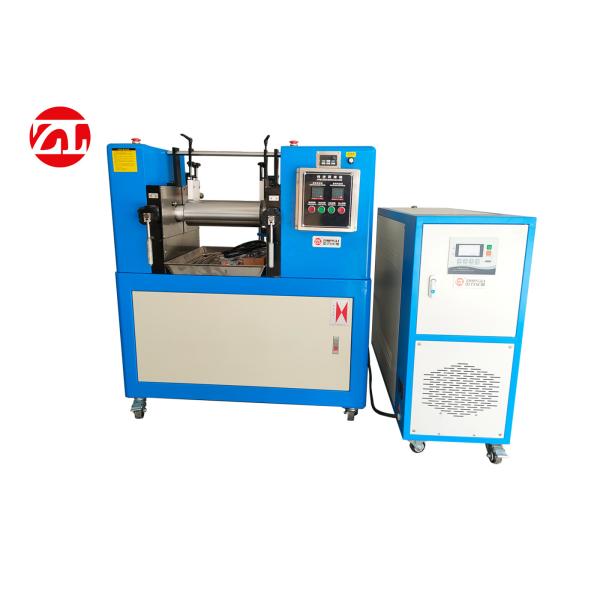
Heating Mode: Electricity heating, Oil Heating (optional)
Cooling Mode: Water Cooling (optional)
Roll Temperature: Room temperature - 300℃
Roll Hardness: HRC 50 ~ 60
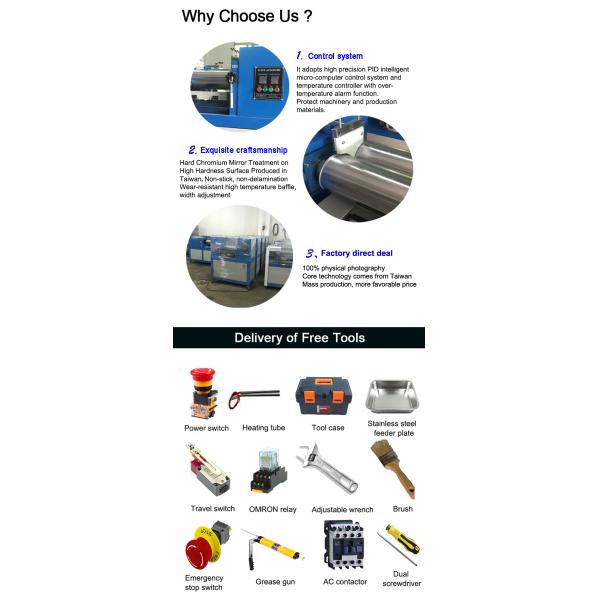
Temperature Accuracy: ±2℃ (high accuracy PID micro computer controller)
Safety device: 6 safety buttons with optional safety guard
Power: 380V 3 phase 50-60hz
Frequently Asked Questions
What is the two roll mill process?
The two roll rubber mill processes natural rubber into various compounds. Two horizontally opposed stainless steel rolls rotate in opposite directions at different speeds to mix rubber and ingredients, creating rubber compounds through mechanical shearing action.
What is the principle of roller mill operation?
Roller mills utilize stress applied by rotating wheels and attrition to process solids in suspensions, pastes, ointments, and solid materials. The rollers rotate at different speeds, shearing material as it passes through the gap between them.
What is the friction ratio of a two roll mill?
The distance between mill rolls (nip) can be varied, while the speed difference between rolls is called friction ratio, enabling shearing action. Typically, the back roll moves faster than the front roll, with common friction ratios around 1:1.25. This open mill mixing process is essential for rubber compound preparation.