Specifications
Model Number :
XLB-1000*1000
Pressing Stroke :
100mm-300mm
MOQ :
1set
Delivery Time :
40days
Plates Daylight :
300mm
Material :
Steel
Certification :
ISO/CE
Total Pressure :
800tons
Packaging Details :
40GP
Auto :
PLC Automatic
Payment Terms :
T/T,L/C
Heating :
Electricity / Oil / Steam
Operating Voltage :
380V 50HZ 3Phase or customized
Brand Name :
Beishun
Manera de calefacción :
Vapor o aceite, sistema eléctrico/de aceite
Place of Origin :
Qingdao
Maximum Product Size :
900x90000mm
Price :
Negotiable
Platen Daylight :
300mm
Safety Device :
Safety Curtain
Supply Ability :
30sets/60day
Voltage :
380V
Size :
Customized
Description
Typical Application Scenarios for Rubber Ceramic Wear Liners

Rubber-backed ceramic wear liners are engineered for high-abrasion and high-impact service in mining, bulk material handling, and mineral processing plants. Common installation points include:

  • Conveyor transfer points and transfer chutes
  • Feed hoppers and receiving hoppers
  • Ore bunkers, storage bins, and silos
  • Crusher discharge chutes
  • Vibrating feeders and apron feeders
  • Mill discharge launders and chutes (ball mill, rod mill)
  • Hydrocyclones, slurry pipe elbows, and splitter boxes
  • Screen underflow chutes and deflector plates
  • Flotation cells and agitator tank linings

These liners are also widely used in coal-fired power generation, metallurgy, cement and aggregate production, sand and gravel plants, and bulk cargo port handling systems. They are suitable for two main working conditions: dry lump ore impact wear and wet slurry abrasive wear.


Production Process of Ceramic Rubber Composite Wear Liners

The following process applies to rubber-backed alumina ceramic wear liners produced on the 45 kgf/cm² hydraulic vulcanizing press.

  1. Raw material preparation: Select alumina ceramic tiles (92% / 95% Al₂O₃), rubber compound (natural rubber / SBR), steel backing plate, and bonding agent.
  2. Pre-treatment: Clean and sandblast the steel plate; wipe ceramic tiles to remove oil and dust for improved adhesion.
  3. Ceramic tile arrangement: Arrange hexagonal or square ceramic tiles on the mould surface with small gaps reserved for rubber filling.
  4. Mould loading: Place the treated steel backing plate into the vulcanization mould and lay the prepared rubber compound between the steel plate and ceramic tiles.
  5. Hot vulcanization: Close the mould, apply pressure at 45 kgf/cm², and set the vulcanization temperature. The rubber is cross-linked under heat and pressure, tightly bonding ceramics, rubber, and steel plate into one integrated composite liner.
  6. Cooling and demoulding: After the vulcanization cycle is complete, cool the mould and remove the finished liner.
  7. Trimming, inspection, and packaging: Cut off excess flash rubber, verify bonding quality, flatness, appearance, and dimensions, then pack for shipment.
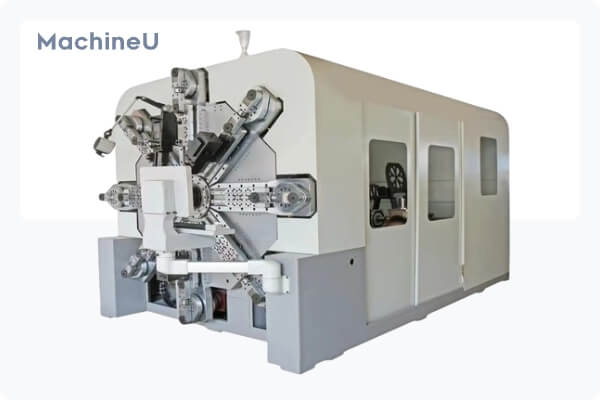
45 kgf/cm² Hydraulic Vulcanizing Press for Rubber Backed Ceramic Wear Liners for Mining Chutes
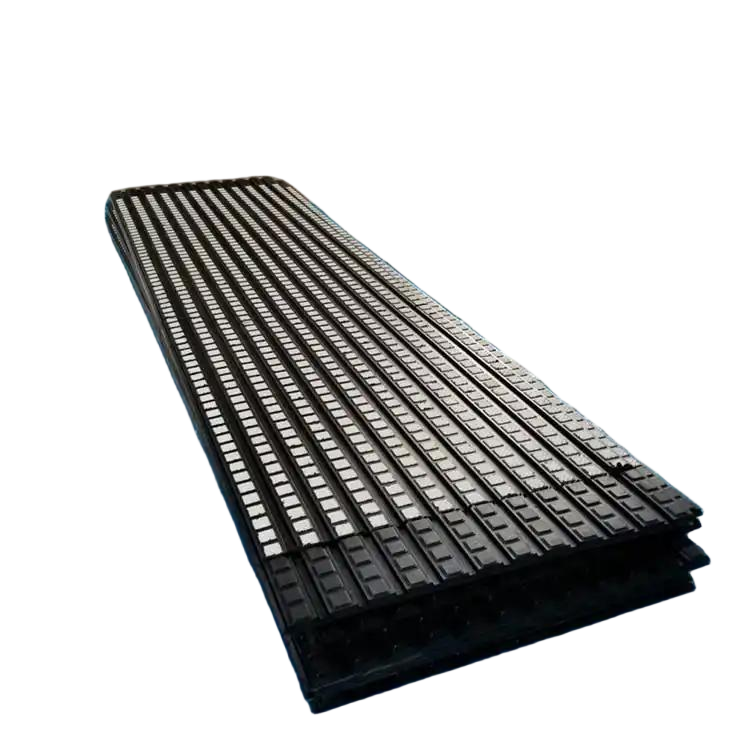
Rubber-backed ceramic wear liner composite panel produced on the hydraulic vulcanizing press.
45 kgf/cm² Hydraulic Vulcanizing Press for Rubber Backed Ceramic Wear Liners for Mining Chutes
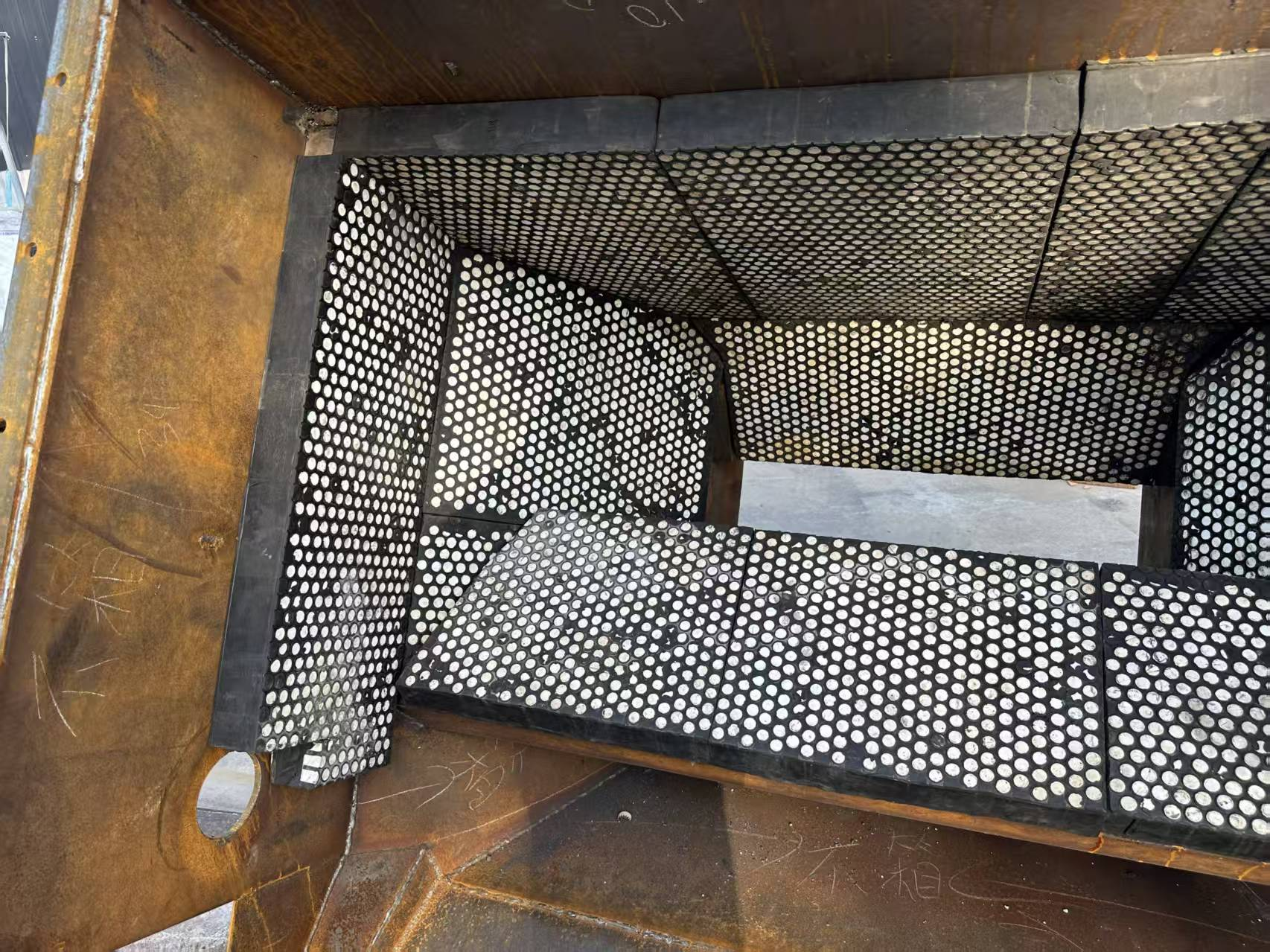
Finished ceramic rubber composite wear liner with hexagonal alumina tiles bonded to the steel backing plate.
Send your message to this supplier
Send Now

45 kgf/cm² Hydraulic Vulcanizing Press for Rubber Backed Ceramic Wear Liners for Mining Chutes

Ask Latest Price
Watch Video
Model Number :
XLB-1000*1000
Pressing Stroke :
100mm-300mm
MOQ :
1set
Delivery Time :
40days
Plates Daylight :
300mm
Material :
Steel
Contact Supplier
video
45 kgf/cm² Hydraulic Vulcanizing Press for Rubber Backed Ceramic Wear Liners for Mining Chutes

Qingdao Beishun Environmental Protection Technology Co.,Ltd

Verified Supplier
5 Years
qingdao
Since 2010
Business Type :
Manufacturer, Seller
Total Annual :
6 million-6,500,000
Employee Number :
50~40
Certification Level :
Verified Supplier
Contact Supplier
Submit Requirement