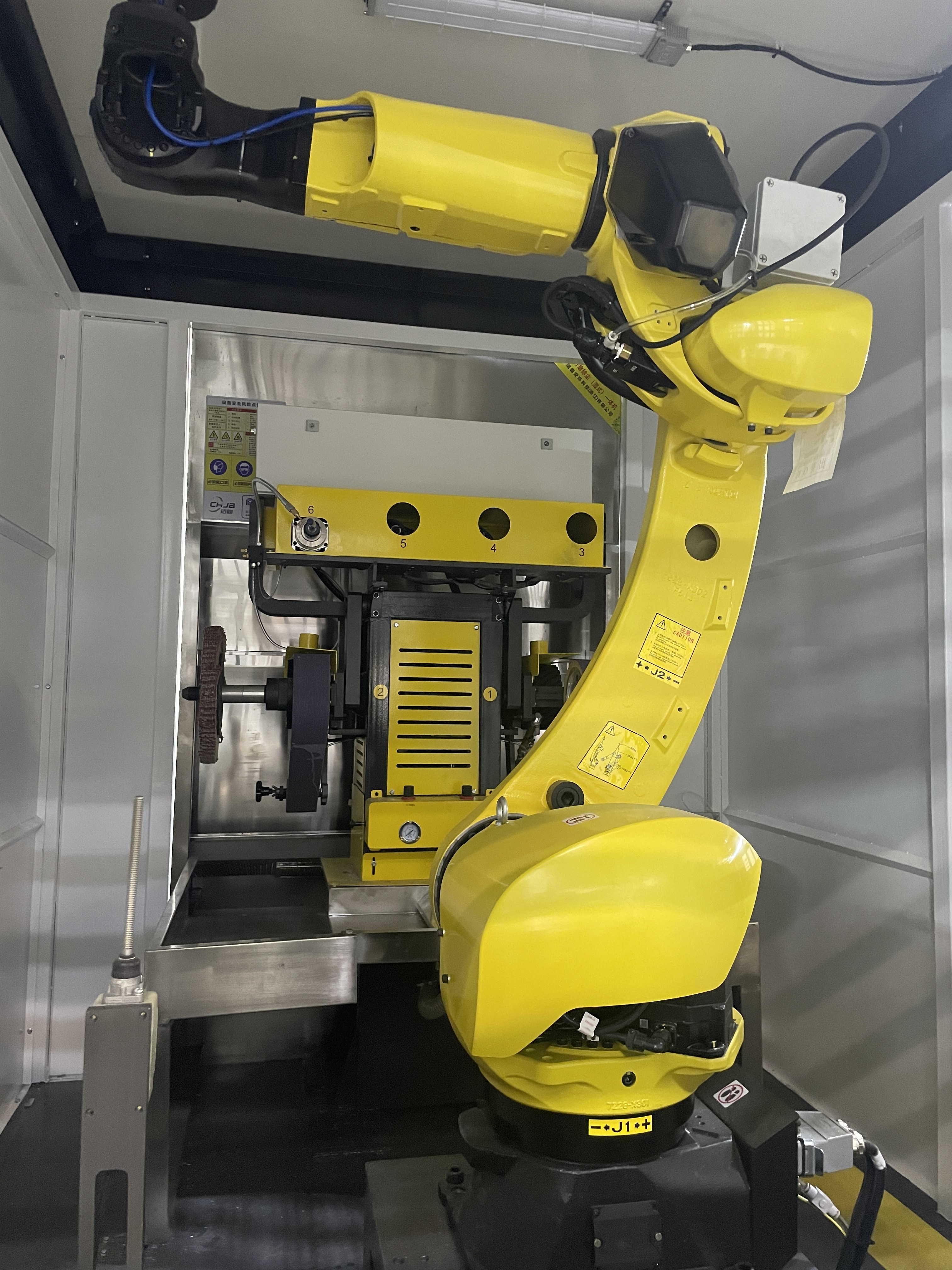
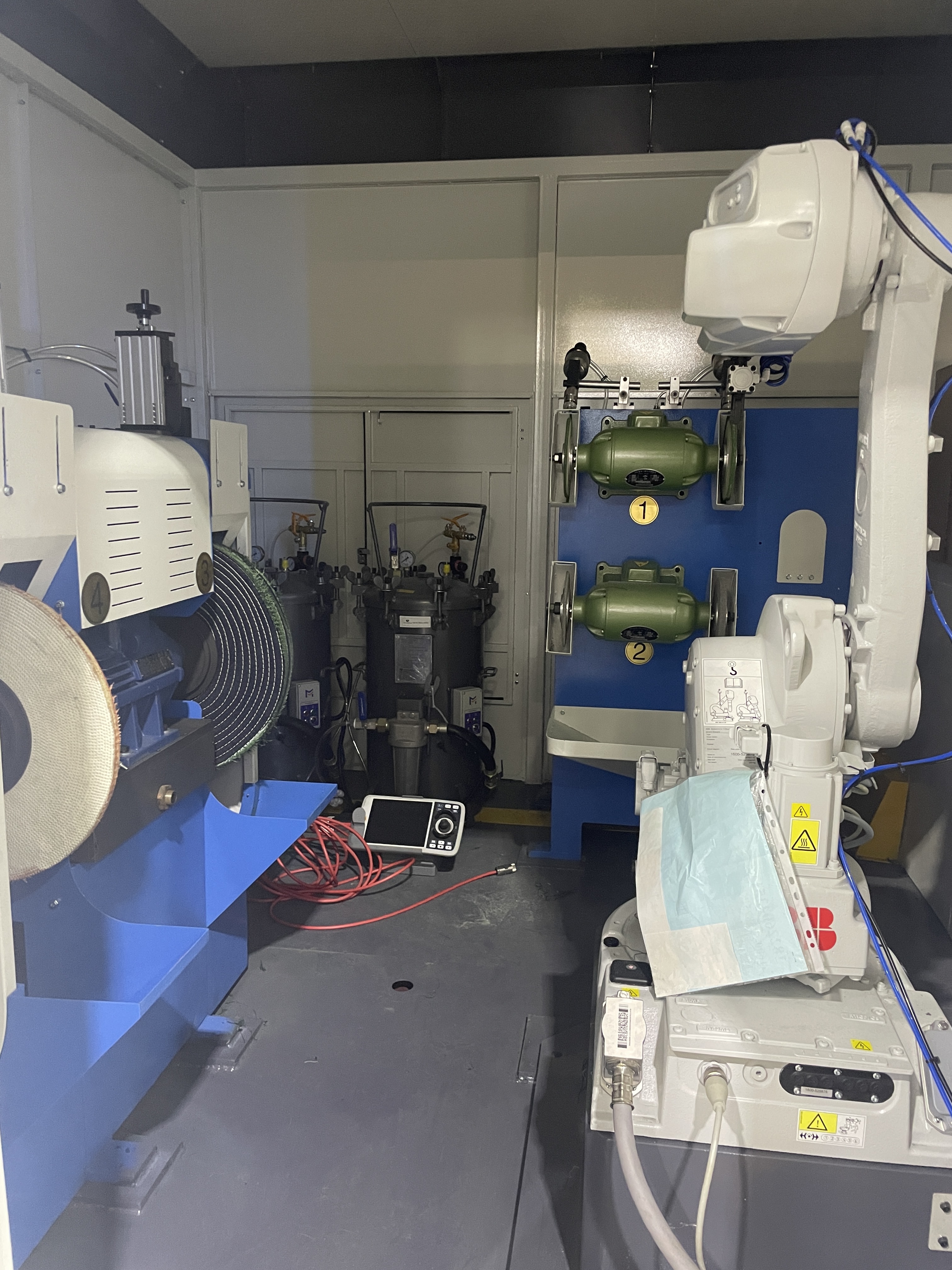
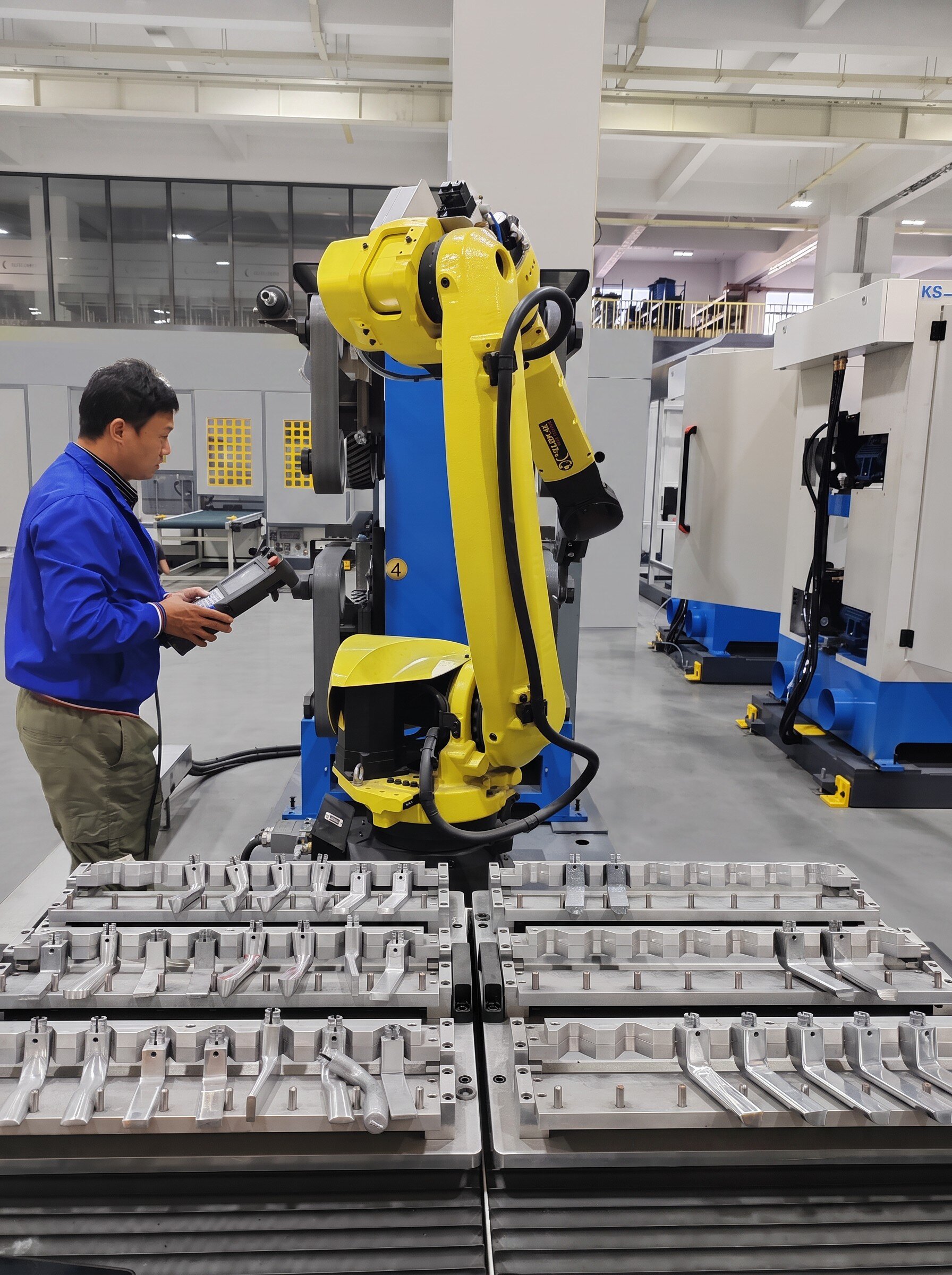
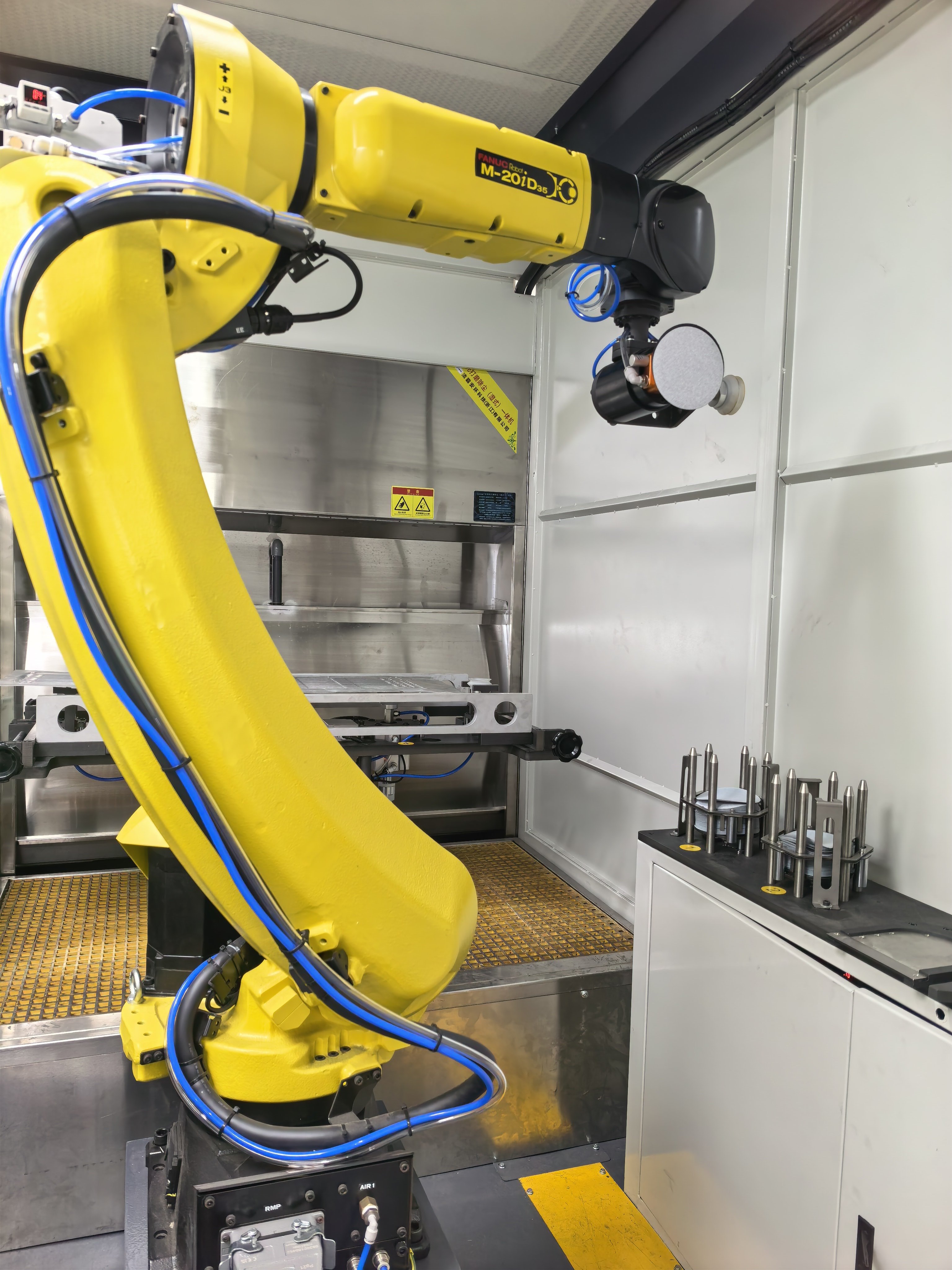
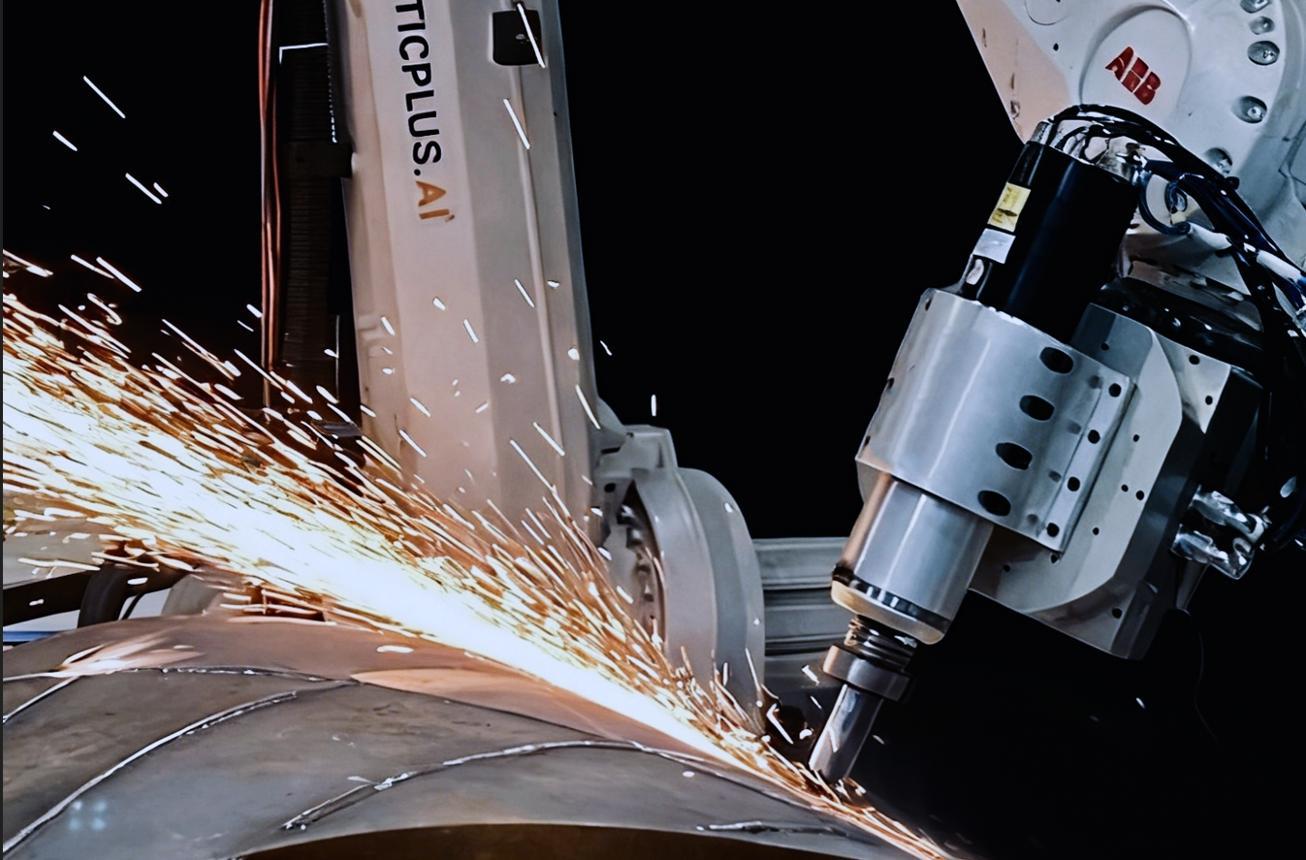
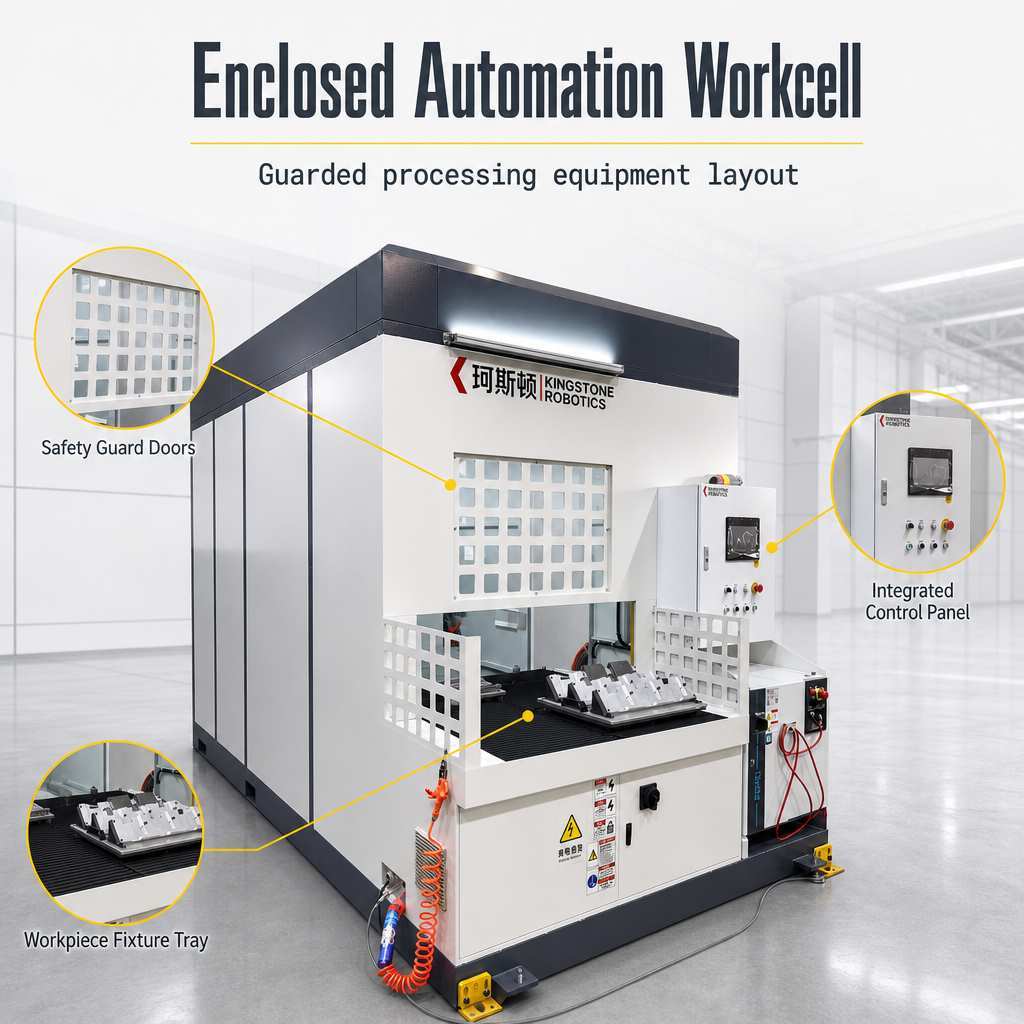
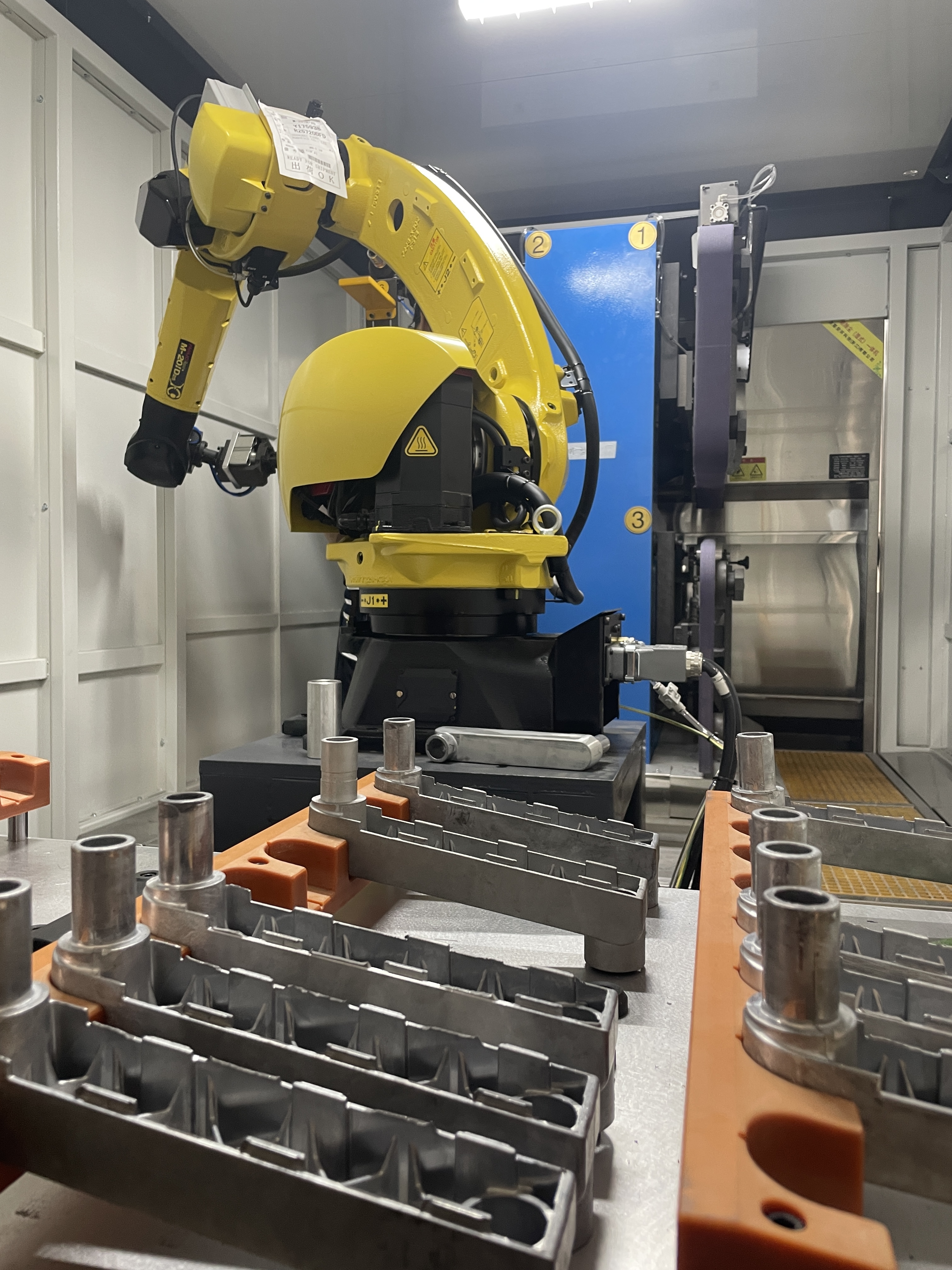
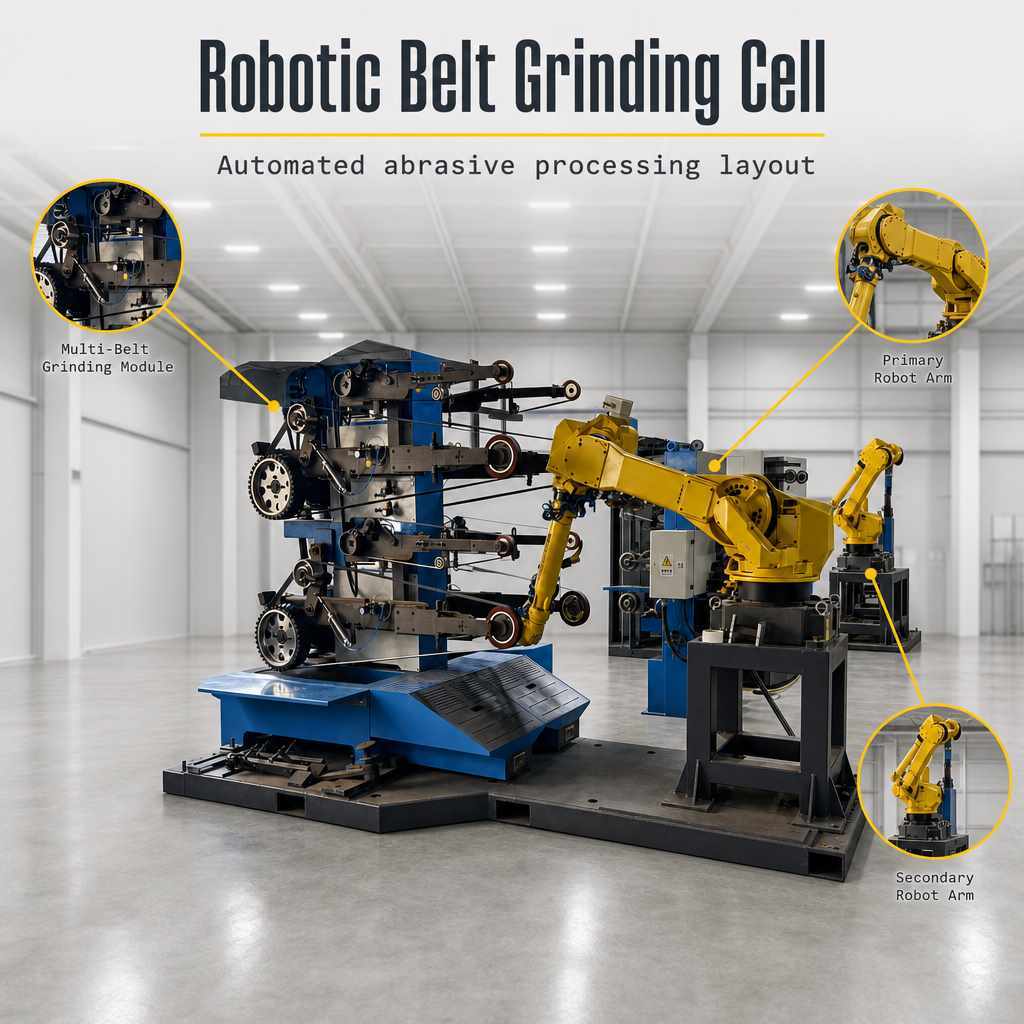
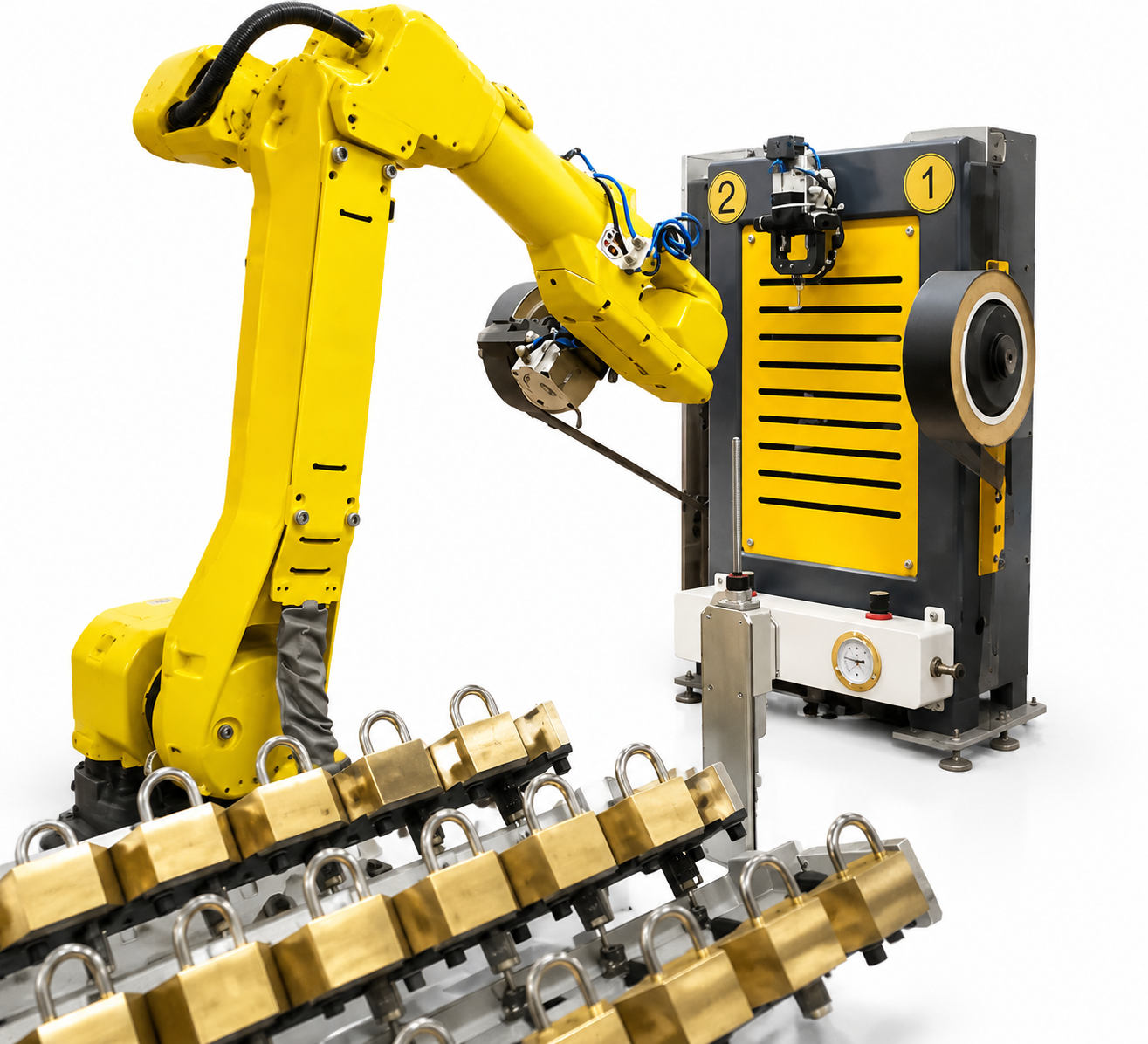
The Industrial Robotic Polishing Machine with Vision Inspection System combines robotic surface finishing technology with machine vision to improve workpiece recognition, processing accuracy, and quality control.
Designed for modern manufacturing environments, this integrated system uses industrial cameras and image processing technology to identify workpiece positions, recognize product features, assist robotic positioning, and inspect selected surface characteristics.
Unlike conventional robotic polishing systems that rely entirely on predefined workpiece positions and manual quality checks, a vision-integrated solution provides additional visual information throughout the production process. Depending on the application, the vision system can be installed before polishing for workpiece identification and positioning, or after polishing for surface inspection and defect detection.
Combined with an industrial robot, specialized polishing tools, customized fixtures, and an intelligent control system, the machine provides a flexible automation solution for manufacturers requiring more controlled and traceable surface finishing operations. It can be configured for stainless steel components, aluminum castings, brass fittings, automotive parts, metal hardware, and other industrial products.
Kingstone Robotics provides customized robotic polishing systems with vision integration based on workpiece geometry, surface characteristics, inspection requirements, and production conditions.
The vision inspection system uses industrial cameras, lighting equipment, and image processing software to collect and analyze workpiece images. Depending on the application, it can perform several functions.
The combination of robotic polishing and machine vision is suitable for manufacturers who require automated processing and additional visual quality control.
For grinding, polishing, and visual inspection of automotive metal housings, brackets, covers, and other components.
For polishing brass faucets, stainless steel fittings, bathroom accessories, and other products requiring consistent appearance.
For processing and inspecting door handles, locks, hinges, decorative hardware, and furniture accessories.
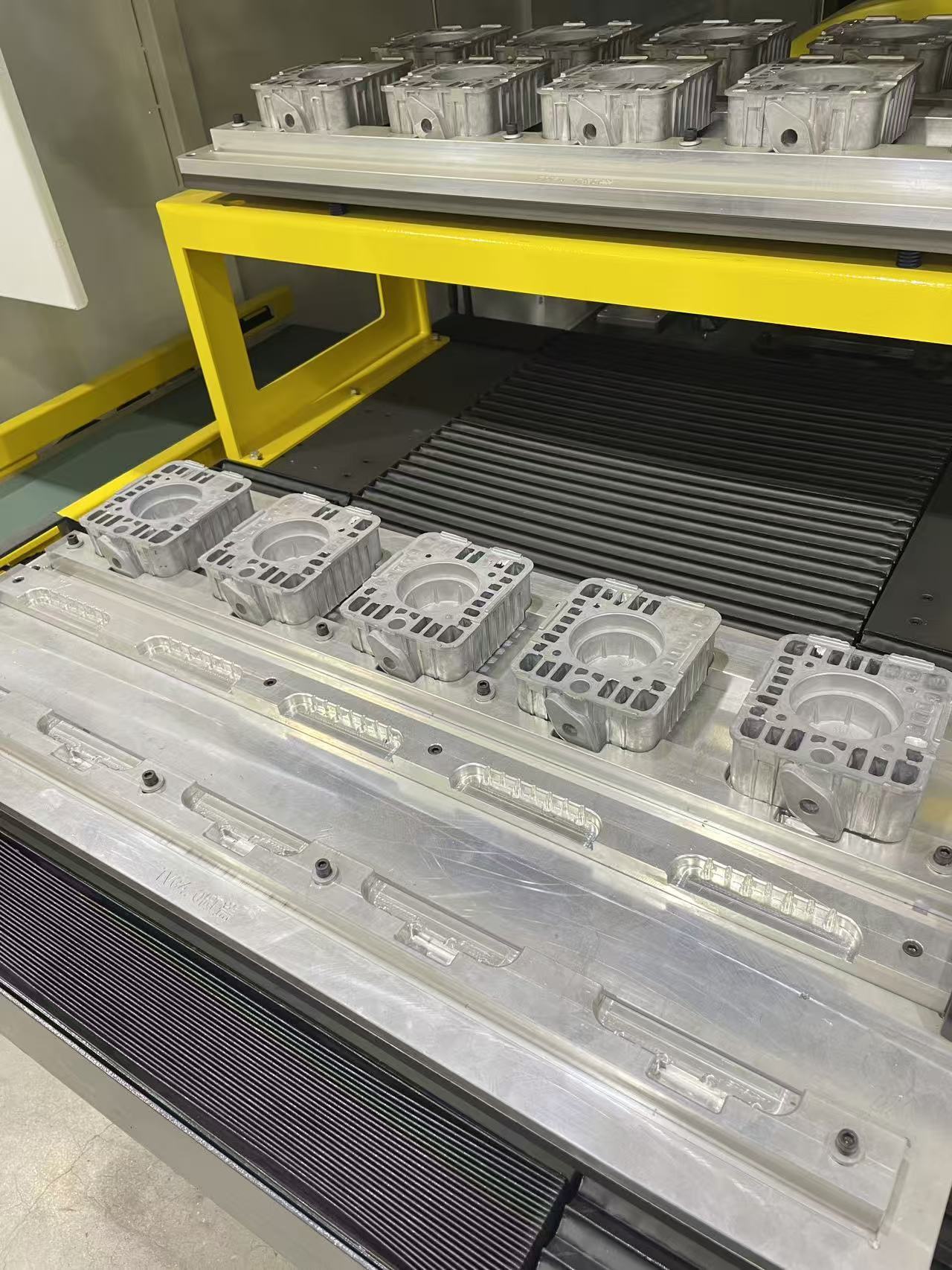
For grinding casting marks, polishing aluminum components, and identifying visible surface defects.
For robotic polishing and visual inspection of stainless steel components with different shapes and surface finishes.
For polishing brass fittings, copper products, valves, and other metal components.
For automated surface finishing and visual inspection of metal parts with defined appearance requirements.
Manufacturers often face challenges when combining automated polishing with consistent product quality inspection. A vision-integrated robotic system can help address several of these issues.
Workpieces may be placed in slightly different positions during loading, affecting the accuracy of predefined robot processing paths. Our Solution: A machine vision system can identify the actual workpiece position and orientation, providing coordinate information for robotic positioning adjustments.
Traditional visual inspection relies on operators checking each finished component, which can be time-consuming and subjective. Our Solution: An automated vision inspection station can capture workpiece images and identify predefined visible defects according to configured inspection standards.
Manufacturers producing multiple product models may need to frequently change processing programs and fixtures. Our Solution: The vision system can identify supported product types and communicate the recognition results to the control system to select corresponding processing programs.
Manual inspection may overlook certain scratches, stains, or other visible surface defects, especially in high-volume production. Our Solution: Camera-based inspection can systematically examine defined surface areas and classify visible defects according to predefined criteria.
Traditional production lines may not have an integrated system for recording visual inspection results. Our Solution: The vision system can be connected to the machine control software to record inspection outcomes and support production quality tracking.
Separate polishing and inspection operations can increase material handling and production complexity. Our Solution: Vision inspection can be integrated into the robotic polishing workflow, allowing workpiece recognition, automated processing, and post-polishing inspection to be coordinated within one production solution.
A typical system can include the following components:
Different workpieces require different camera arrangements, lighting conditions, image processing methods, and inspection criteria. Kingstone Robotics can customize the vision-integrated robotic polishing system according to your production requirements.
| Configuration | Customization Options |
|---|---|
| Robot System | Industrial robotic arm |
| Vision Camera | 2D or 3D vision, depending on application |
| Lighting | Customized industrial illumination |
| Recognition Function | Product model and feature recognition |
| Positioning Function | Workpiece position and orientation detection |
| Inspection Function | Visible scratch, stain, and surface defect detection |
| Processing Tools | Grinding belts, grinding wheels, polishing wheels |
| Workpiece Fixtures | Dedicated fixtures for different products |
| Control System | Robot and vision system integration |
| Sorting Function | Optional automatic sorting or rejection |
| Data Management | Optional inspection result recording |
| Safety Protection | Protective enclosure and safety interlocks |
The final vision configuration depends on workpiece material, surface reflectivity, defect size, inspection speed, camera field of view, and required detection accuracy.
Kingstone Robotics specializes in industrial robotic grinding, polishing, deburring, and automated surface finishing equipment. We understand that automated polishing is only part of a complete manufacturing solution. Workpiece positioning, inspection requirements, and production quality control are also important considerations.
Our engineering team evaluates each application based on:
From robotic polishing process design to vision system integration and machine commissioning, we aim to provide practical automation solutions for manufacturers seeking improved processing consistency and visual quality control.
It is an automated surface finishing system that combines an industrial robot with machine vision technology. The vision system can identify workpiece positions, recognize product features, and inspect selected surface characteristics.
Machine vision provides additional information about workpiece position, orientation, and visible surface conditions. This can help improve robotic positioning and support automated quality inspection.
Yes. With suitable camera hardware and configured image recognition algorithms, the system can identify supported product models and communicate the results to the robot control system.
Yes. A properly configured vision inspection system can detect predefined visible scratches and other surface defects. Detection performance depends on defect size, camera resolution, lighting, surface finish, and inspection conditions.
Yes. Vision-based positioning can provide workpiece coordinates to the robot controller, allowing the robot to adjust its processing position according to the detected workpiece location.