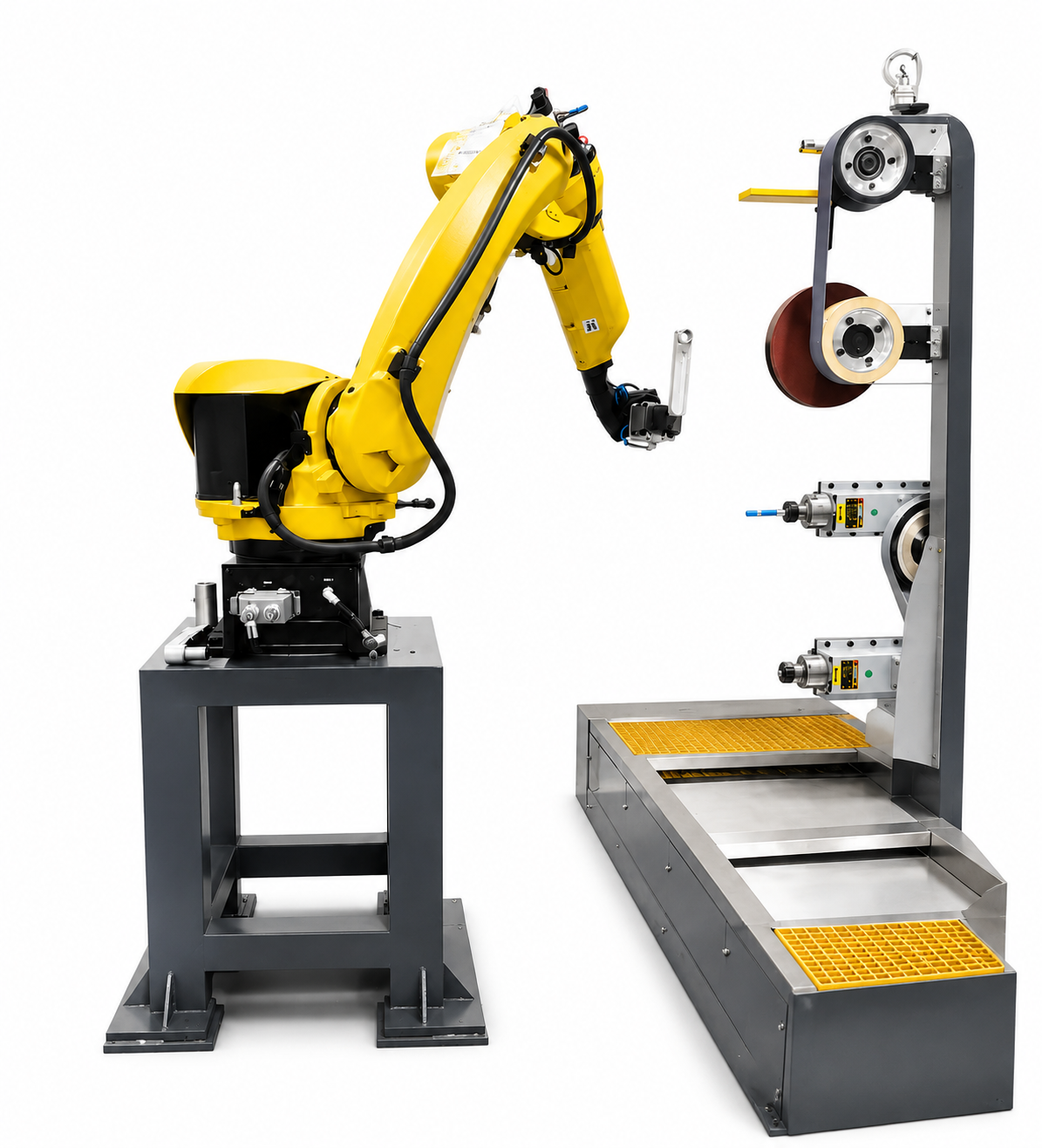
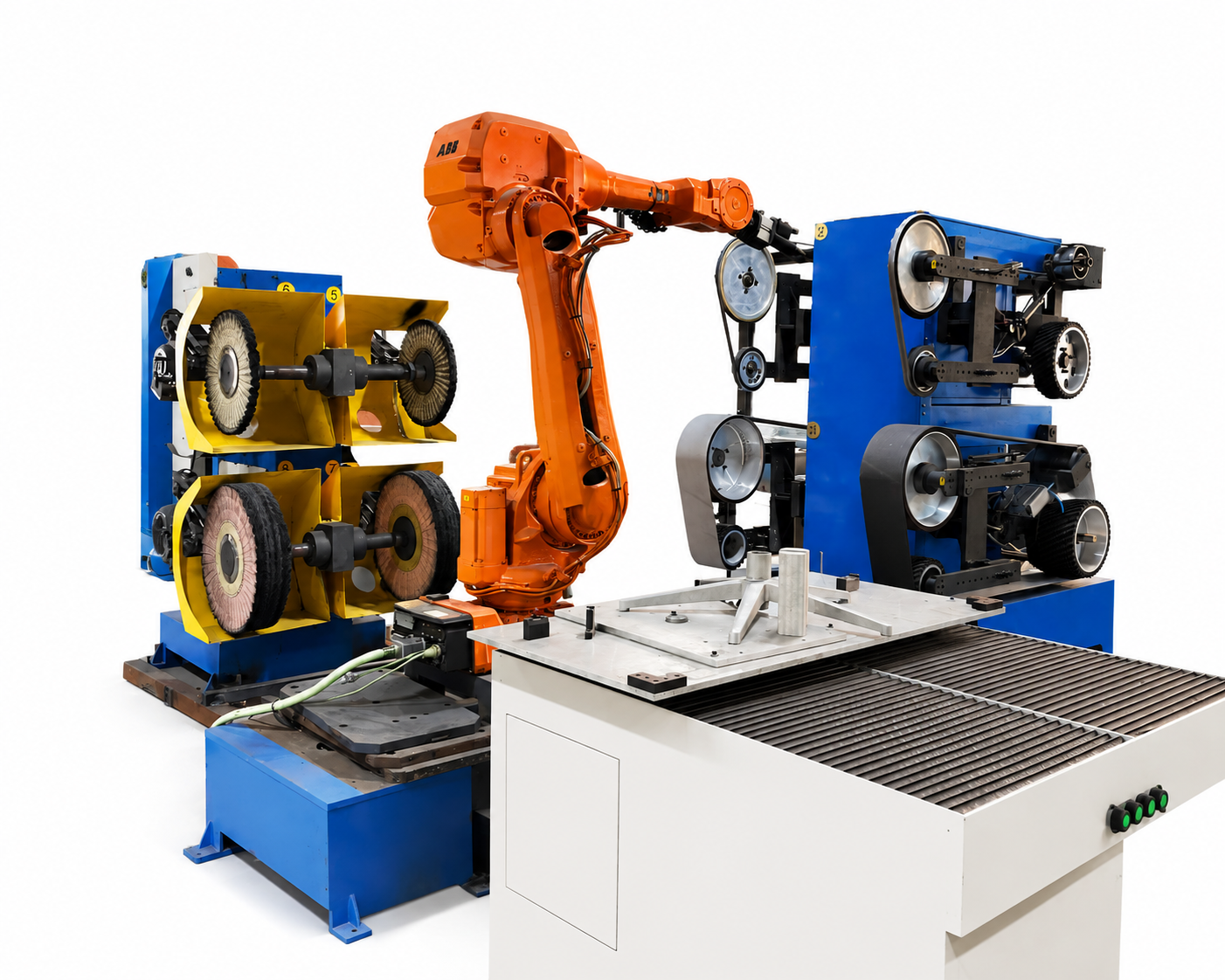
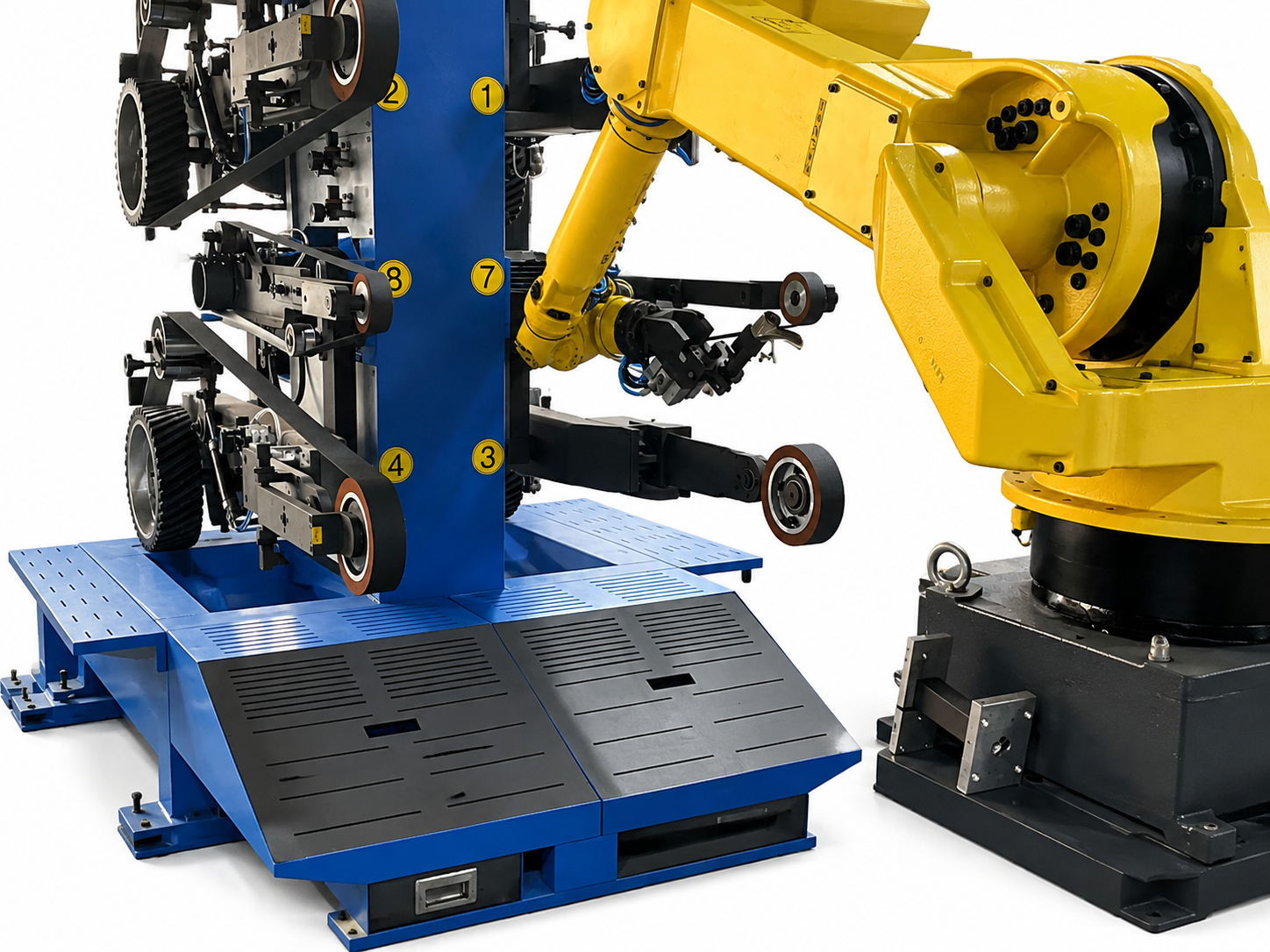
Improve the consistency, efficiency and safety of rear spoiler finishing with a flexible robotic sanding and polishing system. Designed for automotive exterior components with long curved surfaces and complex edges, the system automates repetitive sanding, surface leveling, edge finishing and polishing operations before painting or final inspection.
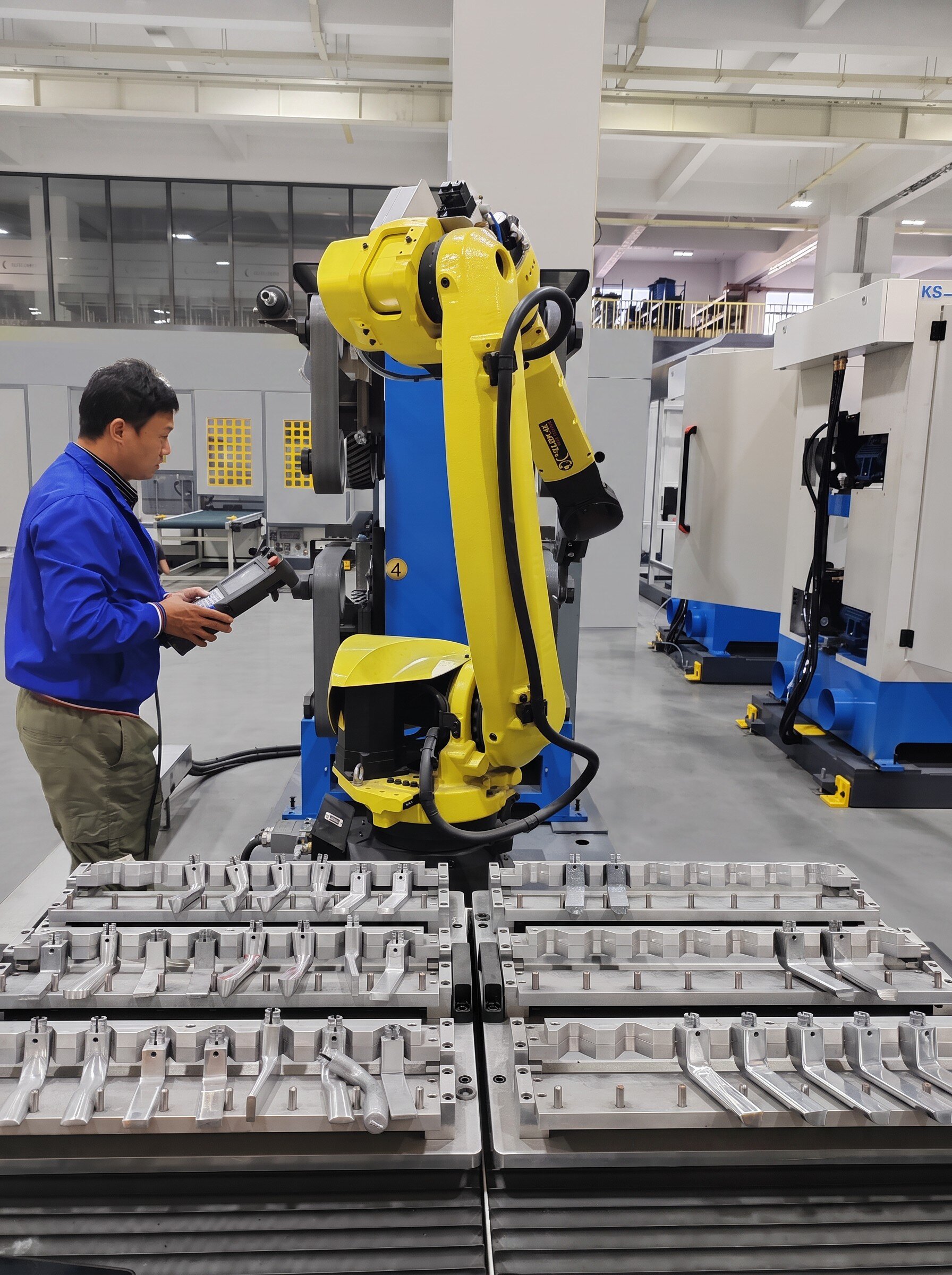
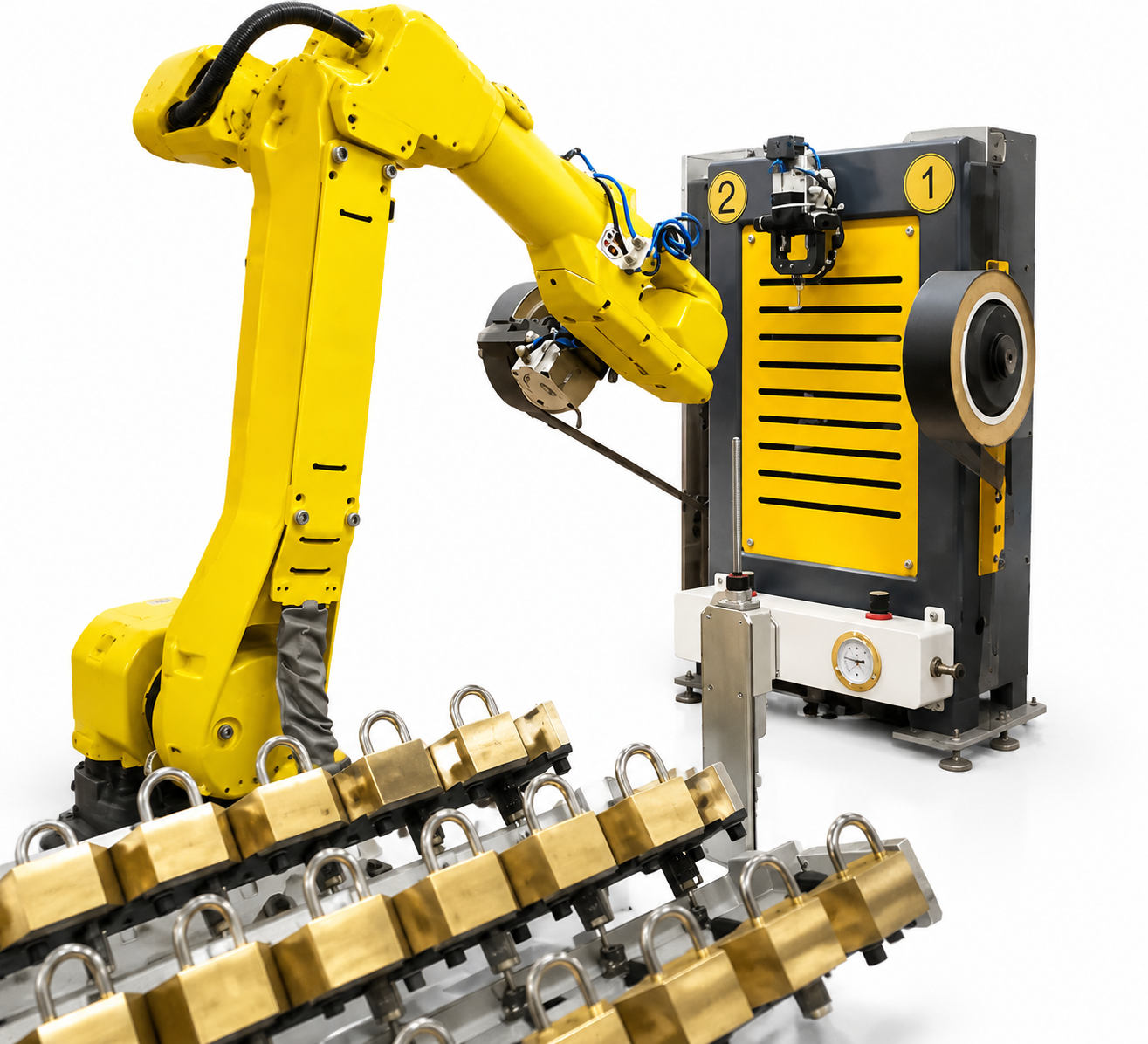
By combining a six-axis industrial robot, compliant force control, application-specific abrasive tools and customized fixtures, the system follows the spoiler profile while maintaining stable contact pressure. It helps reduce manual sanding variation and supports repeatable surface preparation across different part models.
Force-controlled sanding helps maintain stable tool contact on curved surfaces, reducing uneven sanding marks, over-sanding and visible surface variation caused by manual operation.
The six-axis robot can follow long curves, edges, end sections and transitional surfaces that are difficult to process consistently with fixed automation equipment.
The system automates repetitive sanding and polishing operations, allowing operators to focus on inspection, loading, unloading and higher-value finishing tasks.
Robot programs, fixtures and process recipes can be configured for multiple spoiler models. Optional 3D vision or part-position measurement can support flexible production where part position or geometry varies.
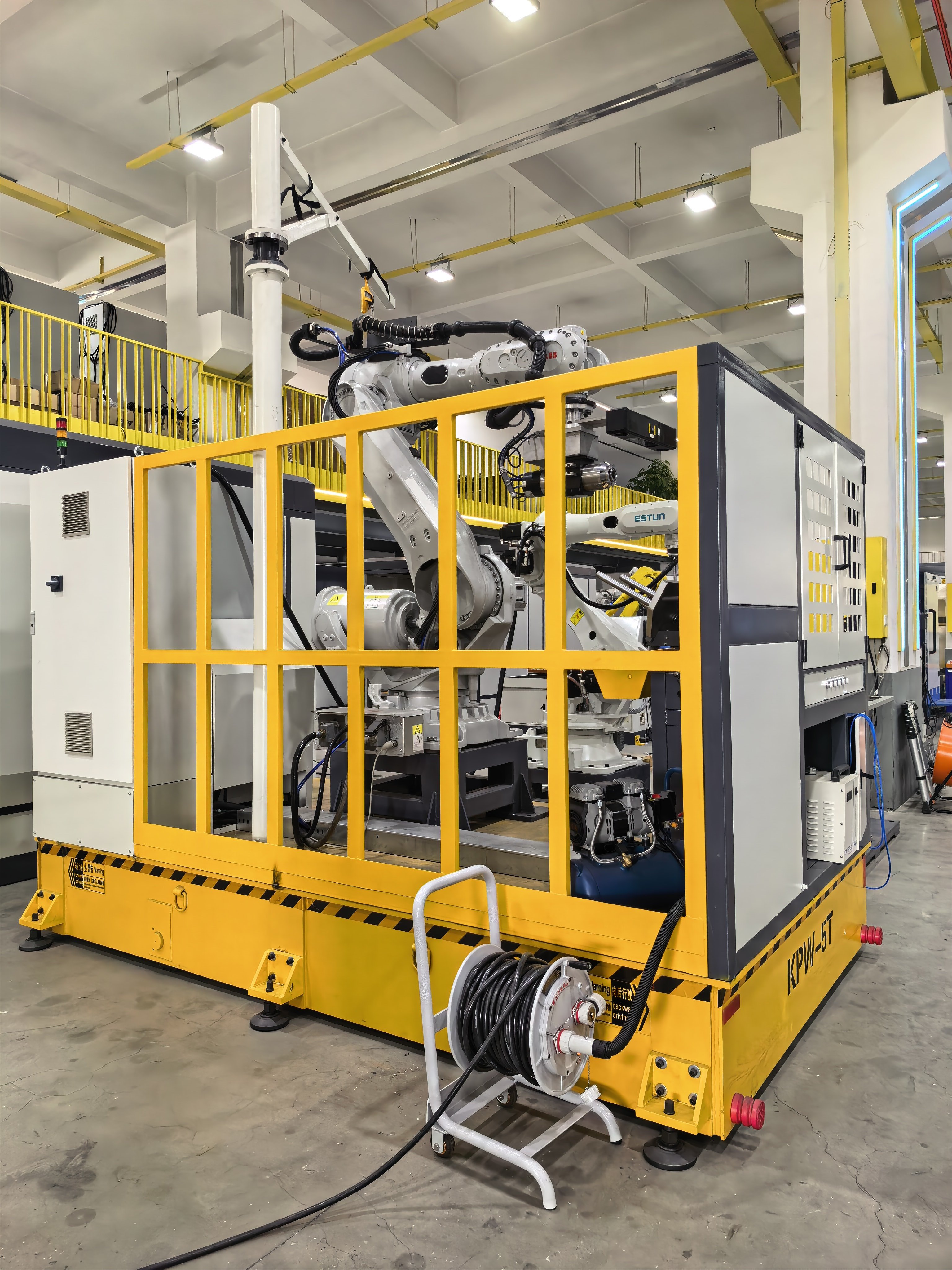
An enclosed robotic cell with an integrated dust-extraction system helps reduce operator exposure to sanding dust, vibration and repetitive manual work.
The HMI can manage process recipes such as robot path, spindle speed, contact force, abrasive sequence and processing time for improved production control and repeatability.
The system can be configured for different automotive exterior-part materials, subject to process testing:
Remove molding flash, parting lines and minor edge defects from injection-molded or composite rear spoilers.
Sand large curved surfaces to improve uniformity and prepare the component for primer, paint or additional coating.
Perform controlled sanding after primer application to improve surface smoothness and coating adhesion before topcoat painting.
Process spoiler edges, curved ends and transitions with compliant tools designed to reduce over-cutting on sensitive areas.
Where required, the system can be configured for controlled polishing of suitable painted surfaces after defects have been identified and the process has been validated.
Optional vision or measurement functions can support the treatment of defined surface areas that require additional sanding or polishing.
Yes. The robotic cell can store multiple programs and process recipes. Different models may require dedicated fixtures, alternative tools or automatic program selection. A part review is required to confirm the most suitable changeover method.
The system can be configured for various plastics and composites. However, the abrasive, spindle speed, contact force, extraction system and safety measures must be selected for each material.
The risk can be reduced through proper fixture support, compliant force control, optimized abrasives and validated process parameters. Sample testing is required before production use.
Yes, primer sanding is a common potential application. The primer type, curing condition, required finish and dust-control requirements must be evaluated during testing.
Painted-part polishing may be possible after process validation. Paint type, defect type, coating thickness and required appearance must be reviewed before selecting tools and parameters.
Yes. Manual loading, dual workstations and fully automated material handling can be configured according to production volume and factory layout.