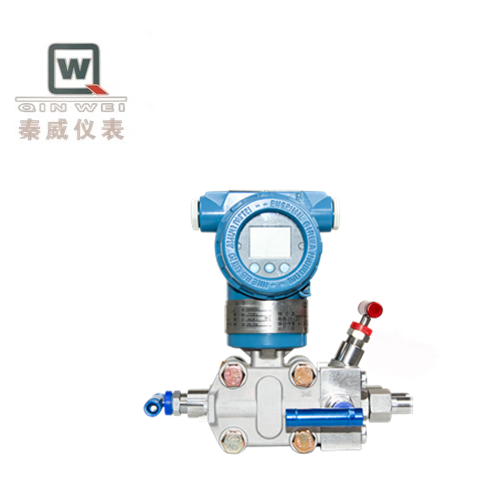
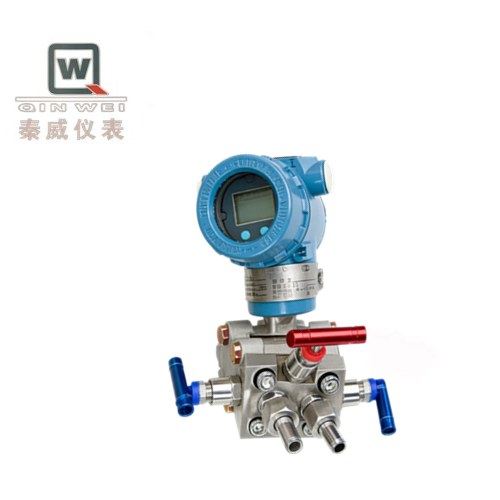
Capacitive Pressure Transmitter With Wide Range And Protection Class IP67/IP68
Working Principle
A capacitive pressure transmitter is a device that converts physical pressure parameters into standard electrical signals. A capacitive pressure transmitter is a high-precision pressure measurement instrument based on the principle of capacitance, which converts pressure signals by detecting changes in the distance between the capacitor plates.
Capacitive pressure transmitters mainly consist of three parts: the pressure sensing element (also known as the pressure sensor), the measuring circuit, and the process connection. It can convert the physical pressure parameters of gases, liquids, etc., sensed by the pressure sensing element into standard electrical signals (such as 4~20mADC, etc.), which are then supplied to secondary instruments such as indicator alarms, recorders, and regulators for measurement, indication, and process regulation. It is powered by 24V.
Product Advantages
- High Precision and Stability
- The intelligent type has an accuracy of ±0.05% FS, the analog type ±0.75% FS, and long-term stability of ≤0.25% FS/5 years.
- Digital compensation technology effectively suppresses temperature drift (±0.01% FS/℃) and static pressure error (±0.02% FS/MPa).
- Wide Range and Flexible Migration
- The measurement range covers 0-0.1kPa to 0-40MPa, supporting a 100:1 range ratio.
- Positive migration can reach 500%, and negative migration 600%, meeting the demands of complex working conditions.
- Resistance to Harsh Environments
- Operating temperature range: -40℃ to 85℃ (amplifier), sensitive elements support -40℃ to 104℃, and high-temperature models filled with inert liquid can reach 204℃.
- Protection class IP67/IP68, explosion-proof certifications include intrinsically safe ExiaIICT5 and flameproof ExdIIBT4.
- Advanced Structural Design
- Fully welded stainless steel isolation diaphragm, with options for corrosion-resistant materials such as Hastelloy C and tantalum, suitable for strong corrosive media.
- No mechanical moving parts, low maintenance, lightweight (2.4kg), and supports compact installation.
Technical Parameters
| Parameter |
Typical Value |
Range Remarks |
| Accuracy Class |
±0.05% FS to ±0.5% FS |
For intelligent type, the highest is ±0.05% FS |
| Response Time |
≤0.2S (standard type) |
For high-speed type, it can reach millisecond level |
| Supply Voltage |
12-45VDC (two-wire system) |
For HART communication, it needs to be ≥18VDC, with load ≤600Ω |
| Static Pressure Limit |
3.45kPa to 31.2MPa |
For high static pressure differential type, it supports 44.1MPa |
| Medium Compatibility |
316L stainless steel, Hastelloy C, tantalum |
Compatible with complex media such as acids, alkalis, and steam |
| Damping Adjustment |
0.2-32 seconds continuously adjustable |
To suppress high-frequency interference |
Application scenarios
- High-precision process control
- Petrochemical industry: Pressure monitoring of distillation columns, differential pressure measurement of reaction vessels.
- Pharmaceutical and food industry: Micro-pressure control of aseptic tanks (0.1-1kPa), meeting FDA certification requirements.
- Special medium measurement
- High-temperature steam: Isolated by condensation bends to avoid direct contact with the transmitter.
- High-viscosity fluids: Such as asphalt and crude oil, use flange-mounted remote transmission structures to prevent clogging.
- Environmental protection and energy
- Sewage treatment: Air pressure regulation in aeration tanks (±5kPa).
- Natural gas metering: Pipeline differential pressure measurement (0-10kPa), supporting online calibration.
Selection and Installation Points
- Selection Guide
- Range Matching: The working pressure is recommended to be 30% - 70% of the range to avoid long-term overload (the overload resistance of capacitive type is usually 120% FS).
- Medium Compatibility: For strong corrosive media, tantalum diaphragms should be selected (such as in the chemical industry), and inert liquid-filled types are preferred in high-temperature scenarios.
- Explosion-proof Certification: In hazardous areas (such as oil and gas fields), confirm the Exia or Exd grade, and intrinsically safe types need to be equipped with safety barriers.
- Installation Specifications
- Pressure Tube Layout: For liquid media, the pressure tubes should be inclined downward (≥1/12 slope), and for gases, they should be inclined upward to prevent the accumulation of gas and liquid.
- Temperature Protection: For high-temperature media (>100℃), a condensation bend should be installed to prevent the vaporization of silicone oil and affect accuracy.
- Electrical Connection: Use shielded twisted-pair cables, keep away from power cables (spacing ≥ 30cm), and the junction box should have an IP67 sealing grade.
- Maintenance Suggestions
- Calibrate once every 12 months, and use a HART hand-held device to adjust the zero point and range.
- Regularly check if the isolation diaphragm is deformed or corroded, and avoid contact with sharp objects.
- Before long-term shutdown, empty the medium in the pressure tubes to prevent crystallization or solidification.