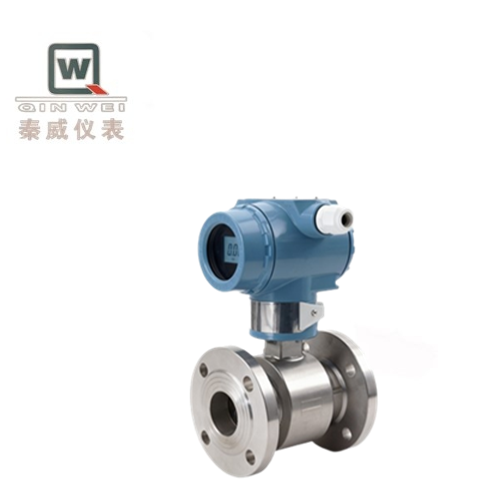
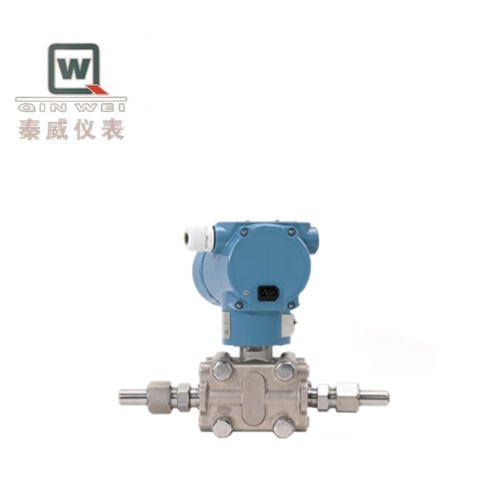
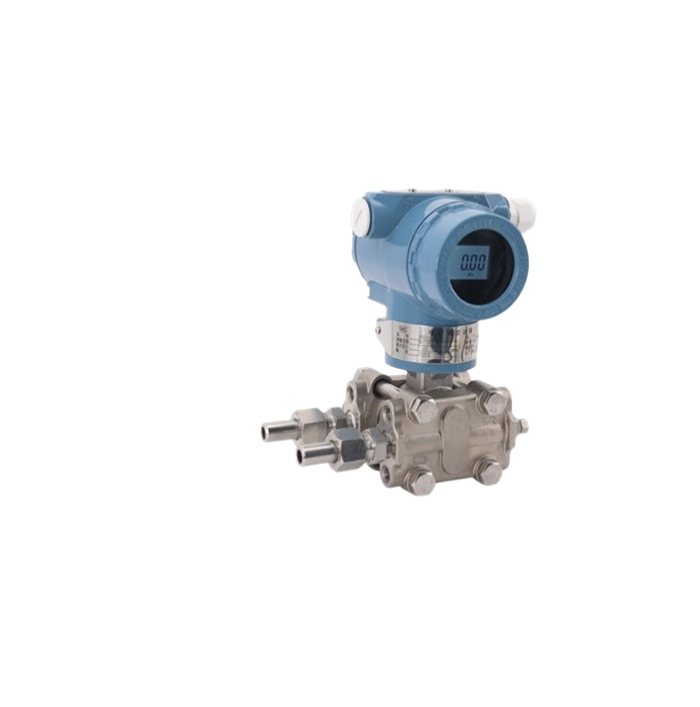
Differential Pressure Transmitter With HART Protocol, Exia/Exd Certification
Differential Pressure Transmitter
Differential pressure transmitter is a widely used measuring instrument in industrial automation. It is used to measure the difference between two pressure points and convert this difference into a standard electrical signal (such as 4-20mA, 0-5V, etc.) for output, facilitating remote monitoring and control.
Working Principle
A differential pressure transmitter typically has two pressure ports: the high-pressure port (HP) and the low-pressure port (LP). When a fluid flows through a throttling device (such as an orifice plate or a Venturi tube), a pressure difference is created on both sides. This pressure difference is transmitted to the measuring element (such as a capacitance sensor, strain gauge, or piezoresistive sensor) through an isolation diaphragm and a sealing fluid. The measuring element converts the differential pressure into an electrical signal, which is then amplified and linearized to output a standard signal.
Main application fields:
- Flow measurement: In conjunction with throttling devices, the flow of liquids, gases or steam is indirectly calculated by measuring the differential pressure.
- Liquid level measurement: In a closed container, the pressure difference between two points is measured and converted into liquid level height, suitable for storage tanks, reaction vessels, etc.
- Filter monitoring: Detect the pressure difference on both sides of the filter element to determine if it is clogged.
- Industrial process control: Monitoring of pressure, density and temperature in fields such as petroleum, chemical, power and metallurgy.
- Special scenarios: Airflow control in air conditioning systems, pressure monitoring in medical equipment, airflow measurement in aerospace, etc.
Typical brands and models:
Key Points for Selection
- Measuring Range: Select the range based on the actual differential pressure, and it is recommended to be 1.5 times the maximum differential pressure.
- Medium Compatibility: For corrosive media, special materials (such as Hastelloy or tantalum) should be chosen.
- Accuracy Class: 0.5%FS is generally suitable for industrial applications, while 0.1%FS or higher is recommended for precise measurements.
- Output Signal: 4-20mA (two-wire system) is the most commonly used, and it supports HART or fieldbus protocols.
- Environmental Conditions: For explosion-proof areas, models with Exia/Exd certification should be selected. For high/low temperature scenarios, the temperature range should be considered.
- Installation Method: Choose between direct insertion, flange connection, or threaded connection based on the pipeline conditions.