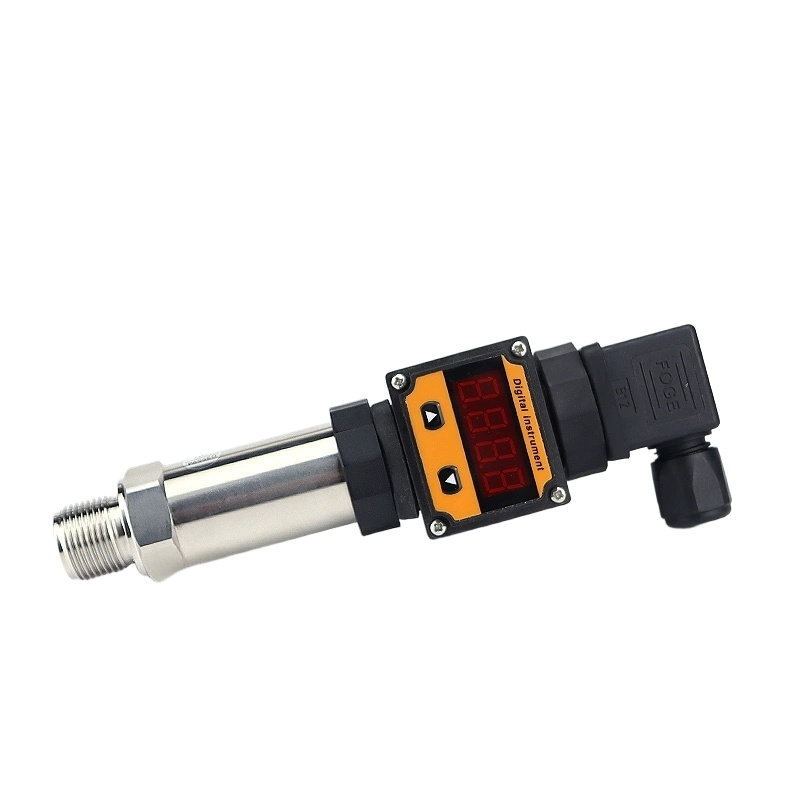
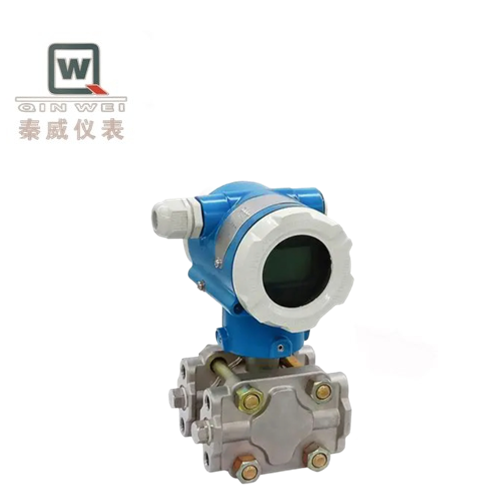
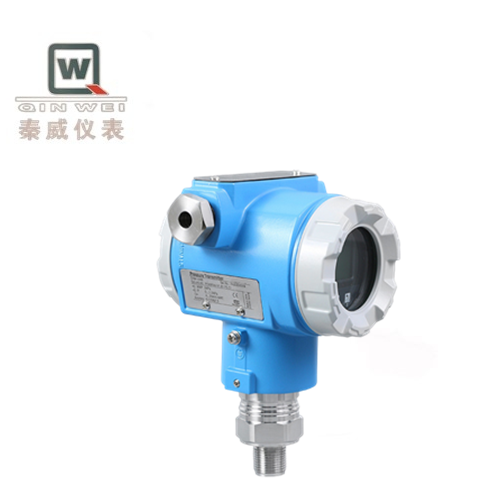
Diffusion Silicon Pressure Transmitter With Digital Display Vacuum Transmitter
Overview
The diffused silicon pressure transmitter is a high-precision pressure measurement instrument based on the piezoresistive effect of semiconductors. It measures pressure by detecting the resistance change caused by the deformation of a silicon diaphragm and outputs a standard electrical signal after signal processing.
Working Principle
Piezoresistive effect: When pressure is applied to the diffused silicon diaphragm, the lattice structure of the silicon crystal changes, resulting in a change in the strain resistance value on the diaphragm. The resistance change is converted into a voltage signal through a Wheatstone bridge, and then undergoes amplification, temperature compensation, and linearization processing, ultimately outputting standard signals such as 4-20mA and 0-5V.
Structural Design: Usually, a 316L stainless steel isolation diaphragm is adopted, which is in contact with the measured medium through silicone oil or directly, ensuring corrosion resistance and long-term stability.
Product Advantages
-
High Precision and Stability
- Linearity can reach ±0.2% FS, repeatability ±0.1% FS, and long-term stability ±0.02% FS/year.
- Intelligent temperature compensation technology effectively suppresses zero drift (±0.01% FS/℃) and sensitivity drift (±0.02% FS/℃).
-
Wide Temperature Range and Overload Capacity
- Operating temperature range is typically -40℃ to 85℃, with some models supporting higher temperatures (e.g., 350℃).
- Overload capacity up to 150% FS, and some models can withstand 2 times the range pressure.
-
Protection and Explosion-proof Performance
- Enclosure protection grade IP67/IP65, waterproof and dustproof.
- Explosion-proof certifications include intrinsically safe ExiaIICT5 and flameproof ExdIIBT4, suitable for hazardous environments.
-
Flexible Interfaces and Compatibility
- Pressure interfaces are available in thread types (e.g., G1/2, NPT), flange (DN25/DN50), etc.; electrical interfaces include HART, aviation plugs, or direct leads.
- Supports output protocols such as HART, 4-20mA, 0-5V, etc., and can be seamlessly integrated with PLC and DCS systems.
Technical Parameters
| Parameter |
Typical Value Range |
Remarks |
| Range |
0-0.1MPa to 0-100MPa |
Covering micro-differential pressure, gauge pressure and absolute pressure measurement |
| Accuracy Class |
±0.1% FS to ±0.5% FS |
Depends on model and compensation technology |
| Supply Voltage |
12-36VDC (Two-wire system) |
Some intelligent models support wide voltage input |
| Response Time |
≤10ms |
High-speed models can reach millisecond level |
| Medium Compatibility |
316L stainless steel, Hastelloy, etc. |
Compatible with corrosive liquids, gases and slurries |
| Long-Term Stability |
≤±0.02% FS / year |
Some high-end models can reach ±0.01% FS / year |
Application Scenarios
-
Industrial Process Control
- Petrochemical: Monitoring pressure in reaction vessels, calculating flow in pipelines.
- Power and Energy: Controlling pressure in boiler steam drums, steam turbines.
- Metallurgy and Steel: Optimizing pressure in blast furnaces and converters.
-
Environmental Protection and Municipal Services
- Sewage Treatment: Regulating air pressure in aeration tanks, measuring liquid levels.
- Urban Water Supply: Monitoring pressure in water distribution networks, managing pumping stations.
-
Special Environments
- High Temperature and High Pressure Scenarios: Geothermal wellheads (350°C), high-pressure oil and gas wells.
- Strong Vibration Environments: Offshore oil drilling platforms, steel rolling equipment (requiring Hirschmann interface anti-vibration design).
Selection and Installation Recommendations
-
Key Points for Selection
- Range Selection: It is recommended that the working pressure be 60% - 80% of the range to avoid long-term overload.
- Medium Compatibility: For corrosive media, 316L stainless steel or chemical seal design should be selected.
- Explosion-proof Certification: In hazardous areas, confirm the Exia or Exd grade.
-
Installation Guidelines
- Location Selection: Keep away from vibration sources, avoid direct sunlight and sudden temperature changes.
- Connection Method: Flange is suitable for high pressure, while thread is suitable for low pressure. Ensure no leakage in the seal.
- Pressure Conduit Layout: For liquid media, the pressure conduit should be inclined upwards (≥1/12 slope), and for gas media, it should be inclined downwards to prevent accumulation of gas and liquid.
-
Maintenance Notes
- Regularly clean the pressure interface to prevent blockage.
- Calibrate once a year to ensure accuracy.
- In high-temperature environments, install a condensate bend to prevent silicone oil vaporization.