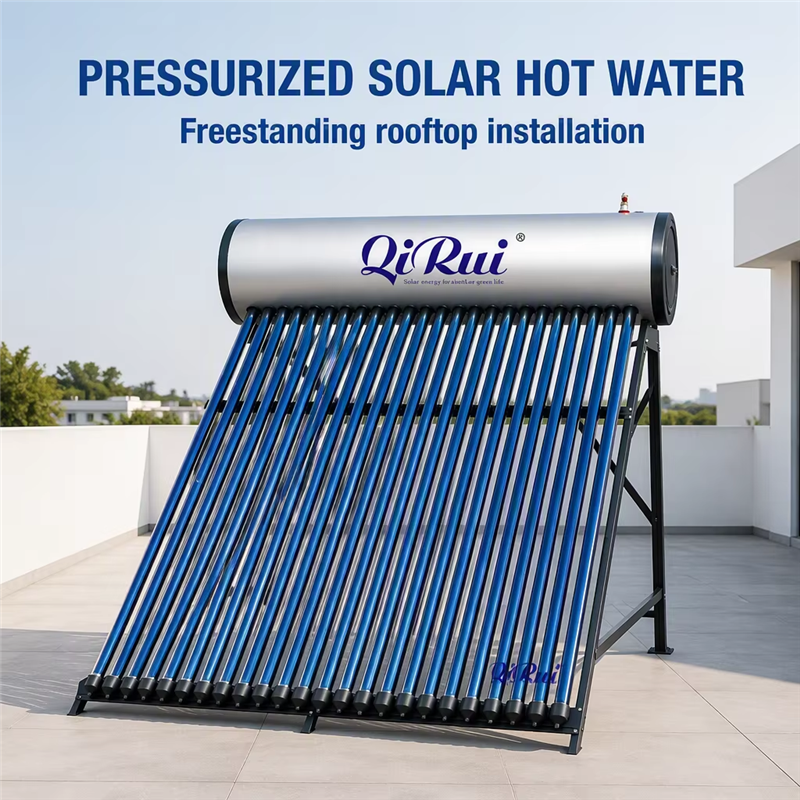
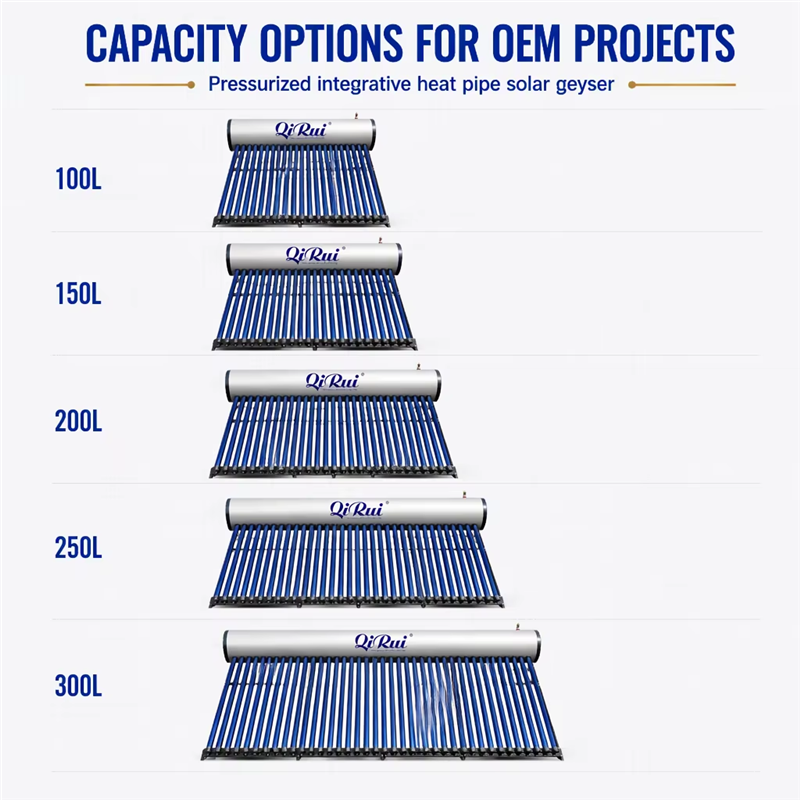
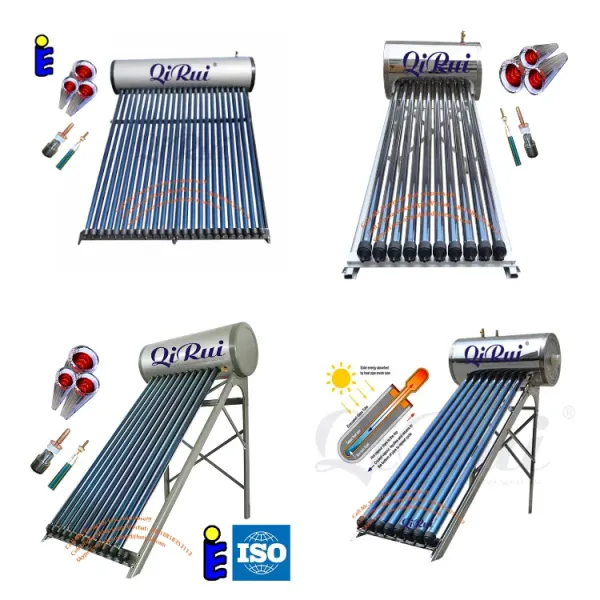
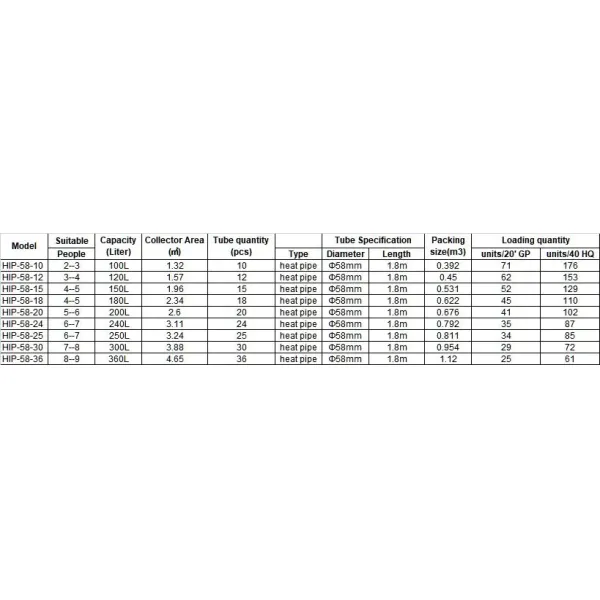
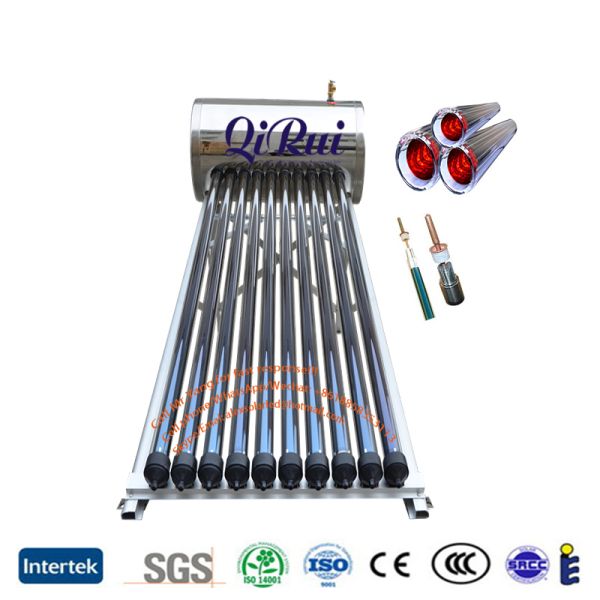
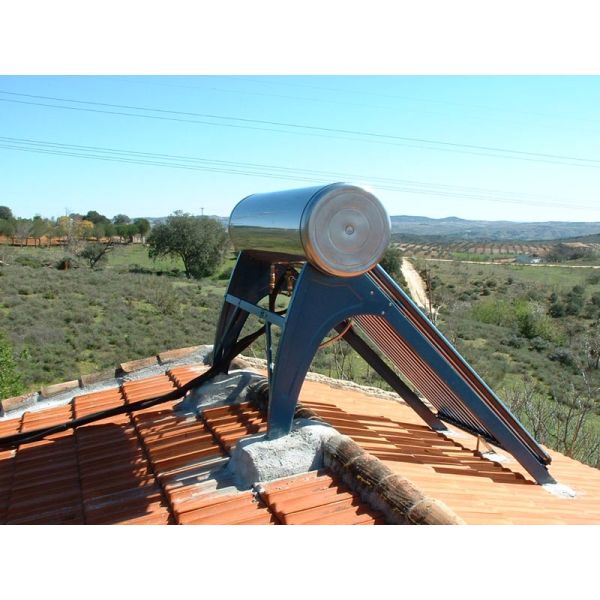
Compact High Pressure 80L 100L 120L 140L 150L 160L 180L 200L 240L 250L 300L 360L Complete Solar Geyser Integrated Heat Pipe High Pressure Solar Hot Water Heater System with Solar Keymark EN12976
| Parameter | Specification |
|---|---|
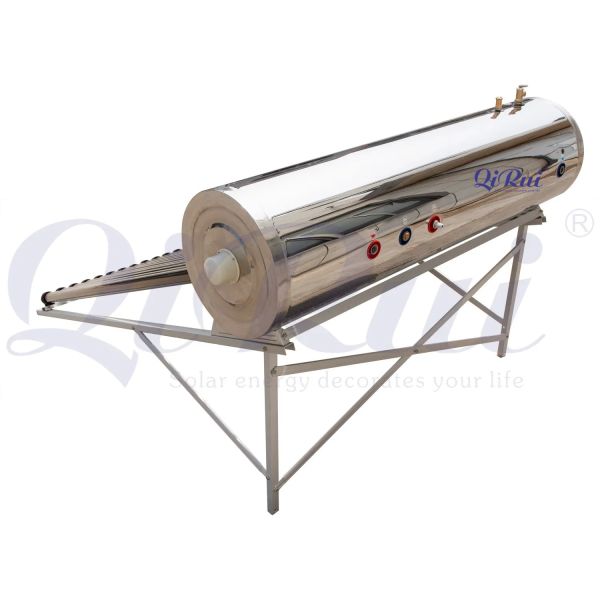
| Material of Outer Tank | 0.4mm galvanized steel/0.4mm SUS304 stainless steel/0.4mm SUS304-BA (bright) |
| Material of Inner Tank | 1.2mm SUS304-2B stainless steel or SUS316 stainless steel |
| Tank Insulating Layer | 50-60mm high-density polyurethane foam |
| Diameter Outer/Inner Tank | 460mm/360mm |
| Electrical Heater | 1500W; 220V/110V |
| Inlet and Outlet Hole | Male 1/2", 3/4" |
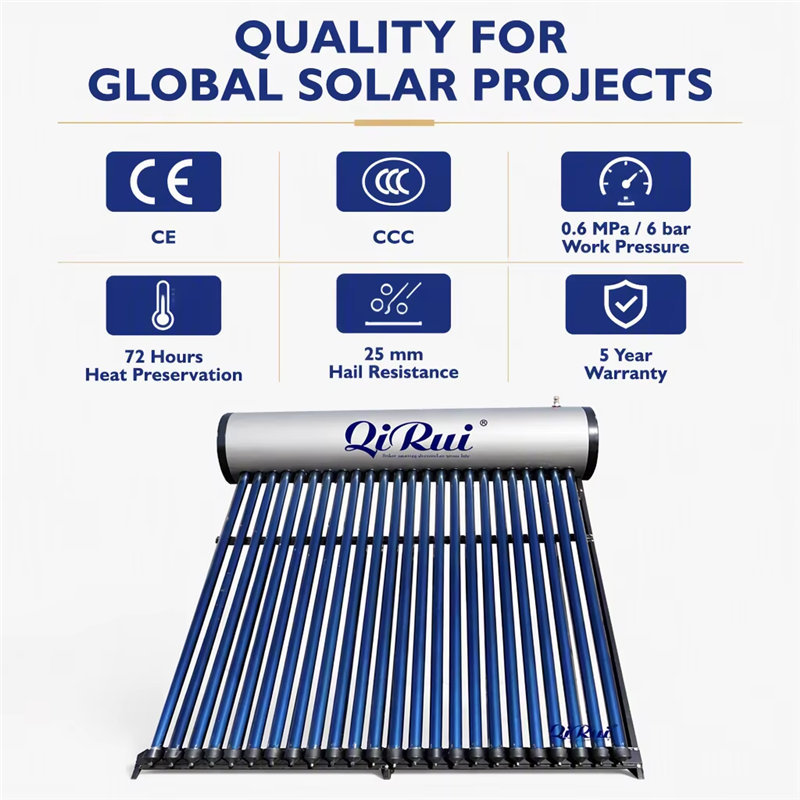
| Maximum Pressure | 1.2 MPa |
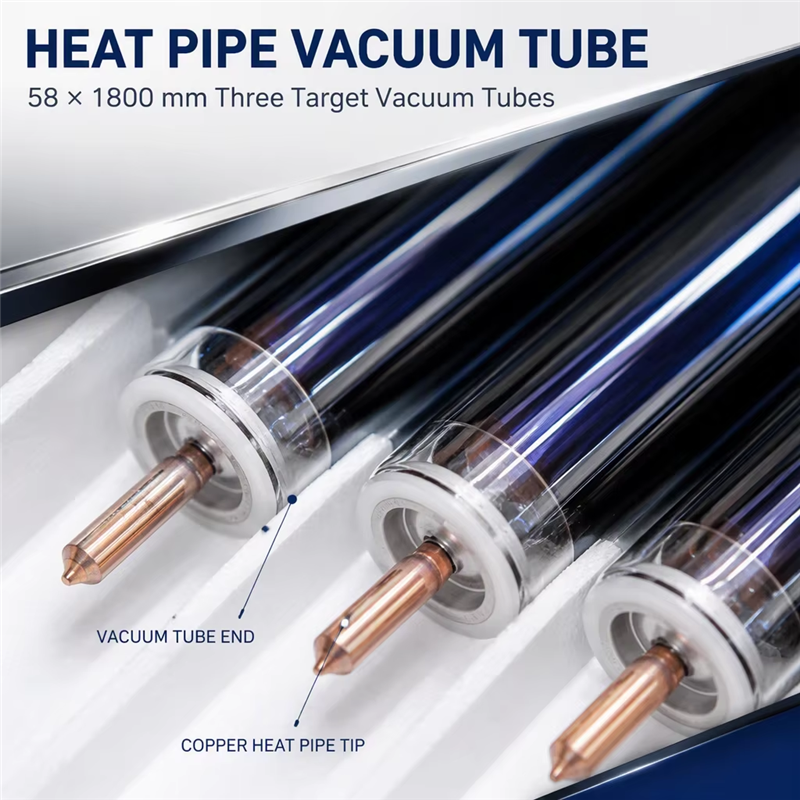
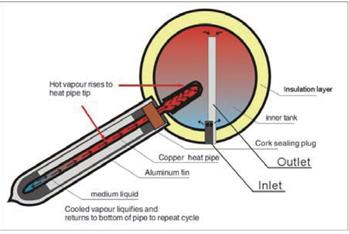
| Solar Collector Tube | 3.3 borosilicate glass with AL/AL-ALN/ALN (single target) or CU/SS-ALN/ALN (three target) |
| Thickness of Glass Tube | 1.6mm |
| Vacuum Tube Tightness | P≤0.005 Pa |
| Absorption | As=0.93-0.96 (AM1.5) |
| Emission Ratio | Ε h=0.04-0.06 (80°C±5°C) |
| Idle Sunning Property Parameters | Y=220~260 m².°C/kW |
| Average Heat Loss Coefficient | Ult=0.6~0.7 W/(m².°C) |
| Bracket Material | 1.2mm Stainless steel/1.6mm aluminum alloy/1.5mm galvanized steel |
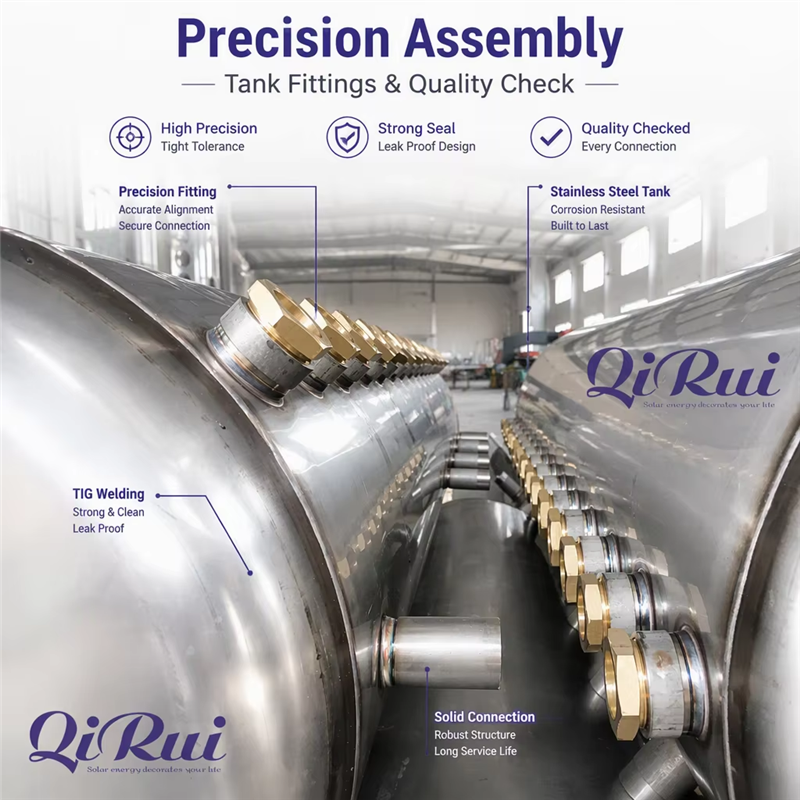
| Tank Structure | Standard holes for P/T valve, water inlet/outlet, electric heater, magnesium rod; custom designs available |
| Welding Method | Automatic argon arc welding |
| Fastener Pieces | Stainless steel screws |
| Seal Material | Stabilized high temperature silicon |
| Optional Accessories | System controller SR609C for electrical heating control and temperature display |
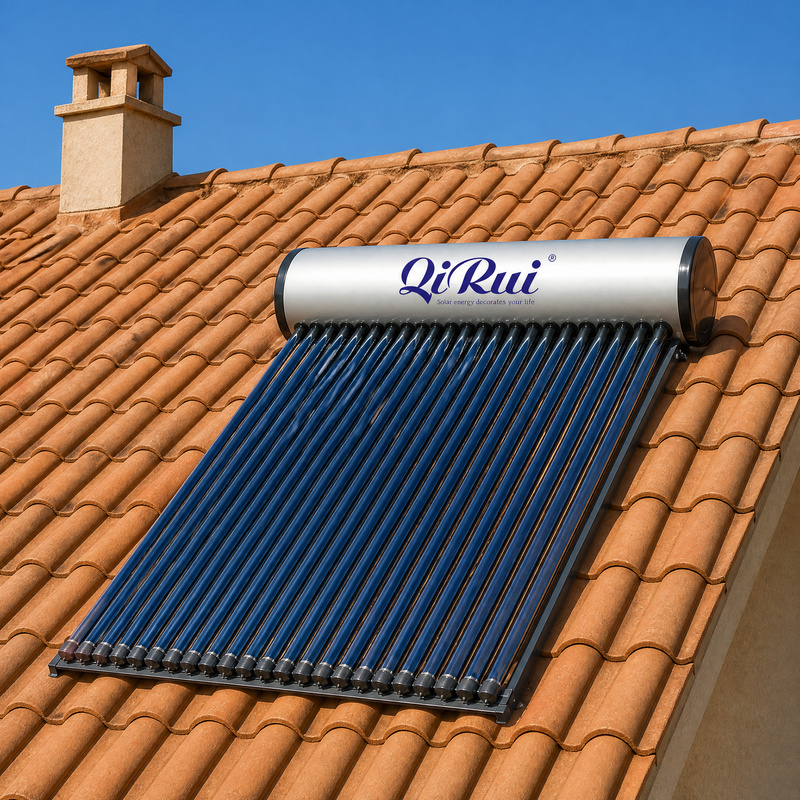
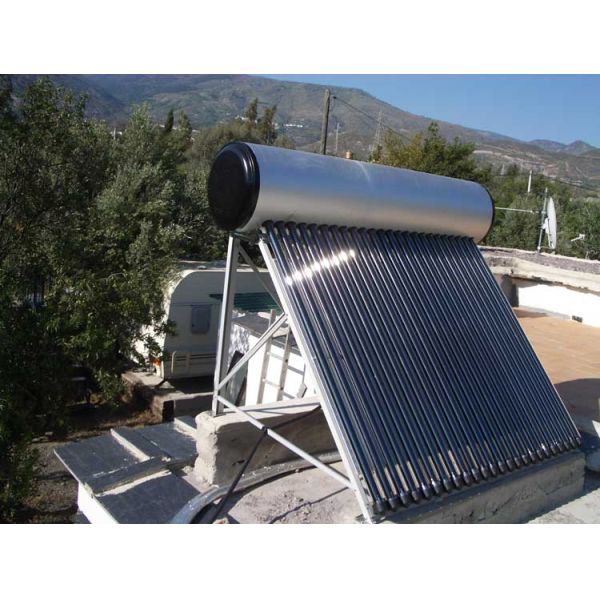
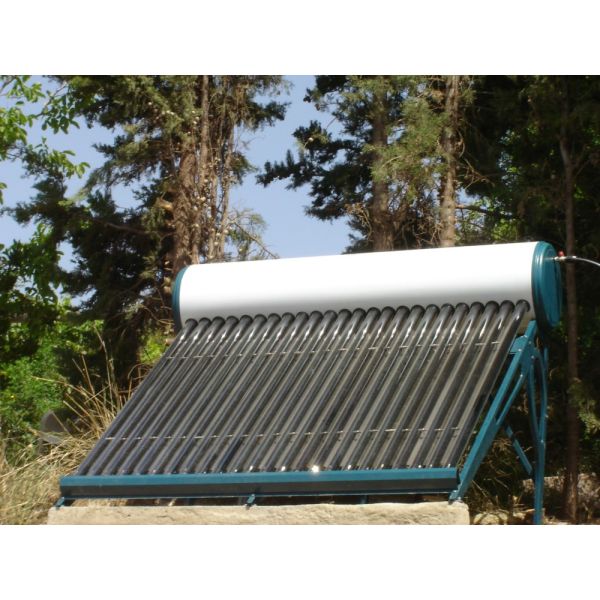
Suitable for both flat roofs and pitched roofs
1. Is solar water heating a viable alternative to gas or electricity?
Solar should be seen as a supplement rather than a complete alternative. While solar cannot totally replace gas or electric heating due to occasional low sunlight days, a correctly sized system can provide 60%-70% of a household's hot water needs annually. The system can be automated to guarantee hot water regardless of sunlight levels.
2. How long will it take to recoup my investment?
QIRUI solar collectors are affordable compared to other systems. For a 4-person household, the cost may be comparable to new electric or gas systems. Depending on location and usage, investment can be recouped in 4-5 years through reduced energy bills, with significant savings over the system's lifetime.
3. Can QIRUI solar collectors be used in cold conditions?
Yes. Systems operate in temperatures as low as -30°C, though performance reduces in extreme conditions. Good heat output is maintained in mild sub-zero temperatures.
4. What happens if one of the tubes is broken?
Tubes are strong and rarely break, but if damaged, they can be easily and inexpensively replaced. The system can operate with several broken tubes, though efficiency decreases, so prompt replacement is recommended.
5. Will water be heated on a cloudy day?
Yes. Heat output is reduced on overcast days but still provides heating. On heavily clouded or rainy days, more gas or electric boosting may be required, but the automated system ensures continuous hot water supply.
6. Can I use a solar collector with my existing hot water system?
Normally yes. Retrofit valves can connect solar to existing cold water inlet. If the existing tank cannot accept solar input directly, an additional storage tank can pre-heat water before it enters the main tank.
7. Are the solar collectors noticeable on the roof?
Collectors blend well with roof design, appearing similar to skylights from a distance. They can be flush-mounted on roofs. Check local building regulations for installation restrictions.
8. Can QIRUI solar collectors be mounted on a flat surface?
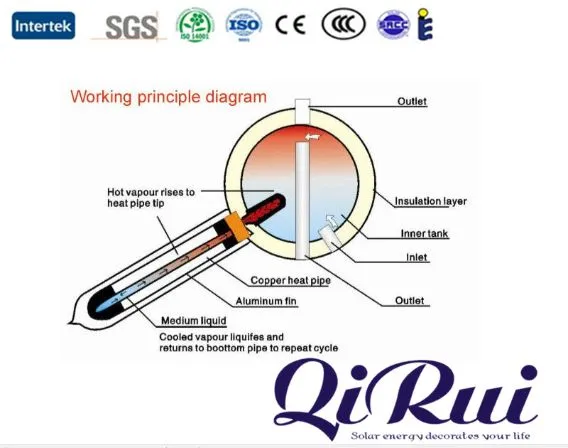
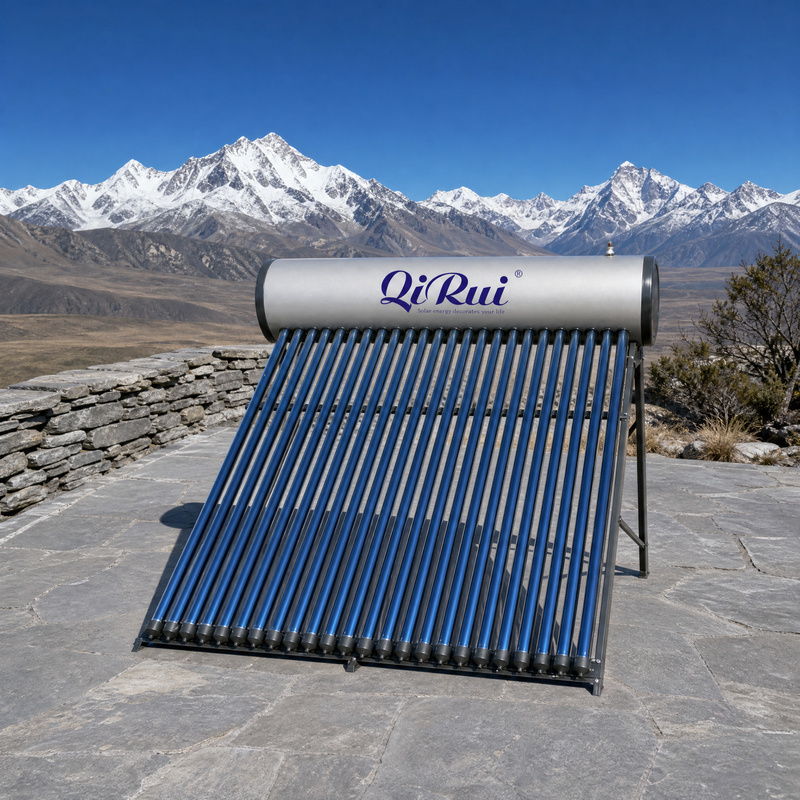
Yes. They can be mounted on flat roofs or ground using stainless steel flat roof frames. Minimum 20° angle ensures optimal heat pipe operation.
9. How do I protect my solar system during subzero temperatures?
For subzero operation, use a controller with low temperature settings. When manifold temperature drops below 5°C/40°F, the pump circulates periodically to warm the collector. In extremely cold areas, a closed loop with glycol/water mix is recommended.
10. Will the QIRUI solar collector be a fire hazard during hot, dry weather?
No. All components are high-temperature rated and non-flammable. Even during stagnation in strong sunlight, the system will not catch fire. Components are stainless steel, aluminum, glass or glass wool. Temperature relief valves prevent manifold temperature from exceeding 99°C/212°F.